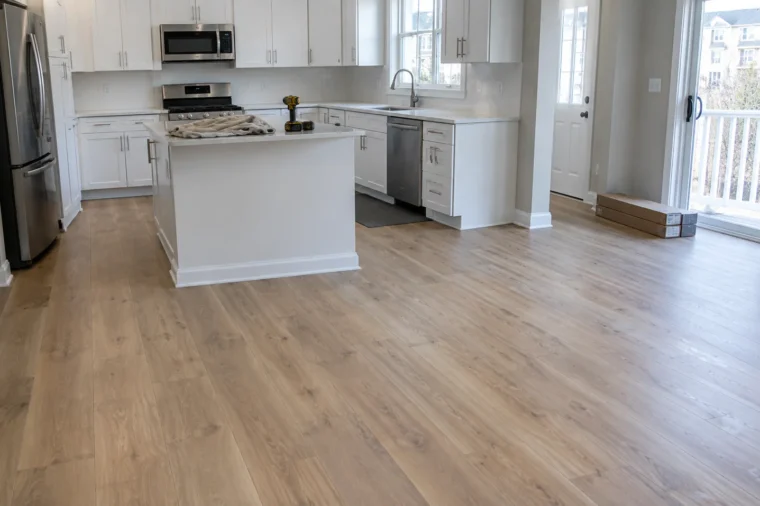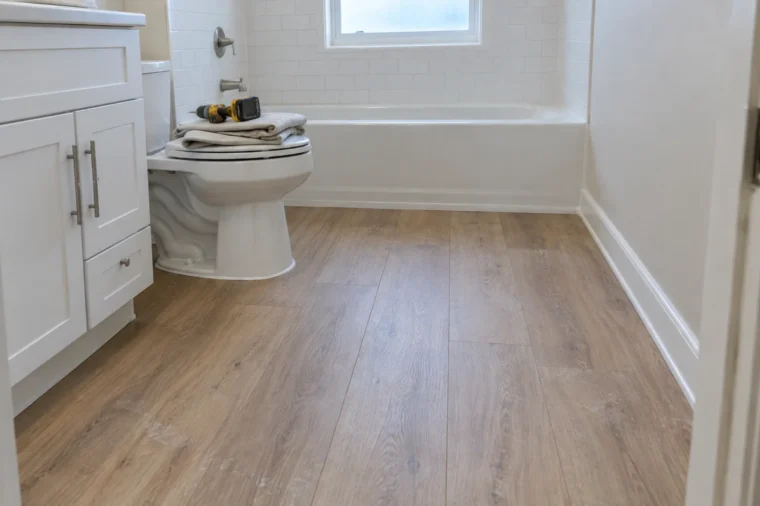
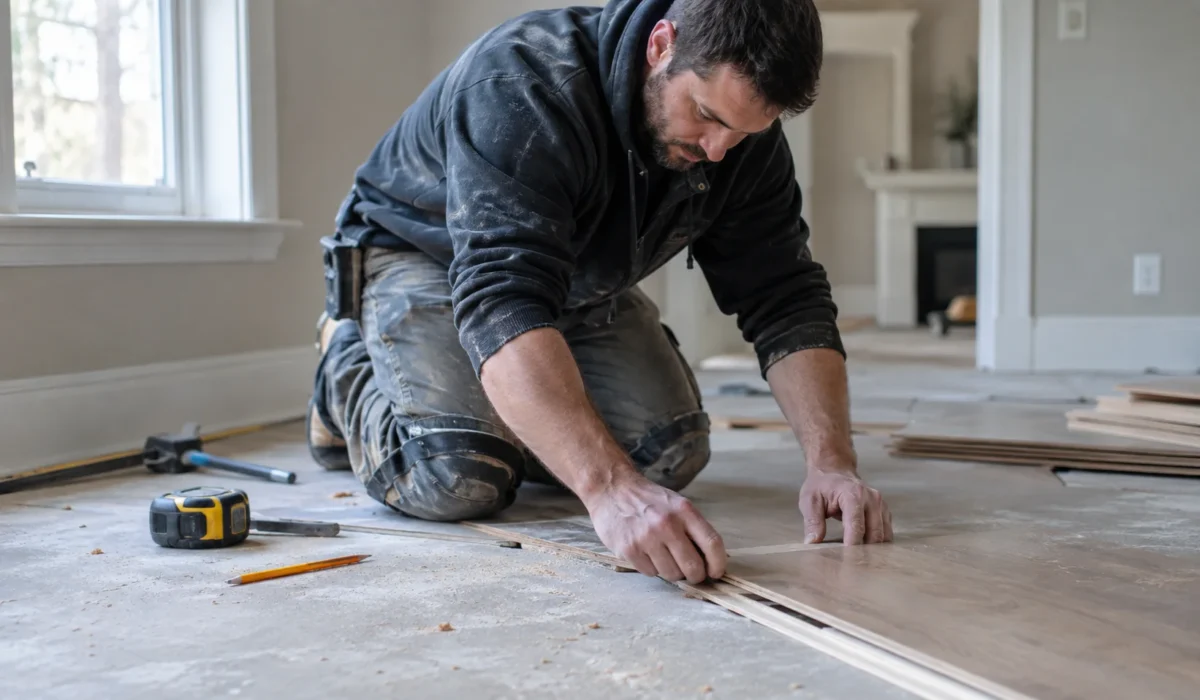
The best flooring for house projects in 2026 is luxury vinyl plank with a rigid SPC core for most rooms, engineered hardwood for main living areas on a wood joist subfloor, and porcelain tile for wet rooms. That is the short answer. The longer answer is that your subfloor decides what you are allowed to install before your taste decides what you want, and in Northern Virginia, Maryland and Washington DC the humidity swing decides how long it lasts.
This guide is written by installers, not by a showroom. It covers every room in the house, the real installed costs in the DMV for 2026, the specifications nobody publishes, and the five mistakes that ruin a good floor. If you already know what you want, you can get a fixed price in 60 seconds with the FIXO instant quote.
In this guide
- Best flooring for house: the short answer
- Start with the subfloor, not the showroom
- Best flooring for uneven floors
- The six flooring types compared
- Best flooring for house, room by room
- Best flooring for rental property
- What it costs to floor a whole house in 2026
- Best flooring for resale value
- Second floors, condos and sound ratings
- Five mistakes that ruin a good floor
- Where FIXO fits
- Frequently asked questions
Best flooring for house: the short answer
If you want one material through the whole house, choose rigid core luxury vinyl plank with a 20 mil wear layer. It is the only common floor that is genuinely waterproof, works above grade and below grade, handles the Mid-Atlantic humidity swing without cupping, and costs less installed than engineered hardwood. That is why it is the default recommendation in almost every DMV home we measure.
If you want the floor that holds its value longest and you have a wood joist subfloor, choose engineered hardwood with a 3 mm or thicker wear layer, or solid white oak. If you want the floor that outlives the house, choose porcelain tile. If comfort and quiet matter more than durability, as they do in bedrooms, carpet is still the right answer.
The materials that lose money are solid hardwood below grade, standard laminate in any wet room, and sheet vinyl anywhere you plan to stay ten years.
The one rule that matters: the subfloor determines what is eligible, the room determines what is appropriate, and the climate determines how long it lasts. Pick in that order and you will not make an expensive mistake.
Start with the subfloor, not the showroom
Most people choose the best flooring for house projects the wrong way round. They pick a color, then find out the product cannot go where they wanted it. Three site conditions decide the answer before style does.
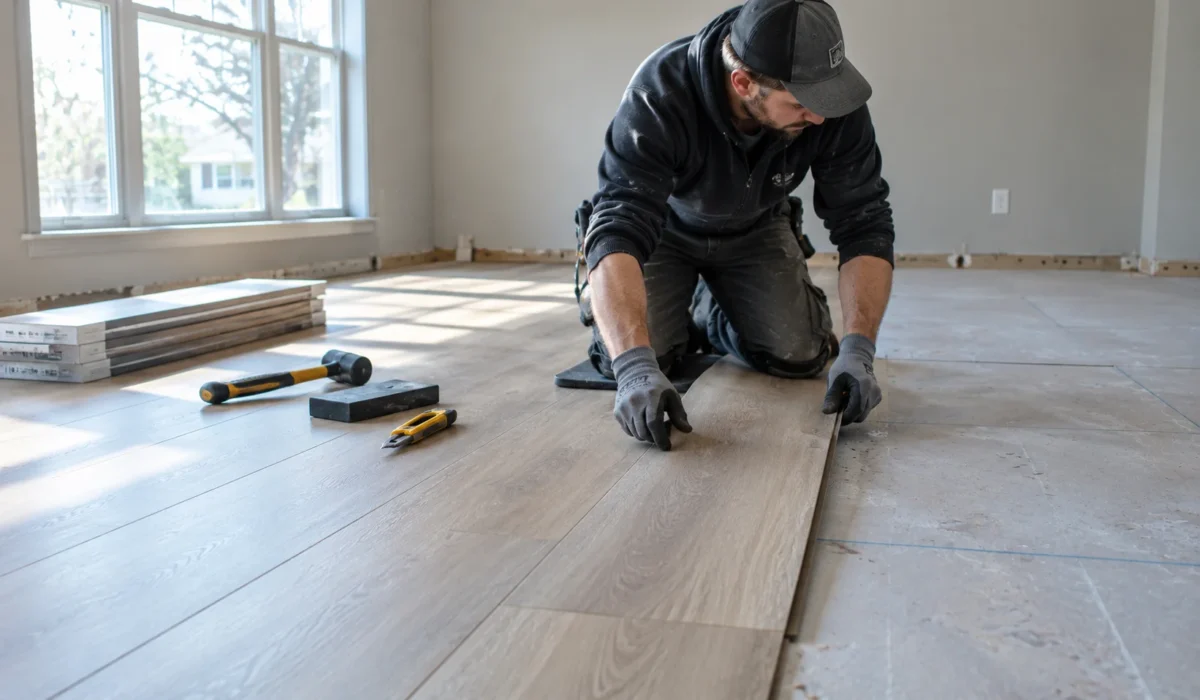
Is the room below grade, on grade or above grade?
Below grade means any floor with soil against the outside of the wall, which in the DMV usually means a finished basement on a concrete slab. On grade means a slab at ground level, common in Maryland townhomes and post 2000 Virginia builds. Above grade means a wood joist subfloor with plywood or OSB over it, which is most main and upper levels.
Solid hardwood is off the table below grade. Almost every manufacturer voids the warranty on a below grade installation because concrete is hygroscopic and pulls moisture from the ground all year. Engineered hardwood can go on a slab with a proper vapor barrier and a glue down installation. Rigid core LVP and porcelain tile go anywhere.
Has anyone tested the slab for moisture?
This is the single most skipped step in the DMV and the single most common cause of a floor failing in year two. A concrete slab that looks bone dry can still be pushing vapor. There are two accepted tests:
- ASTM F2170 in situ relative humidity probe. Probes are drilled into the slab and read after 72 hours, following the NWFA installation guidelines. Most LVP adhesives allow up to 85 percent RH, many wood adhesives cap out at 75 to 80 percent.
- ASTM F1869 calcium chloride test. Measured in pounds of moisture vapor emitted per 1,000 square feet in 24 hours. Most manufacturers cap this at 3 to 5 pounds.
For wood subfloors the test is a pin moisture meter. You want the subfloor and the flooring within 2 to 4 percent of each other, with the wood flooring itself at roughly 6 to 9 percent moisture content before it goes down.
Is the subfloor flat enough?
Flat and level are not the same thing. A floor can slope a full inch across a room and still be perfectly flat, and a flat floor is what the product actually requires. Typical manufacturer tolerances are 3/16 inch over a 10 foot span for click lock floating floors and 1/8 inch over 6 feet for glue down. Beyond that, the locking joints flex over the void, the seams open, and the warranty is gone.
Best flooring for uneven floors
The best flooring for uneven floors is rigid core SPC luxury vinyl plank installed as a floating floor over a leveled substrate, or carpet if the unevenness is a slope rather than a dip. Every article that tells you a flexible material will simply ride over the problem is selling you avoidance, not a solution.
Here is the honest version. There are three different problems people call uneven, and they have three different fixes:
- Out of level. The floor is flat but sloped, common in pre war Alexandria and Arlington homes that have settled. Floating floors handle this fine. No leveling needed. Your furniture will notice, your floor will not.
- Out of flat. Dips, humps and waves. This is the one that fails. Low spots get filled with self leveling compound, high spots on concrete get ground down. Budget roughly $2 to $4 per square foot for self leveling compound in the DMV, or $0.50 to $1.50 per square foot for light cleaning and spot leveling.
- Deflecting or bouncy. The joists themselves flex. No flooring product fixes this. It needs sistering or blocking from below, and tile in particular will crack over it because ceramic needs L/360 deflection and natural stone needs L/720.
How to tell which you have: lay a 10 foot straightedge or a straight piece of aluminum on the floor in several directions and slide a tape measure under it. Anything over 3/16 inch of gap gets marked and filled. A laser level tells you slope. Bounce tells you deflection.
Thin goods telegraph. Sheet vinyl and 6 mil LVP will show every ridge underneath within a year. If the subfloor is rough and you are not leveling it, a thicker rigid core plank with an attached pad hides more, though it does not make the problem legal under the warranty.
The six flooring types compared
Use this table to narrow the best flooring for house projects down to two or three candidates before you look at a single sample. These are 2026 installed price ranges for the Northern Virginia, Maryland and DC market, meaning material, labor and standard prep together. Subfloor repair, demo and haul away are separate line items.
| Material | Installed cost per sq ft (DMV, 2026) | Waterproof? | Key spec to check | Lifespan | Below grade? |
|---|---|---|---|---|---|
| Luxury vinyl plank (SPC rigid core) | $4 to $9 | Yes, fully | Wear layer 12 mil home, 20 mil pets or rental | 15 to 25 years | Yes |
| Laminate | $3 to $7 | No, water resistant only | AC rating, AC3 minimum, AC4 for busy homes | 15 to 25 years | No |
| Engineered hardwood | $8 to $16 | No | Wear layer 3 mm or thicker to refinish once | 20 to 40 years | Glue down with vapor barrier only |
| Solid hardwood | $10 to $18 | No | Janka: red oak 1290, white oak 1360, hickory 1820 | 50 years or more, refinishable | No, warranty void |
| Porcelain or ceramic tile | $10 to $22 | Yes | PEI 3 or higher, DCOF 0.42 or higher | 50 years or more | Yes |
| Carpet | $3 to $7 | No | Face weight and twist, pad density 6 lb or better | 5 to 15 years | Not recommended |
The specification most people never check is the wear layer, measured in mils. A 6 mil plank is builder grade and will scuff. A 12 mil plank is fine for a normal household. A 20 mil plank is the threshold for dogs, kids and rental turnover. A 28 mil plank is commercial. Two planks can look identical in a showroom and be ten years apart in service life.
For a full head to head on the three products most DMV homeowners actually choose between, see LVP vs laminate vs engineered hardwood.
Best flooring for house, room by room
There is no single best flooring for house wide use that also wins in every room, which is why this section goes room by room. Consistency still helps resale, so most homes should use one material across the connected main level and change only where the room demands it. The old design rule of thumb is to use no more than three flooring materials in a single home.
What is the best flooring for a living room?
The best flooring for a living room is engineered hardwood if you want resale value, or 20 mil rigid core LVP if you want durability at a lower installed cost. A living room is a high traffic social space with furniture load, direct sun and usually an open plan connection to the kitchen or hall, so the floor needs to be scratch resistant, dimensionally stable and continuous.
Three living room specific points that most guides skip. Run planks parallel to the longest wall or toward the main light source, because a plank laid across the light shows every seam. If the living room opens into a kitchen, run the same floor through both rather than transitioning, since a threshold in an open plan reads as a mistake. And if you have large south or west facing windows, ask for a UV stable product, because both wood and vinyl will shift color under years of direct sun.
When homeowners ask us about the best flooring for living room and dining room areas together, the answer is one continuous floor across both. Breaking the two up with a threshold makes a main level feel smaller and is the most common regret we hear about.
Carpet in a living room is a personal call. An area rug over hard surface gives you the warmth and the sound absorption without the stains, and it is the choice most DMV buyers expect to see.
Best flooring for bedrooms
The best flooring for bedrooms is carpet for comfort and quiet, or engineered hardwood if allergies or resale matter more. Bedrooms are low traffic private rooms, so durability is the wrong criterion. Warmth underfoot, sound absorption and indoor air quality are the right ones.
If you choose carpet, the pad matters as much as the carpet. A 6 to 8 pound density pad at 7/16 inch is the practical sweet spot, and the cheap 4 pound pad builders use is why carpet flattens in three years. Look for a FloorScore or CRI Green Label Plus certified product, which limits VOC emissions in a room you breathe in for eight hours a night.
If you choose hard surface, hardwood or LVP collects less dust and fewer allergens than carpet and is easier to keep clean around a bed. Upstairs bedrooms sitting over a living room need attention to sound, which is covered below.
Kitchens
Rigid core LVP or porcelain tile. Kitchens combine standing water risk, dropped cookware and hours on your feet. Tile is the most durable and the coldest and hardest underfoot. LVP is warmer, quieter and much more forgiving of a dropped glass. Standard laminate does not belong here.
Bathrooms
Porcelain tile, with LVP as the budget alternative. Bathrooms need a DCOF rating of 0.42 or higher for wet slip resistance, which is the specification you should ask for by name. Grout lines are the weak point, so a larger format tile with fewer joints and a sealed grout is the better long term choice.
Basements
Rigid core LVP over a vapor barrier, or tile. Summer humidity in the DMV sits in the 70 to 85 percent range for months, and a slab absorbs ground moisture year round. The EPA recommends keeping indoor relative humidity between 30 and 50 percent, which a DMV basement will not hold on its own in July. Carpet in a basement becomes a mold problem after one sump pump failure. Solid hardwood is not an option below grade. We wrote the full version of this in our guide to best waterproof basement flooring.
Best flooring for laundry room and laundry area
The best flooring for a laundry room is waterproof rigid core LVP for most homes and porcelain tile where you want maximum durability. A laundry room is the highest risk room in the house per square foot: a supply hose fails and you have gallons on the floor, not a spill.
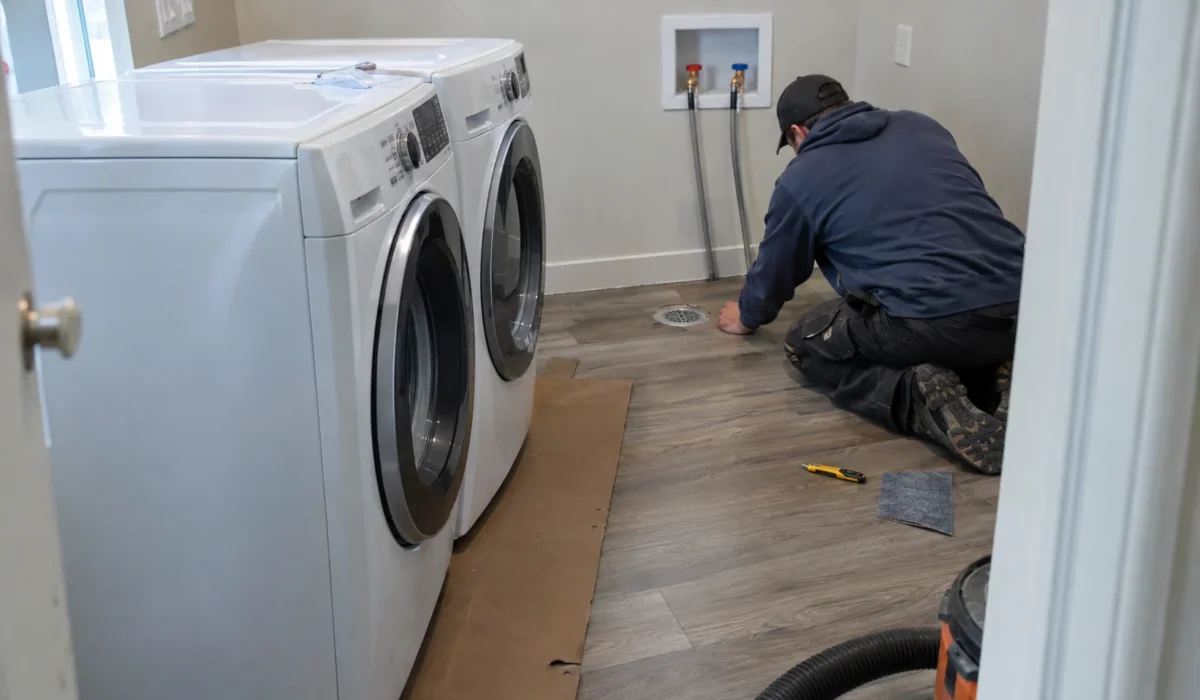
The best flooring for laundry area installs also have to solve four problems that material choice alone does not:
- Run the floor under the appliances. The waterproof surface has to continue under the footprint of the washer and dryer, not stop at the front of them. A leak that starts behind the machine has to hit floor, not subfloor.
- Finished floor height. Build the floor up with a thick mortar bed and the closet doors bind or the machines no longer slide in. Measure before you choose.
- Drain pan and connections. Cut clean around the supply valves, the drain and any recessed washer box, and make sure a drain pan still sits flat.
- Vibration. A washer on a spin cycle is a moving load. A denser SPC core stays flatter under it and runs quieter than a fiberboard core laminate.
Standard laminate is the wrong call here. It is water resistant, not waterproof, and the fiberboard core swells permanently once water reaches a seam. That is why the best flooring for laundry room installs in the DMV is almost always vinyl or tile. Because a laundry room is small, expect a labor minimum rather than a pure per square foot price. Our detailed laundry room flooring guide has the full cost breakdown and the second floor laundry checklist.
Best flooring for staircase
The best flooring for staircase projects is carpet for safety, hardwood for resale value, and 20 mil LVP with a matching stair nose when you want the upstairs floor to run continuously down the stairs. Stairs are the one place in the house where slip resistance is a safety issue rather than a preference, and where the hardware matters more than the plank.
The part every national article names and none of them explains is the stair nosing. A stair nose is the shaped edge piece that caps each tread. On LVP and laminate you need a color matched overlap or flush stair nose from the same product line, ordered at the same time as the flooring, because a mismatched nose is the thing that makes a stair job look cheap. You also need a nose on every tread, at the landing, and at the top riser.
Stairs cost more per square foot than flat floor and are almost always priced per step, because each tread is a custom cut, a riser and a nose. Carpet on stairs typically runs $15 to $55 per step in this market, hard surface more. A carpet runner over hardwood is the compromise that gives you traction on the tread and wood at the edges.
One live disagreement worth knowing about: some installers argue against LVP on stairs because it offers less traction than carpet. It is a fair point in a home with elderly residents or toddlers. In a normal household, a quality 20 mil plank with a proper nose is safe and it is what most DMV homeowners choose when they want one floor throughout. Stairs are priced as an add on in the FIXO instant quote.
Entryways and mudrooms
Porcelain tile or 20 mil LVP. This is where road salt, grit and winter slush arrive, and grit is abrasive, so the finish takes the worst wear in the house here. A walk off mat inside the door extends the life of everything beyond it.
Best flooring for rental property
The best flooring for rental property in the DMV is 20 mil commercial grade rigid core LVP in every room, with carpet only in bedrooms if the unit competes on comfort. This is the one room by room answer that is genuinely unanimous across the industry, and the reasoning is cost per year of service rather than beauty.
Four things make LVP the landlord answer:
- Single plank replacement. A click lock floating floor lets you lift and replace a damaged plank at turnover instead of re flooring the room. Buy 10 percent extra and keep it as attic stock for exactly this.
- One SKU across the portfolio. If every unit has the same plank, one box of spares covers all of them and repairs always match.
- Waterproof survives tenants. Overflowing tubs, failed supply lines and unreported leaks are turnover reality, not exceptions.
- Wear layer is the whole decision. 12 mil is an owner occupied spec. 20 mil is the rental spec. The extra cost is a fraction of one turnover.
Two DMV specifics. Most DC condo boards and many Northern Virginia and Montgomery County HOAs require a minimum sound rating between units before they will approve a hard surface install, so check the bylaws before you buy the material. And homes built before 1978 may have lead paint on the baseboards and asbestos in old vinyl tile, which changes how the existing floor comes up.
What it costs to floor a whole house in 2026
Using the DMV installed ranges above, here is what a whole home project looks like. These figures assume a single material throughout the finished area, standard prep, and no structural repair.
| Home | LVP at $6.50 per sq ft | Engineered hardwood at $12 per sq ft | Laminate at $5 per sq ft |
|---|---|---|---|
| 1,200 sq ft ranch or condo | about $7,800 | about $14,400 | about $6,000 |
| 1,800 sq ft townhome, main and upper | about $11,700 | about $21,600 | about $9,000 |
| 2,400 sq ft colonial | about $15,600 | about $28,800 | about $12,000 |
| 600 sq ft finished basement | about $3,900 | not recommended below grade | not recommended below grade |
Then add the line items that quotes leave out and change orders later:
- Demo and haul away of old carpet and tackstrip: about $0.75 to $1.50 per sq ft
- Self leveling compound where needed: about $2 to $4 per sq ft
- Slab crack repair: roughly $50 to $300 per crack
- Vapor barrier on a slab: about $0.30 to $1.00 per sq ft
- Transitions, thresholds and quarter round: priced per linear foot
- Stairs: priced per step, not per square foot
- Waste factor: order 10 percent extra for a straight lay, 15 to 20 percent for diagonal or herringbone
FIXO prices flat, so the number you see in the instant quote for LVP and laminate is the number you sign, not an estimate that moves once the crew is in the house.
Best flooring for resale value
Hardwood remains the resale leader in the DMV, and it is not close. Buyers in Arlington, Bethesda, McLean and Northwest DC expect wood on the main level, and a listing that has it photographs better and shows better. Refinishing existing hardwood rather than replacing it usually returns more than a new installation, because the cost is a fraction and the result is identical to a buyer.
LVP has closed most of the perception gap in the last five years, especially in townhomes, condos and basements where buyers know hardwood does not belong. Where LVP still costs you money is when a cheap 6 mil plank is installed over an original hardwood floor, which a buyer reads as something being hidden.
If resale inside two years is the goal, the best flooring for house resale in the DMV is refinished existing hardwood on the main level with LVP everywhere hardwood does not belong. The choices that actively hurt resale: carpet on the main level, three or more different flooring materials visible from one spot, standard laminate in a kitchen, and any floor with visible seam separation. Consistency and flow are worth more than any single upgrade.
Second floors, condos and sound ratings
This is the section almost no flooring article includes, and it is the one that gets people stopped by their HOA.
Hard surface over an occupied space transmits impact noise. Footsteps, dropped items and a spinning washer all travel down. Two ratings govern it: IIC, impact insulation class, for impact noise through the floor, and STC, sound transmission class, for airborne noise. Most condo and HOA bylaws in the DMV set a minimum in the IIC 50 to 55 range for any hard surface installation, and many require the installation to be approved in advance.
What this means practically. If you live in a DC condo, a Rockville or Silver Spring high rise, or a stacked townhome, ask your association for the flooring specification before you pick a product, then buy an acoustic underlayment rated to meet it. An attached pad on a budget plank usually will not hit the number on its own. On a wood joist second floor in a single family home there is no rule, but the same underlayment is what keeps the upstairs hallway from sounding like a drum.
Carpet remains the quietest floor by a wide margin, which is one more argument for it in bedrooms above living space.
Five mistakes that ruin a good floor
- Skipping the moisture test. Installing over an untested slab is the number one cause of failure in DMV basements and slab built townhomes. The test costs a fraction of the floor.
- Ignoring flatness. A locking joint bridging a dip will separate. Manufacturers specify roughly 3/16 inch over 10 feet for a reason, and no product is forgiving enough to make that go away.
- No acclimation and no expansion gap. Wood and laminate need 48 to 72 hours in the space at normal living conditions, and every floating floor needs about 1/4 inch of expansion gap at every wall and vertical object. Trap it and it buckles.
- Buying on price per square foot alone. A 6 mil wear layer and a 20 mil wear layer sit on the same rack looking identical. One of them is a ten year floor.
- Hiring on price alone with no written workmanship warranty. Ask what is warranted, for how long, and who does the work. Subcontracted day labor and a verbal promise is how a cheap quote becomes an expensive floor.
Where FIXO fits
Choosing the best flooring for house projects is only half the job. The other half is the installation, and that is where most floors are actually won or lost. FIXO is an installer owned flooring company serving Northern Virginia, Maryland and Washington DC. We install LVP, laminate, engineered hardwood and tile with our own crews, not subcontracted day labor, and we are licensed and insured in Virginia, Maryland and DC.
Two things make a FIXO job different. The price is fixed: the number you sign is the number you pay, and the instant price estimator gives you that number for LVP and laminate in about 60 seconds rather than after three showroom visits. And most homes are installed in one to two days, with an express measurement inside 48 hours.
We work across 18 cities including Alexandria, Arlington, Fairfax, McLean, Vienna, Reston, Ashburn, Falls Church, Bethesda, Silver Spring and Washington DC. You can see every flooring installation service we offer, with fixed pricing, in one place.
Frequently asked questions
What type of flooring is best for an entire house?
Rigid core luxury vinyl plank with a 20 mil wear layer is the best flooring for house wide installation. It is the only common material that is waterproof, works above and below grade, and handles the DMV humidity swing without cupping. Engineered hardwood is the better whole house choice if every room sits on a wood joist subfloor and resale value is the priority.
What is the most durable type of flooring?
Porcelain tile, by a wide margin. Rated PEI 3 or higher it lasts 50 years or more and is effectively impervious to water. The tradeoffs are that it is cold and hard underfoot, it is the most expensive common floor to install at $10 to $22 per square foot in the DMV, and it needs a flat, non deflecting subfloor.
What is the best flooring for a living room?
Engineered hardwood for resale value or 20 mil rigid core LVP for durability at a lower installed cost. Run the planks toward the main light source, carry the same floor through any open plan connection to the kitchen, and use an area rug rather than wall to wall carpet for warmth and sound.
What is the best flooring for bedrooms?
Carpet over a 6 to 8 pound density pad if you want warmth and quiet, or engineered hardwood if allergies or resale matter more. Bedrooms are low traffic, so comfort and indoor air quality are better criteria than scratch resistance. Look for FloorScore or CRI Green Label Plus certification.
What is the best flooring for a laundry room?
Waterproof rigid core LVP for most homes, porcelain tile where you want maximum durability. Just as important as the material: run the waterproof floor under the washer and dryer footprint, check that the finished floor height still lets the doors close and the machines slide in, and cut clean around the supply valves and drain pan.
What is the best flooring for uneven floors?
Rigid core SPC luxury vinyl plank as a floating floor, after the low spots are filled. First work out whether the floor is out of level, out of flat or deflecting. Only out of flat needs self leveling compound, at roughly $2 to $4 per square foot in the DMV. A bouncy floor is a joist problem and no flooring product fixes it.
What is the best flooring for a staircase?
Carpet is the safest, hardwood holds the most resale value, and 20 mil LVP with a matching stair nose is the right answer when you want one continuous floor. Order the color matched stair nosing with the flooring, and expect stairs to be priced per step rather than per square foot.
What is the best flooring for a rental property?
20 mil commercial grade rigid core LVP throughout, with carpet only in bedrooms. Click lock LVP lets you replace a single damaged plank at turnover, buying one product across a portfolio means repairs always match, and the waterproof core survives the leaks tenants do not report. Check your HOA or condo sound requirement first.
How much does it cost to floor a whole house in Northern Virginia, Maryland or DC?
Installed in 2026, budget about $7,800 for a 1,200 square foot home in LVP, about $11,700 for an 1,800 square foot townhome, and about $15,600 for a 2,400 square foot colonial. Engineered hardwood roughly doubles those figures. Demo, leveling, transitions and stairs are separate line items. Get your own fixed number in 60 seconds with the FIXO instant quote.
Do I need to test a concrete slab before installing flooring?
Yes, on any slab, including one that looks dry. Use an ASTM F2170 in situ relative humidity probe, typically capped at 85 percent for vinyl adhesives and 75 to 80 percent for wood, or an ASTM F1869 calcium chloride test capped at 3 to 5 pounds per 1,000 square feet in 24 hours. Skipping this is the most common cause of floor failure in DMV basements and slab built townhomes.
 4.9 on Google14 reviews
 Licensed & InsuredVirginia · Maryland · Washington, D.C.
 Workmanship GuaranteedInstallation backed in writing
 Locally OwnedServing NoVA, MD & D.C.