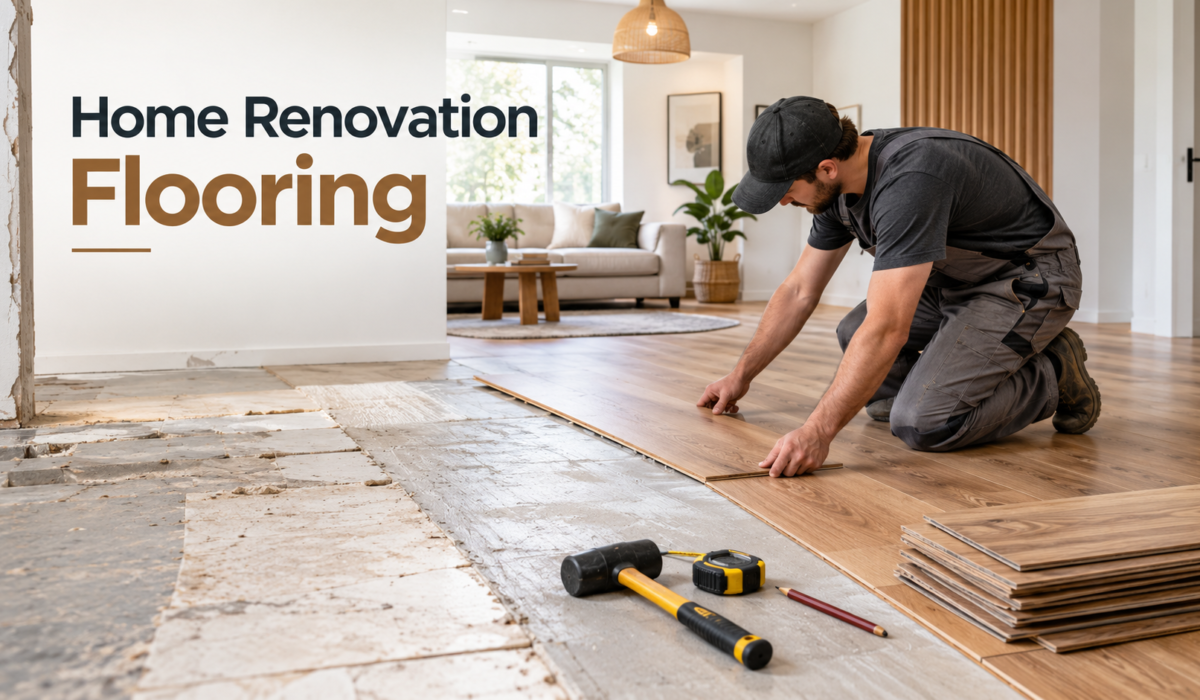
Home renovation flooring is the one decision that touches every other part of a remodel. It sets the finished height of the doors, the look of every room, the schedule for the painters and cabinet crew, and a large slice of the budget. Get it right and the rest of the renovation falls into place. Get it wrong and you pay for it twice.
This guide is written from the installer side. FIXO installs luxury vinyl plank, laminate, engineered hardwood, and tile across Northern Virginia, Maryland, and Washington DC, usually in one to two days at a fixed price. We also spend a lot of time telling homeowners that they do not need new floors yet, so this guide covers flooring repair honestly, including the point where repair stops making financial sense.
Quick answer: For most home renovation flooring projects in the DMV, waterproof luxury vinyl plank or laminate gives the best mix of durability, speed, and installed cost at roughly $5 to $9 per square foot. Repair the existing floor if less than 30 percent of it is damaged and the subfloor is sound. Replace it if damage is wider, the subfloor is wet, or you are already renovating the room.
What home renovation flooring means for your budget and timeline
Flooring is usually 10 to 20 percent of a whole home renovation budget, but it controls far more than that share suggests. Three things make it different from choosing paint or fixtures.
It is a finished height, not just a finish. Every floor has a thickness. Tile over backer board can add three quarters of an inch. Click lock vinyl adds a quarter inch. Doors, transitions, dishwasher openings, and stair nosings all depend on that number, so it has to be decided before cabinets and trim go in.
It is on the critical path. Painters need the floor protected or not yet installed. Cabinet installers need the finished floor height. Plumbers need the toilet flange set to the new surface. When flooring slips a week, four other trades slip with it.
It is the surface you live on. Countertops get touched. Floors get walked, dragged, spilled on, and scratched by pets every single day for 15 to 25 years. Durability matters more here than anywhere else in the house.
So before you fall in love with a color sample, answer three questions: which rooms are in scope, what is under the current floor, and are you replacing everything or repairing part of it.
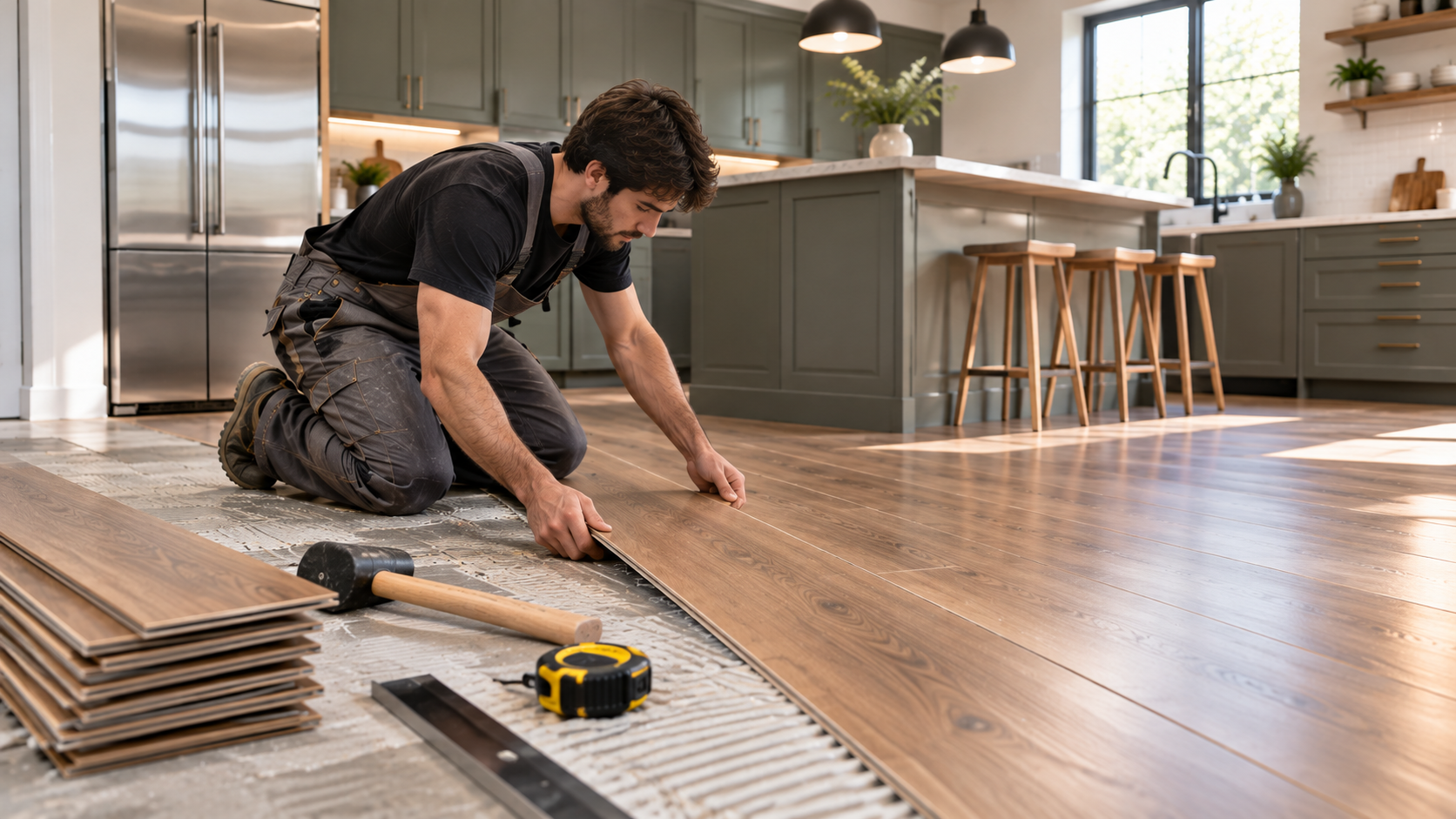
Flooring repair or replacement: the 30 percent rule
The most useful rule in flooring repair comes from restoration contractors, and it holds up on real jobs. If less than 30 percent of a floor is damaged and the subfloor beneath it is dry and solid, repair is almost always cheaper. Past 30 percent, patching costs climb toward the cost of a full replacement, and you end up with a patched floor instead of a new one.
Signs a flooring repair will work
- Damage is local: one water stain by the fridge, a few scratched boards in a hallway, three cracked tiles by the door
- The subfloor is dry. Push a screwdriver into it near the damage. If it is firm, you are in good shape
- You can still buy matching material, or you have leftover boxes from the original install
- The floor is less than 10 years old and the finish elsewhere is still in good condition
- You are not renovating the rest of the room
Signs you should replace instead
- Damage covers more than a quarter of the room or shows up in several rooms
- The floor moves, bounces, or feels soft anywhere, which points to subfloor or joist problems
- Cupped or crowned wood across a wide area, which means a moisture problem below the floor
- Laminate with swollen seams. Laminate core cannot be dried back to flat
- You are already remodeling the kitchen or bathroom. Repairing an old floor around new cabinets locks in a floor you would have replaced two years later anyway
Flooring repair cost by material (2026)
Professional floor repair runs $500 to $3,000 for most jobs, with the national average around $1,100. The layer needing work drives the price far more than the material does. Typical ranges pulled from Angi, HomeGuide, and HomeAdvisor 2026 data:
| Material | Typical repair range | Common repair | Replace instead when |
|---|---|---|---|
| Luxury vinyl plank | $300 to $1,850 | Swap individual planks, reseat lifted edges | Widespread lifting from a bad subfloor |
| Laminate | $350 to $1,600 | Replace swollen boards from the nearest wall | Swelling in more than a few boards |
| Tile | $275 to $650 | Replace cracked tiles, regrout | Cracks follow a line across the floor |
| Hardwood | $480 to $1,700 | Board replacement, spot sanding, refinish | Wear layer too thin to sand again |
| Subfloor | $500 to $1,200 per room | Cut out and replace wet sections | Damage reaches joists |
| Joists | $2,000 to $10,000 | Sistering or replacement | Always a structural job with a permit |
Two things the tables never say. First, matching is the hidden cost. A replacement hardwood board is easy; blending its stain into 15 years of sunlight and wear is the expensive part. Second, a laminate repair often means unclicking every board between the wall and the damage, which is why a small laminate patch can cost more than a small vinyl patch.
Best home renovation flooring options ranked
For DMV homes, four materials cover almost every renovation. Carpet is a comfort choice for bedrooms rather than a renovation workhorse, and we rarely recommend solid hardwood over a slab or in a wet room, so neither is ranked here. For the full room by room comparison, our guide to the best flooring for a house goes deeper on each material.
| Material | Installed cost (DMV, per sq ft) | Waterproof | Lifespan | Best renovation use |
|---|---|---|---|---|
| Waterproof luxury vinyl plank | $5 to $9 | Yes | 15 to 25 years | Kitchens, basements, whole floor runs, rentals |
| Laminate (AC4 or higher) | $4 to $8 | Water resistant, some fully waterproof cores | 15 to 25 years | Living areas, bedrooms, hallways |
| Engineered hardwood | $9 to $16 | No | 25 to 40 years | Main living levels where resale value matters |
| Porcelain tile | $10 to $22 | Yes | 40 years plus | Bathrooms, mudrooms, laundry |
1. Waterproof luxury vinyl plank
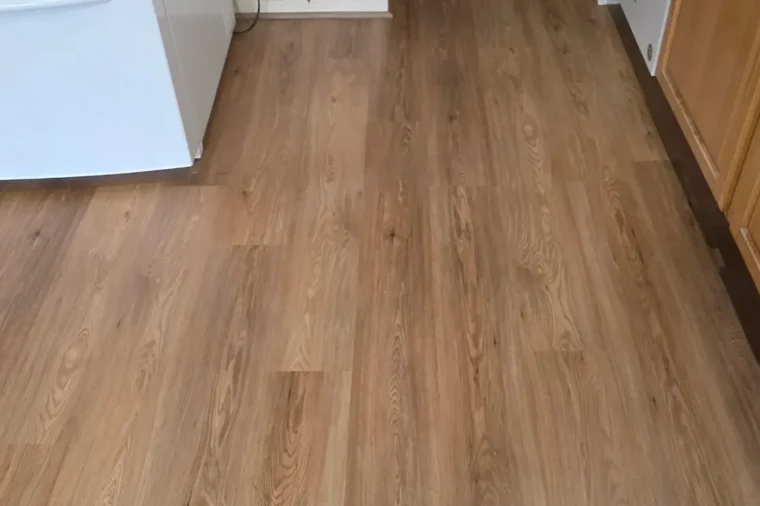
LVP is the default home renovation flooring choice for a reason. A rigid core will not swell if the dishwasher leaks, it goes over a flat slab without a wood subfloor, and one product can run from the front door through the kitchen and down to the basement with no transitions. Look for a 20 mil wear layer or thicker in kitchens and entries, 12 mil is fine in bedrooms. Our LVP flooring installation page lists the products and fixed prices we work with.
2. Laminate
Laminate wins on looks per dollar. The photographic layer and embossed texture in a good AC4 laminate are hard to tell from real wood at standing height, and it takes scratches from dogs better than most engineered hardwood. The tradeoff is water. Standard laminate has a wood fiber core that swells when water sits in a seam, so keep it out of bathrooms and laundry rooms unless the product is rated waterproof. See our laminate flooring installation service for the cores we install and where each one belongs.
3. Engineered hardwood
Real wood on top, plywood layers underneath. It moves less than solid hardwood, so it works over slabs and in the humidity swings we get between a Fairfax August and a January cold snap. Thicker veneers (3 mm or more) can be refinished once or twice. Appraisers and buyers still treat it as hardwood, which matters if the renovation is partly about resale.
4. Porcelain tile
Nothing beats porcelain in a bathroom or a mudroom. It is fully waterproof, it does not care about heat, and it will outlast every other floor in the house. It is also the least forgiving to install: subfloor flatness, deflection, and mortar coverage all have to be right or tiles crack within a year. We wrote up the nine tile flooring installation mistakes we get called to fix most often.
Choosing renovation flooring room by room
A whole home renovation does not need one floor everywhere, but it should not need six either. Two materials, sometimes three, is the sweet spot.
Kitchen: waterproof LVP or porcelain tile. Set the finished height before the dishwasher goes in. A floor that runs under the dishwasher can trap it in place forever.
Living room, dining, hallways: LVP, laminate, or engineered hardwood. Run the same product through all three so the sightlines stay clean.
Bedrooms: laminate or LVP. Lower wear layer requirements, so this is where the budget can relax.
Bathrooms and laundry: porcelain tile or waterproof LVP with sealed perimeter gaps. Never standard laminate.
Basement: waterproof LVP over a tested slab. Tape a square of plastic to the concrete for 24 hours. If the underside is wet, fix the moisture before the floor goes down.
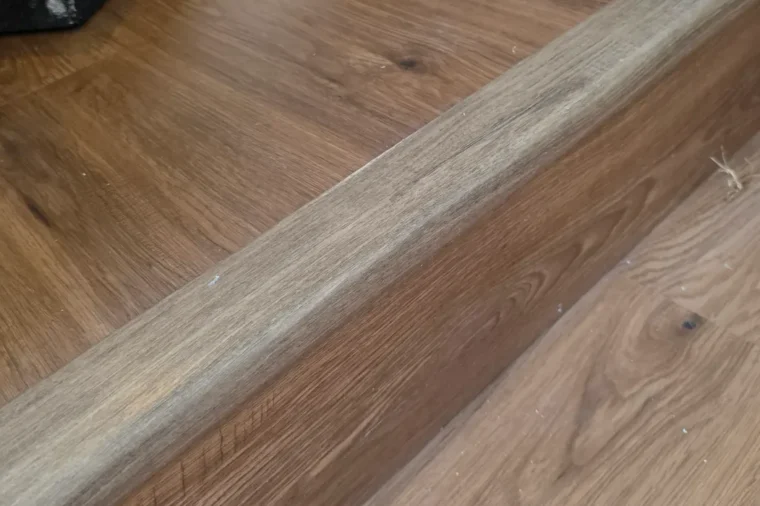
Stairs: match the adjacent floor with proper stair nosing rather than leaving old carpet on the steps. It is the most visible spot in a renovation and the most often skipped.
The subfloor: what your home renovation flooring actually depends on
Every flooring warranty is really a subfloor warranty. Manufacturers require the substrate to be flat within 3/16 of an inch over 10 feet for click lock floors, and tighter for tile. Most DMV homes built between 1960 and 2000 miss that number somewhere.
When the old floor comes up, this is what a good installer checks before the new one goes down:
- Flatness. Highs get ground or sanded, lows get filled with patch or self leveling compound. This is the single biggest difference between a floor that lasts and one that clicks and gaps within a year
- Moisture. Wood subfloors should read under 12 percent, and within 2 to 4 points of the new flooring. Slabs need a moisture test before any wood or laminate product
- Squeaks. Screw the subfloor to the joists now. It is a five minute job with the floor up and impossible afterward
- Soft spots. Any give under foot means cutting out and replacing that section of plywood or OSB
- Old adhesive. Cutback and old vinyl glue can bleed through new vinyl. It gets scraped or sealed
Budget roughly $1 to $3 per square foot for prep on an average home, more if there is water damage. If a quote does not mention subfloor prep at all, ask why.
How to sequence flooring in a whole home renovation
The order matters. This is the sequence we ask general contractors and homeowners to follow, and it prevents most of the change orders we see.
- Demolition and rough trades. Old floors out, plumbing and electrical moved, subfloor repaired and flattened.
- Drywall and ceilings. All the dust producing work finishes before the floor arrives.
- Cabinets and built ins, unless the floor runs under them. Standard practice with floating floors (LVP, laminate) is to install cabinets first and run the floor to them, so the floor can expand. Tile and glue down floors often go under.
- Prime and first coat of paint. Painters work faster with no floor to protect.
- Flooring. Material acclimates in the house for 48 hours first, then install. Most FIXO jobs finish in one to two days.
- Baseboards, shoe molding, and transitions. Trim goes on after the floor so it covers the expansion gap.
- Final coat of paint and touch ups.
- Appliances, toilets, and furniture. The toilet is the last thing back in a bathroom, on a flange set to the new floor height.
Skipping step 1 or moving step 5 earlier is where budgets break. Floors installed before drywall get scratched, floors installed before the subfloor is flat get replaced.
Home renovation flooring cost in Northern Virginia, Maryland, and DC
Typical installed prices in the DMV market in 2026, including material, labor, underlayment, and basic transitions:
| Project | Typical range | Notes |
|---|---|---|
| One room, 200 sq ft, LVP | $1,000 to $1,800 | Small room minimums apply at most installers |
| Main level, 800 sq ft, LVP or laminate | $4,000 to $7,200 | The most common whole level job we see |
| Main level, 800 sq ft, engineered hardwood | $7,200 to $12,800 | Add for stairs |
| Bathroom, 60 sq ft, porcelain tile | $900 to $1,500 | Includes backer board and waterproofing |
| Removal of old flooring | $1 to $3 per sq ft | Tile removal is the top of the range |
| Subfloor prep | $1 to $3 per sq ft | More for water damage |
| Stairs | $75 to $150 per step | Depends on material and nosing |
Compare that to the flooring repair ranges above and the decision usually becomes clear. A $1,200 repair on a 12 year old laminate floor in a kitchen you are about to remodel is money spent on a floor with three years left. A $600 tile repair in an otherwise sound bathroom is money well spent.
FIXO prices are fixed and shown online. Enter your rooms and material on the instant quote estimator and you get a number in about a minute, before anyone visits the house.
Home renovation flooring mistakes we get called to fix
Choosing the floor last. Finished height decides the door undercuts, the dishwasher clearance, and the toilet flange. Pick the floor first, even if you install it late.
Ignoring the subfloor to save money. A $500 saving on prep becomes a $4,000 replacement when the floor gaps.
Standard laminate in a wet room. The seams swell, the boards lift, and there is no repair.
No expansion gap. Floating floors need a quarter inch at every wall and fixed object. Trim covers it. Without it, the floor buckles in July.
Mixing four materials. Every transition strip is a trip point and a visual break. Fewer materials read as a bigger, calmer home.
Buying exactly enough. Order 10 percent extra, and keep a box. That leftover box is what makes a future flooring repair cost $150 instead of a full replacement when the product is discontinued.
Skipping acclimation. Two days in the house at normal temperature and humidity. Boards installed cold from a truck shrink and gap.
Where FIXO fits
FIXO installs LVP, laminate, engineered hardwood, and tile for homeowners and renovation contractors across Northern Virginia, Maryland, and DC. Fixed online pricing, materials included, most homes done in one to two days, with subfloor prep and transitions written into the quote instead of added on site.
We do not push a replacement when a repair will do. If you send photos of the damage, we will tell you which side of the 30 percent line you are on. You can see our credentials, service area, and reviews on our Centreville business listing on BizMakers America, or call (757) 589 6859.
Frequently asked questions about home renovation flooring
Should flooring be installed before or after cabinets in a renovation?
Floating floors like LVP and laminate usually go in after cabinets, running up to the cabinet base with an expansion gap, so the floor can move freely. Tile and glue down floors are often installed first, under the cabinets. Either way, decide the finished floor height before cabinets are ordered so dishwasher and toe kick clearances are correct.
Is it cheaper to repair or replace flooring?
Repair is cheaper when less than 30 percent of the floor is damaged and the subfloor is dry. Most professional flooring repair jobs cost $500 to $3,000. Once damage spreads past that line, or the subfloor is wet, patching approaches the cost of a new floor, and replacement gives you a full warranty and a uniform finish instead of a visible patch.
What is the best flooring for a whole house renovation?
Waterproof luxury vinyl plank is the most versatile home renovation flooring for a whole house because one product can run through the kitchen, living areas, bedrooms, and basement with no transitions. Pair it with porcelain tile in bathrooms if you want a tile look in wet rooms. Engineered hardwood is the upgrade for main levels when resale matters.
How long does home renovation flooring take to install?
Material needs 48 hours in the house to acclimate. After that, a typical main level of 800 square feet in LVP or laminate takes one to two days, including removal of the old floor and subfloor prep. Tile takes longer, usually two to four days for a bathroom, because mortar and grout need curing time between stages.
Can you repair laminate flooring that has water damage?
Only if the damage is limited to a few boards and the core has swollen slightly. Because laminate locks together, the installer unclicks boards from the nearest wall back to the damage, replaces them, and reassembles. If swelling is widespread, or the subfloor beneath is wet, the floor cannot be dried flat and replacement with a waterproof product is the better repair.
How much does flooring repair cost in Northern Virginia?
Expect $300 to $1,850 for vinyl, $350 to $1,600 for laminate, $275 to $650 for tile, and $480 to $1,700 for hardwood, based on 2026 regional and national data. Subfloor repair adds $500 to $1,200 per room. Matching discontinued material is the biggest wild card, so keep leftover boxes from any installation.
Does new flooring add value to a home renovation?
Yes. Flooring is one of the first things buyers and appraisers notice, and dated or damaged floors are a common reason offers come in low. Hardwood and engineered hardwood carry the strongest resale perception, but a clean, consistent waterproof LVP through a main level returns most of its cost in the DMV market and photographs well in listings.
Final Thoughts
Home renovation flooring works best when it is decided early, installed late, and built on a subfloor that has been checked, not assumed. Repair what is worth repairing, replace what is not, and keep the number of materials small. Do that and the floor will outlast the rest of the renovation.
 4.9 on Google14 reviews
 Licensed & InsuredVirginia · Maryland · Washington, D.C.
 Workmanship GuaranteedInstallation backed in writing
 Locally OwnedServing NoVA, MD & D.C.