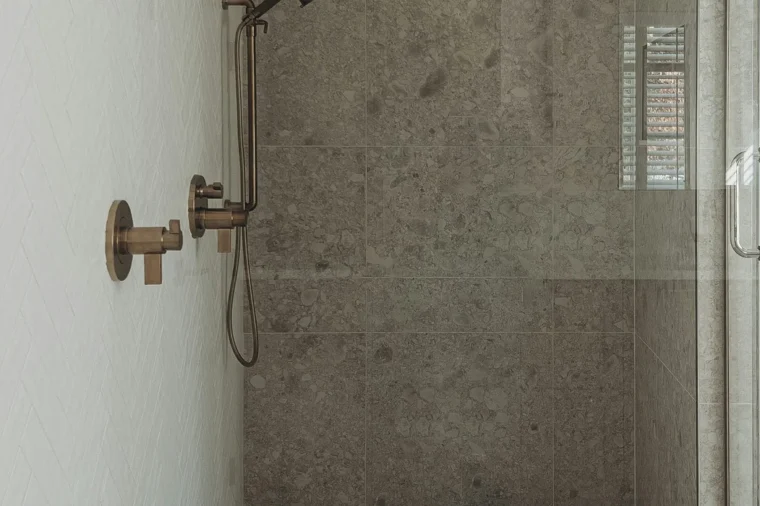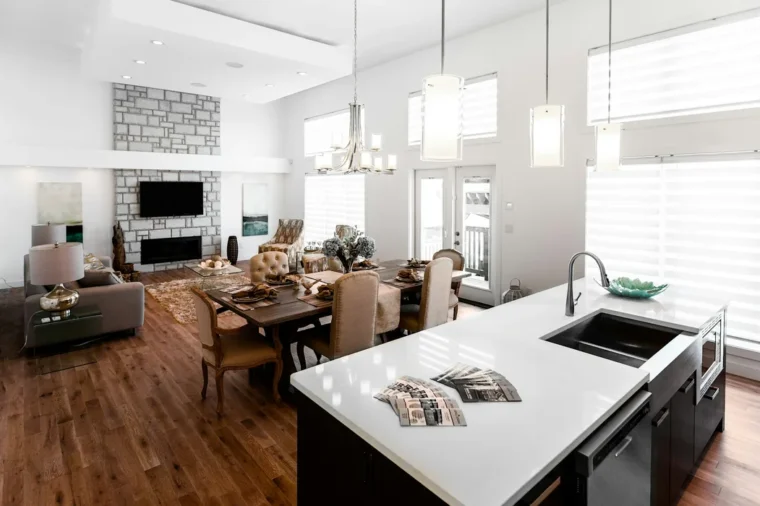
The most popular kitchen countertop materials are quartz, granite, marble, butcher block, laminate, solid surface and porcelain. Quartz is the low-maintenance all-rounder, granite handles heat best among common stones, marble looks beautiful but etches, wood is warm but needs oiling, and laminate is the budget pick. The best choice depends on how hard you cook, how much care you will give it and where in the kitchen it goes.
This buyer’s guide is built around one comparison matrix. Start with the table, read the profile of each material you are considering, then use the head-to-head and the cook-type picks to narrow it down to one or two.
Alvin put this guide together for FIXO, whose kitchen renovation crews install cabinets, countertops and backsplashes on one schedule. Care figures come from manufacturer and fabricator guidance, and the installation notes reflect how we sequence kitchens.
What this buyer’s guide covers
Key takeaways
- Quartz needs no sealing, but its maker says to keep hot pans off it with trivets.
- Granite takes high heat and resists scratches, but most fabricators suggest resealing it regularly.
- Marble always etches from acids such as lemon juice and vinegar.
- Butcher block and laminate are the friendliest on budget, with clear trade-offs.
- Countertops are templated after cabinets are installed, so pick the sink and faucet first.
Kitchen countertop materials: comparison matrix
This table rates the seven kitchen countertop materials on the things that matter day to day. Cost is shown as relative levels, from $ to $$$$, because installed prices vary widely by slab, thickness and edge. The quartz vs granite matchup gets its own table further down.
| Material | Heat | Scratches | Stains | Sealing | Repairable | Relative cost |
|---|---|---|---|---|---|---|
| Quartz | Use trivets | Good | Very good | None | Limited | $$$ |
| Granite | Excellent | Very good | Good when sealed | Periodic | Hard | $$ to $$$ |
| Marble | Good | Fair | Fair, etches | Periodic | Can be honed | $$$ to $$$$ |
| Butcher block | Poor | Fair, shows cuts | Fair | Oil regularly | Very, sand and oil | $ to $$ |
| Laminate | Poor | Fair | Good | None | Rarely | $ |
| Solid surface | Fair | Fair | Good | None | Yes, scratches buff out | $$ |
| Porcelain slab | Very good | Very good | Very good | None | Edges chip, hard to fix | $$$ |
Ratings are general comparisons between kitchen countertop materials, not lab results. Individual products vary, so always read the care and warranty sheet for the exact slab you choose.
The 7 materials, one by one
Each profile below covers one of the kitchen countertop materials: what it is, what it is best for and what to watch out for.
1. Quartz (engineered stone)
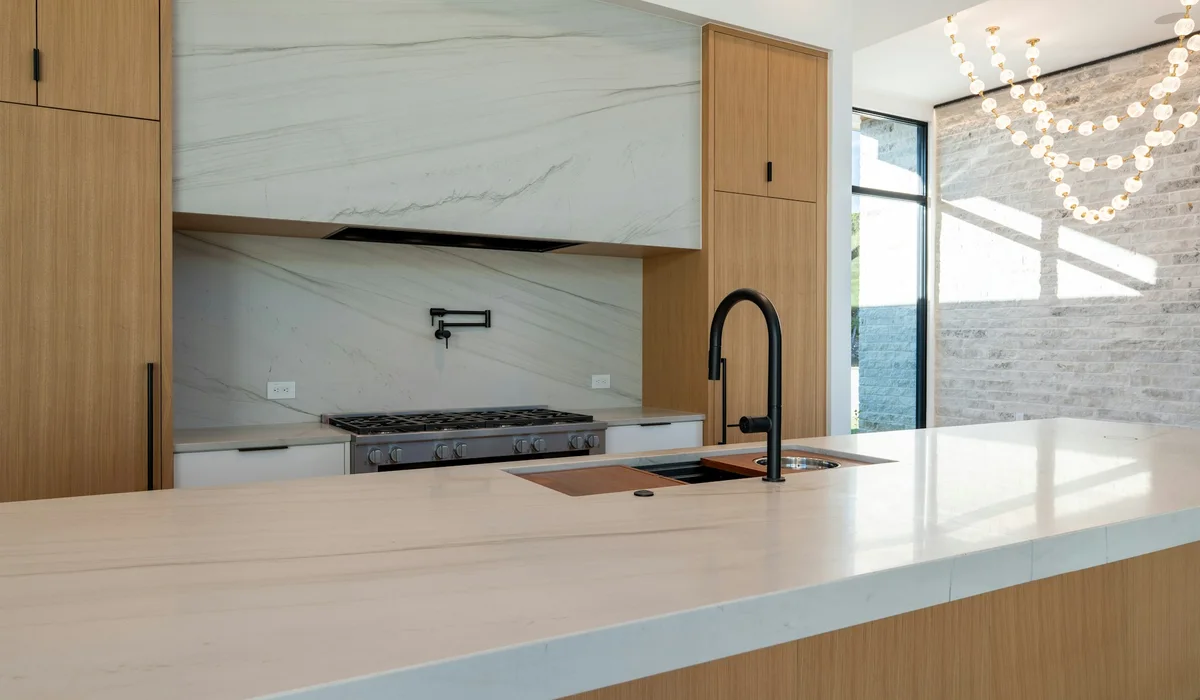
Quartz is made from crushed stone bound with resin and pigments, then pressed into slabs. It comes in a huge range of colors, including marble looks with soft veining. Because it is nonporous, it does not need sealing.
The Caesarstone care guide tells owners to put hot cookware on trivets, because sudden or prolonged heat can damage the surface, especially near edges. It also lists harsh products to avoid, such as oven cleaner, acetone and paint stripper, and advises always using a cutting board.
Best for: busy kitchens that want a consistent look with almost no upkeep. Watch out for: hot pans straight from the stove and harsh chemical cleaners.

2. Granite
Granite is natural stone, quarried and cut into slabs, so every piece is different. It is hard and heat resistant. A granite maintenance sheet from the International Surface Fabricators Association calls it heat resistant for all kitchen purposes and rates it 7 on the Mohs hardness scale.
The same sheet gives a rule of thumb of sealing every 6 to 12 months, while noting that fabricators set their own guidelines. It recommends cleaners close to neutral pH and warns that, while scratches are rare, they are very hard to repair.
If quartz vs granite is your shortlist, granite is the more forgiving of heat.
Best for: serious cooks and anyone who wants natural stone with real toughness. Watch out for: acidic cleaners, skipped sealing and very busy patterns that clash with tile.
3. Marble
Marble is softer natural stone prized for its veining. The ISFA sheet notes that all marble is vulnerable to acids, which leave dull spots called etching, and that marble needs a cutting board every time. Lemon juice, wine, tomato sauce and vinegar-based cleaners all etch it.
Some owners accept the wear as character; others are frustrated by it. A honed finish hides etching better than a polished one.
Best for: bakers, who like its cool surface, and owners who welcome patina. Watch out for: acids, knives and expectations of a showroom finish forever.
4. Butcher block
Butcher block is strips of hardwood glued into a slab. It brings warmth that stone cannot, and it is one of the few surfaces you can sand and refinish at home.
It needs regular oiling, and water left near a sink can stain or raise the grain. Hot pans scorch it. Many homeowners use wood on an island or a baking station and a harder surface around the sink and range.
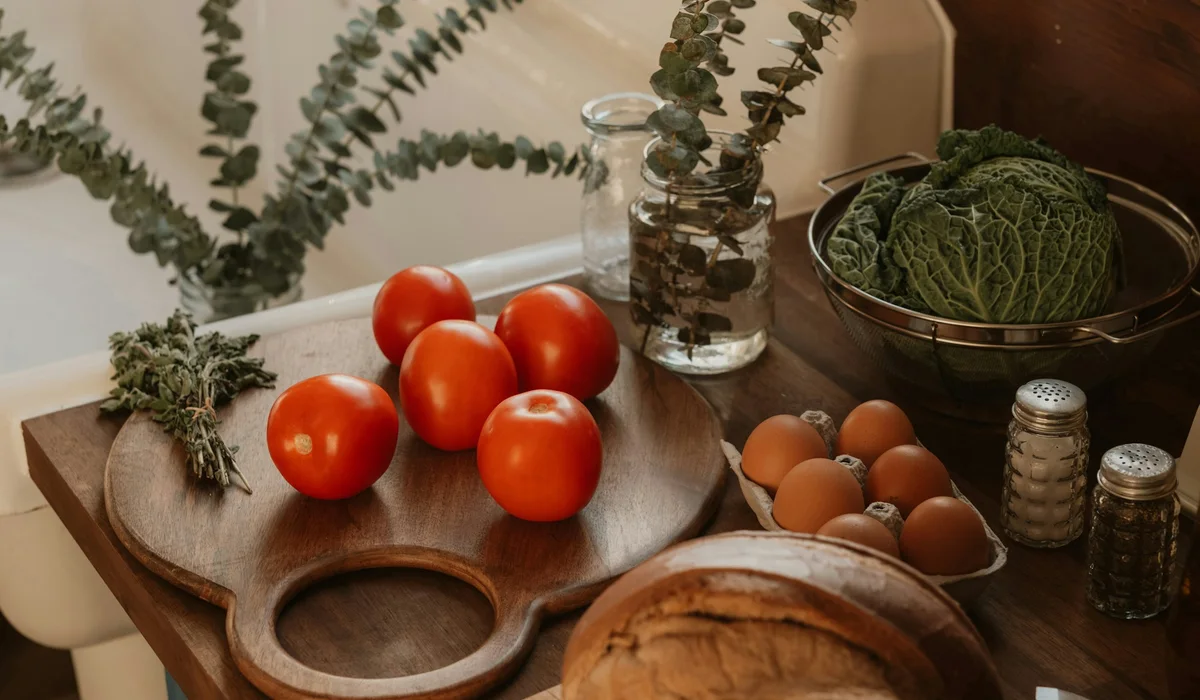
Best for: islands, coffee bars and cottage or farmhouse styles. Watch out for: standing water and a busy cooktop zone.
5. Laminate
Laminate is a printed decorative layer bonded to particleboard. Modern patterns imitate stone and wood far better than older versions did, and it is the lowest-cost option.
It is sensitive to heat, and seams and edges can lift if water gets underneath. Deep chips and burns are hard to repair, so damage usually means replacement.
Best for: rentals, laundry rooms and tight budgets. Watch out for: hot pans, standing water at seams and undermount sinks, which most laminate tops cannot take.
6. Solid surface
Solid surface is an acrylic or polyester material, sold under several brand names. It can be joined with nearly invisible seams and formed into integrated sinks. Its main advantage is repairability: light scratches can usually be buffed out.
It is softer than stone and can be marked by hot pans, so trivets matter here too.
Best for: joint-free looks, integrated sinks and households that want easy repairs. Watch out for: heat and sharp knives.
7. Porcelain slab
Large-format porcelain slabs are fired clay, printed with stone, concrete or wood looks. They resist heat, scratches and stains very well and are relatively thin.
The weak point is the edge. Porcelain can chip if hit with a heavy pot, and repairs are difficult. It also needs a fabricator who works with it regularly.
Best for: modern kitchens, outdoor kitchens and heavy cooks. Watch out for: edge impacts and inexperienced fabricators.
Quartz vs granite: head to head
Quartz vs granite is the comparison most homeowners end up making, because both suit busy kitchens and sit in similar price bands. This table puts the differences side by side.
| Point | Quartz | Granite |
|---|---|---|
| Origin | Engineered from crushed stone and resin | Natural stone, each slab unique |
| Look | Consistent, wide color range | Natural variation and movement |
| Sealing | Not needed | Periodically, per fabricator |
| Heat | Use trivets for hot pans | Handles kitchen heat well |
| Scratches | Use a cutting board | Very hard, scratches rare |
| Cleaning | Mild cleaner, avoid harsh chemicals | Neutral pH, avoid acids |
| Choosing a slab | From samples | Best chosen in person at the yard |
In short, pick quartz if you want a uniform look and no sealing, and pick granite if you cook with lots of heat and like natural variation. For many people the quartz vs granite decision comes down to looks once they have seen full slabs side by side.

Best countertop for kitchen use, by cook type
There is no single best countertop for kitchen use in every home. Match the best countertop for kitchen use to how the room is really used.
| If you are… | Consider | Why |
|---|---|---|
| A heavy, high-heat cook | Granite or porcelain | Handle heat and scratches well |
| A family with young kids | Quartz | No sealing, resists stains from juice and markers |
| A baker | Marble on a baking station, quartz elsewhere | Cool surface for dough without etching worries everywhere |
| On a tight budget | Laminate or butcher block | Lowest cost, quick to install |
| Preparing to sell | Quartz or granite in a neutral tone | Broad appeal and low upkeep for buyers |
| Wanting a smooth, joint-free look | Solid surface | Invisible seams and integrated sinks |
If you rarely cook, almost any of these kitchen countertop materials will last. If you cook every day, put the toughest surface around the range and sink, where most of the wear happens.
How to choose kitchen countertop materials in 5 steps
Narrowing seven kitchen countertop materials down to one is easier in a fixed order. Work through these steps before you visit a showroom.
- Rank your priorities. Put heat, stains, scratches, upkeep and looks in order. Your top two usually rule out half the list.
- Set a budget band. Use the relative cost column in the matrix to see which kitchen countertop materials fit before falling for a slab.
- Look at full slabs. Samples are small. Natural stone in particular varies across a slab, so see the real piece if you can.
- Test samples at home. Put a drop of lemon juice, oil and coffee on each sample and leave it overnight. It shows how each surface reacts to your habits.
- Check the cabinets and layout. Heavy stone needs level, sturdy boxes, and the layout decides where seams fall. If you are keeping your boxes, see our cabinet refinishing service.
Most people find the best countertop for kitchen life at home is the one that matches their habits, not the one that looked best in a showroom photo.
Questions to ask your fabricator
- Where will the seams fall, and how will the pattern be matched across them?
- Are the sink cutout, faucet holes and edge profile included in the price?
- What thickness is the slab, and is a sub-top needed?
- For granite and marble, which sealer is applied and how often should I reseal?
- If I am still weighing quartz vs granite, can I see full slabs of both before committing?
- What does the warranty cover, and what voids it?
Clear written answers make it easy to compare quotes for different kitchen countertop materials on equal terms.
Mixing materials in one kitchen
Using two kitchen countertop materials is common and often practical. A stone or quartz perimeter with a wood or contrasting island lets you put durability where it is needed and character where people gather. The best countertop for kitchen islands is not always the best one for the sink run.
A few rules keep a mix looking intentional:
- Pick one dominant surface and one accent, not three competing ones.
- Keep the island and perimeter at a clear contrast, either in color or texture.
- Repeat the accent somewhere else, such as open shelves or a range hood trim.
- Match the busiest pattern with the quietest backsplash.
Our kitchen layout ideas guide covers island sizes and clearances, which affect how much of each material you will need.
Edges and thickness
Edge profile and thickness change both the look and the cost of a countertop.
- Eased edge. A square edge with slightly softened corners. Clean, modern and the most common choice.
- Bullnose. Fully rounded. Gentler on hips and less prone to chipping.
- Bevel. An angled top edge that catches light.
- Ogee. An S-shaped profile suited to traditional kitchens.
- Mitered edge. Two pieces joined at the edge to make a slab look much thicker, often used on islands.
Stone and quartz slabs are commonly sold in two thicknesses, often around 2 cm and 3 cm. Thinner slabs may need a plywood sub-top or a built-up edge, so ask your fabricator what their price includes.
Rounded edges are worth a look in homes with young children, because a softened corner is gentler at head height for toddlers. Crisp square edges also show small chips more readily on softer stones, so marble often looks better with a slightly larger radius.

Where countertops fit in a kitchen remodel
Timing matters as much as the material. Stone, quartz and porcelain tops are templated from the installed cabinets, cut in a shop and then installed. That means a few decisions must be locked in early.
- Cabinets installed and level. The template is taken from the real cabinets, not drawings.
- Sink and faucet chosen. The fabricator needs the sink model to cut the opening and the faucet holes.
- Cooktop chosen. A drop-in cooktop needs its cutout dimensions at template time.
- Template, fabricate, install. Expect a gap between template and install while the slab is cut.
- Backsplash after counters. Tile starts once the tops are set.
Plan for the old countertops too. Prying off stone or tiled tops can chip cabinet faces and walls, so if you are keeping the cabinets, ask how the old tops will come off and who repairs any damage.
Our kitchen renovation page explains what goes wrong when each trade books separately: countertops cannot be measured until cabinets are set, and tile setters turn up before the tops exist. One coordinator avoids that. See our kitchen remodel service for how we sequence the trades.
Care cheat sheet
Whichever of the kitchen countertop materials you choose, these habits extend its life.
| Material | Daily care | Avoid |
|---|---|---|
| Quartz | Warm water and mild soap | Hot pans, oven cleaner, acetone, abrasive pads |
| Granite | Neutral pH stone cleaner | Acidic and citrus cleaners |
| Marble | Neutral cleaner, wipe spills fast | Lemon, vinegar, wine left sitting, knives |
| Butcher block | Wipe dry, oil on a schedule | Standing water, hot pans |
| Laminate | Mild soap and water | Heat, water at seams, cutting directly on it |
| Solid surface | Mild soap and water | Hot pans, harsh solvents |
| Porcelain | Mild soap and water | Heavy impacts on edges |
If you are keeping your existing countertops and only updating cabinets, our cabinet painting guide explains how to protect the tops during the work.
Kitchen countertop materials FAQ
What is the most durable kitchen countertop material?
Granite and porcelain are the toughest against heat and scratches, while quartz is the most stain resistant with the least upkeep. The right answer depends on whether heat, stains or maintenance worries you most.
Is quartz or granite better for a kitchen?
In quartz vs granite, quartz wins on low maintenance and consistent color, and granite wins on heat resistance and natural variation. Both suit busy kitchens.
What is the best countertop for kitchen use on a budget?
Laminate is the lowest-cost option, and butcher block is a step up with warmth and repairability. Both work well when you avoid hot pans and standing water.
Does quartz need sealing?
No. Quartz is nonporous, and its makers describe it as virtually maintenance free. Clean it with a mild soap and keep hot pans on trivets.
How often should granite be sealed?
A common rule of thumb is every 6 to 12 months, but fabricators set their own guidance based on the stone. Ask yours when the countertop is installed.
Can I put a hot pan on my countertop?
Granite and porcelain handle kitchen heat well, but even granite can lose polish with excessive heat. Quartz, laminate, solid surface and wood should always get a trivet.
Next step: price your new countertops
If you have found the best countertop for kitchen needs like yours, or are planning cabinets or a full kitchen too, our kitchen renovation team measures once and quotes cabinets, countertops, backsplash and lighting in one fixed price. Start with an instant quote.