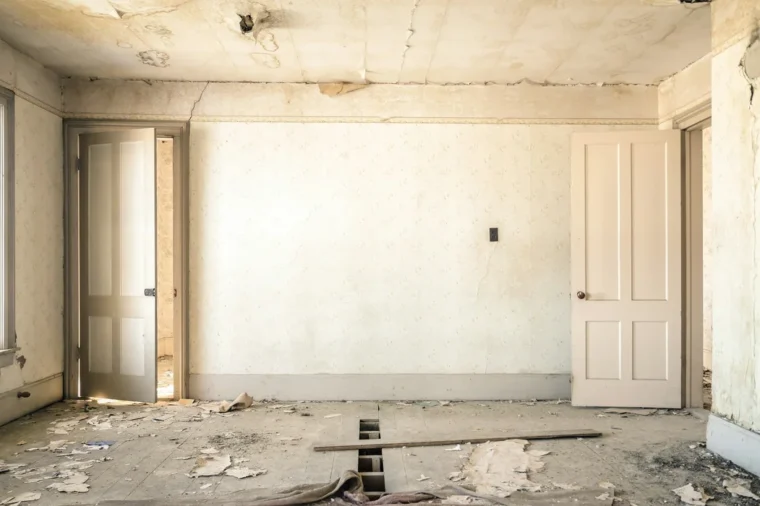
How much paint do I need? Plan on one gallon for roughly 350 to 400 square feet of wall per coat; Benjamin Moore, for example, lists 400 to 450 square feet per gallon for its Regal Select eggshell. A 12 by 14 foot bedroom with 8-foot ceilings has about 366 square feet of paintable wall after a door and two windows, so two coats take a little over two gallons. Use the calculator below for your exact rooms.
Buying the right amount of paint saves a second trip to the store mid-project and avoids a garage full of half-empty cans. It also protects the finish: running short and opening a new batch partway across a wall is how slight color differences show up.
This guide gives you a paint calculator for walls, ceilings and primer, the hand formula behind it, how paint coverage changes with texture and color, quick estimates for common room sizes and how to buy so every wall matches. Alvin wrote it for FIXO, which handles interior painting for homes throughout Northern Virginia, Maryland and DC.
What this paint guide covers
- Paint calculator
- How to calculate by hand
- Calculator settings explained
- Paint coverage per gallon
- How many coats
- When you need primer
- Quick estimates by room size
- Whole-house estimates
- Accent walls, halls and stairwells
- Ceilings, trim and doors
- Buying tips
- Coverage by product type
- Kitchens and bathrooms
- Planning checklist
- Estimating mistakes
- FAQs
Key takeaways
- Wall area = perimeter of the room × ceiling height, minus doors and windows.
- Most interior paints cover about 350 to 400 square feet per gallon per coat on typical walls; check your can.
- Plan on two coats for most repaints, and three for dramatic color changes.
- Prime new drywall, patched areas and stains, and consider tinted primer for big color swings.
- Buy a little extra and mix cans together so the color stays consistent.
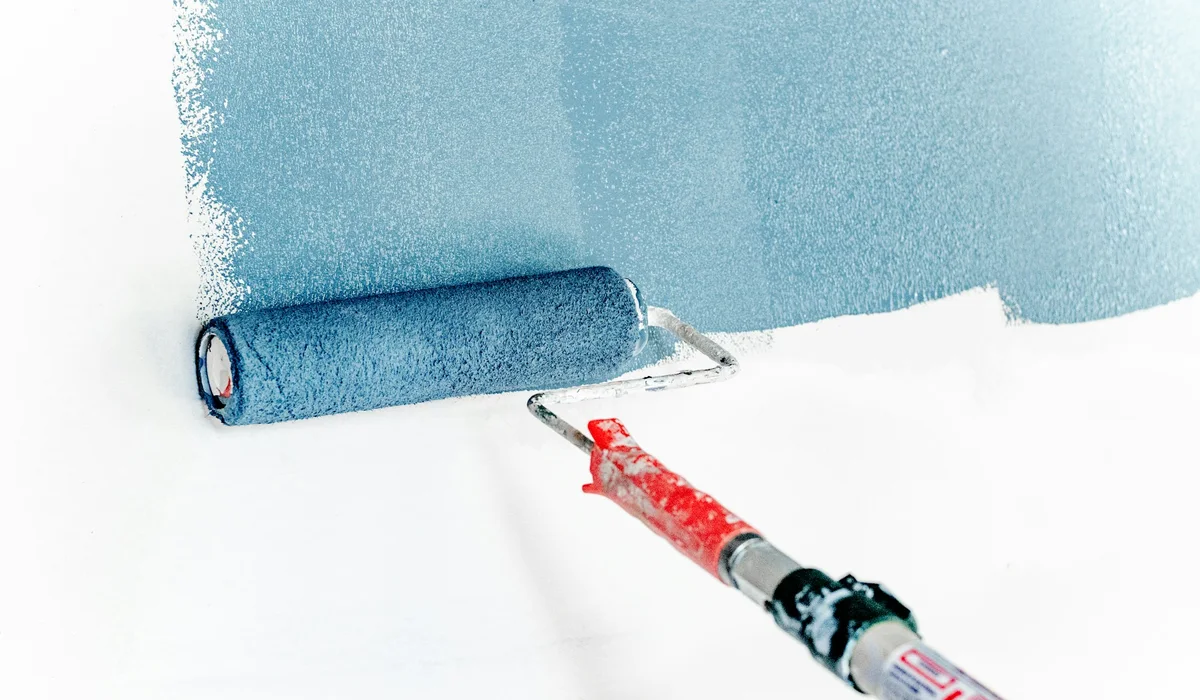
Paint Calculator for Walls, Ceilings and Primer
This paint calculator handles up to three rooms at once. It subtracts about 20 square feet for each door and 15 for each window, then divides by the coverage you choose and rounds up to gallons and quarts.
Paint calculator: how much paint do I need?
The result is a planning number. Paint makers print expected coverage on every can, so compare it with the setting you chose and adjust if your product lists something different.
How to Work Out How Much Paint You Need by Hand
If you prefer a pencil and paper, the math takes about two minutes:
- Add the lengths of all walls to get the perimeter of the room.
- Multiply by the ceiling height to get the total wall area.
- Subtract about 20 square feet per standard door and 15 per average window.
- Multiply by the number of coats.
- Divide by the paint coverage per gallon printed on the can.
Worked example. A 12 by 14 foot bedroom with 8-foot ceilings has a perimeter of 52 feet. 52 × 8 = 416 square feet of wall. Subtract one door (20) and two windows (30) and you have 366 square feet. Two coats make 732 square feet. At 350 square feet per gallon, that is 2.1 gallons; at 400, about 1.8. Buying two gallons plus a quart covers it with a little left for touch-ups.
Paint Calculator Settings Explained
Each option in the paint calculator changes the answer for a reason:
- Ceiling height: taller walls mean more area; a 9-foot ceiling adds about an eighth more wall than an 8-foot one.
- Doors and windows: subtracted at about 20 and 15 square feet each. Big picture windows or sliding doors deserve a larger deduction.
- Coats: two is the default; pick three for strong color changes.
- Wall surface: sets paint coverage at 400, 350 or 300 square feet per gallon depending on texture and condition.
- Ceilings and primer: add separate lines so you can buy ceiling paint and primer in the right amounts.
Paint Coverage per Gallon: What Changes It
The number on the label assumes a smooth, sealed, previously painted surface and normal application. Real-world paint coverage is often lower. Benjamin Moore’s Regal Select eggshell page, for instance, lists 400 to 450 square feet per gallon and one or two coats; many painters plan closer to 350 to stay safe.
| Factor | Effect on coverage |
|---|---|
| Smooth, previously painted walls | Close to the label figure |
| Light orange-peel or knockdown texture | More surface area, so expect lower coverage |
| New or patched drywall | Porous surfaces soak up paint unless primed first |
| Dark over light, or light over dark | Often needs an extra coat or tinted primer |
| Low-quality or very thin paint | Lower hide, so more coats |
| Spraying | Some paint is lost to overspray compared with rolling |
The calculator’s three wall settings, 400, 350 and 300 square feet per gallon, reflect these situations. When in doubt, choose the lower number.
How Many Coats of Paint?
Two coats are the standard for repainting walls. The first coat covers most of the old color; the second evens out sheen, hides roller marks and gives full color depth. FIXO’s interior painting quotes include two finish coats for that reason.
- One coat: refreshing the same color on clean, sound walls.
- Two coats: most repaints and color changes.
- Three coats: dramatic changes, such as covering a deep red or navy with a pale color, or saturated colors such as reds and yellows that hide poorly.
When You Need Primer
Primer seals the surface so the finish coats go on evenly and stick well. Use it on:
- New drywall or skim-coated walls
- Patched and sanded areas, which otherwise “flash” as dull spots through the finish
- Water stains, smoke or marker that can bleed through
- Glossy surfaces such as old oil-based trim
- Big color changes, where a tinted primer can save a finish coat
Spot-priming patches is often enough on otherwise sound walls; the calculator’s primer option assumes a full coat over every surface you select. In homes built before 1978, sanding or scraping old paint can disturb lead, and the EPA lead renovation rule sets lead-safe practices for contractors doing that work.

How Much Paint for Common Room Sizes
These estimates assume 8-foot ceilings, one door, two windows, two coats on walls at 350 square feet per gallon and two coats on ceilings at 400.
| Room size | Wall area (after openings) | Walls, 2 coats | Ceiling, 2 coats |
|---|---|---|---|
| 10 × 10 ft | About 270 sq ft | About 1.5 gallons | About 2 quarts |
| 12 × 12 ft | About 334 sq ft | About 2 gallons | About 3 quarts |
| 12 × 14 ft | About 366 sq ft | About 2 gallons + 1 quart | About 3 to 4 quarts |
| 14 × 16 ft | About 430 sq ft | About 2.5 gallons | About 1 gallon + 1 quart |
| 16 × 20 ft | About 526 sq ft | About 3 gallons | About 1.5 to 2 gallons |
Rooms with 9-foot ceilings need roughly 12% more wall paint than the same room with 8-foot ceilings, and vaulted ceilings or stairwells should be measured wall by wall.
How Much Paint Do I Need for a Whole House?
There is no reliable shortcut based on the home’s square footage alone, because ceiling heights, open plans and cabinet walls vary so much. The accurate way is room by room: run each room through the paint calculator, then add halls, stairwells and closets.
As an illustration, a three-bedroom home with three 12 by 12 bedrooms (about 2 gallons each), a 14 by 16 living room (about 2.5 gallons), a kitchen with much of its wall covered by cabinets (often about 1 gallon) and a hall and stairwell (perhaps 1.5 gallons) comes to roughly 11 gallons of wall paint for two coats.
Ceilings, trim and doors are extra. If you are asking how much paint do I need for an entire interior, expect a number in that range for a modest home and more for open, tall spaces.
How Much Paint Do I Need for an Accent Wall, Hall or Stairwell?
Accent wall. One 12-foot wall with 8-foot ceilings is 96 square feet. Two coats at 350 square feet per gallon is about half a gallon, so a gallon is plenty. Deep colors such as navy, forest green or charcoal may need a third coat or a gray-tinted primer.
Hallways. Measure each wall section between doors and add them up; halls have many openings, so subtract each door.
Stairwells. Treat the tall wall as a rectangle plus a triangle following the stair slope, and plan for ladders or scaffolding. Stairwells are where people most often underestimate how much paint they need, because the walls are taller than they look.
Ceilings, Trim and Doors
Ceilings. Ceiling area is simply length × width. Flat ceiling paint usually goes on in one or two coats; plan two when changing from a yellowed or stained ceiling to bright white.
Trim. Baseboards, casings and crown use far less paint than walls, often quarts rather than gallons for a room or two. Measure the linear feet and check the coverage on the enamel can, since trim paint is applied in thinner, more careful coats. Our guide to baseboard styles covers trim profiles if you are updating them before painting.
Doors. Painting both sides of a standard interior door with two coats takes a modest amount of enamel; a quart typically handles a few doors depending on the panel style.
FIXO’s trim painting service covers doors, baseboards and casings in a hard-wearing enamel.
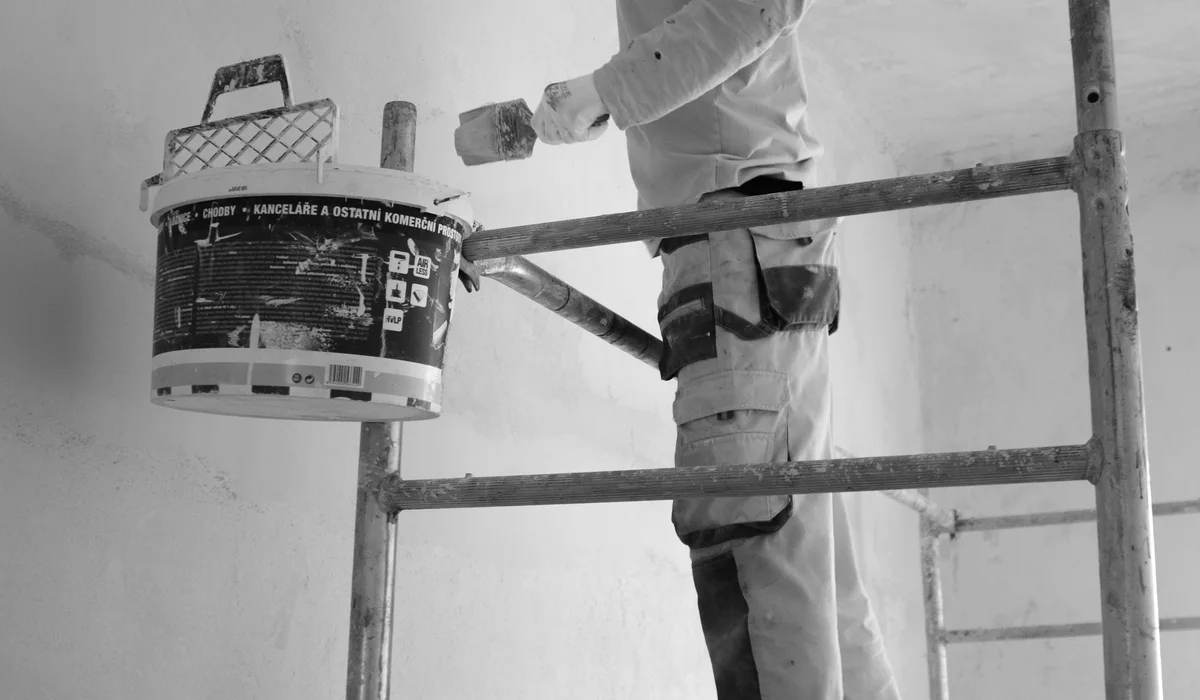
Buying Tips: Gallons, Buckets and Matching Color
- Round up. Running out mid-wall is worse than having a quart left over.
- Box your paint. When you buy several gallons of one color, pour them together into a larger bucket and mix. This evens out tiny batch differences.
- Consider a 5-gallon bucket for large open areas painted one color, which is often cheaper per gallon and easier to keep consistent.
- Keep a labeled touch-up can with the color name, sheen, room and date.
- Store leftovers properly: sealed tight, indoors and away from freezing temperatures.
Paint Coverage by Product Type
Paint coverage is not the same for every can on the shelf:
- Wall paint: commonly 350 to 450 square feet per gallon per coat, depending on the product and surface.
- Primer: often a little lower on porous new drywall, which soaks up the first coat.
- Ceiling paint: usually a flat finish formulated to hide; one or two coats are typical.
- Trim enamel: applied in thinner coats on narrow surfaces, so it goes further than you might expect but is sold in quarts for that reason.
Always read the spread rate on the product label or data sheet, and use it in place of the calculator default when it differs.
Common Paint Estimating Mistakes
- Forgetting the second coat. Most estimates should double the wall area.
- Using the best-case coverage number. Textured or porous walls rarely hit the top of the label range.
- Over-deducting openings. Small windows and closet doors barely change the total; do not subtract the whole wall around them.
- Skipping primer on patches. Unprimed repairs often need an extra coat to disappear.
- Buying all colors at once without a sample. Test a sample on the wall first; changing colors after buying wastes paint.

Kitchens, Bathrooms and Rooms With Built-Ins
Kitchens and bathrooms have far less exposed wall than their floor size suggests, because cabinets, tile and appliances cover much of it. Measure only the visible wall sections above counters, between cabinets and around the tub surround. A small bathroom often needs only a gallon for two coats, while a kitchen with full-height cabinets may need less than a bedroom of the same size.
These rooms also see steam and splashes, so many owners choose a satin or a paint labeled for kitchens and baths. If cabinets are getting a new color too, see our guide to painting kitchen cabinets, which uses a different enamel and process.
Quick Paint Planning Checklist
- Measure every wall, or use the calculator for each room
- Count doors and windows, and note any large openings
- Choose sheen and test color samples on the wall
- Decide on primer for patches, stains and new drywall
- Work out how much paint you need for two coats and round up
- Buy enough to box the paint for each color
- Set aside a labeled touch-up can when you finish
If you work through that list before shopping, the question of how much paint do I need has a confident answer, and the job runs without a mid-project store run.
What to Do With Leftover Paint
A labeled quart or two of each color is worth keeping for touch-ups. Store cans sealed tight, upside down for a few seconds to seal the lid, and somewhere that will not freeze. For true leftovers, check whether a local reuse center accepts sound paint, and follow your county’s household hazardous waste guidance for disposal, especially for oil-based products. Knowing how much paint you need up front is the simplest way to keep leftovers small.
Choosing a Sheen
Sheen does not change how much paint you need much, but it changes how the walls wear. Flat and matte hide wall flaws and suit ceilings and low-traffic rooms. Eggshell and satin wipe clean more easily and suit living areas, halls and kids’ rooms. Semi-gloss is for trim, doors and high-moisture areas. Pick the sheen before buying, since different sheens of the same color look slightly different side by side.
How Much Paint Do I Need: FAQs
How much paint do I need for a 12×12 room?
With 8-foot ceilings, one door and two windows, there are about 334 square feet of wall. Two coats at 350 square feet per gallon need about two gallons.
How many square feet does a gallon of paint cover?
Typically 350 to 400 square feet per coat on smooth, sealed walls. Some premium paints list more; Benjamin Moore lists 400 to 450 square feet for Regal Select eggshell. Textured or porous walls get less.
Do I need two coats of paint?
Usually, yes. Two coats give even color and sheen. One coat may be enough when repainting the same color on clean walls.
How much paint do I need for a ceiling?
Multiply the room length by width. A 12 by 14 foot ceiling is 168 square feet, so two coats at 400 square feet per gallon take a little under one gallon.
Should I buy a 5-gallon bucket?
For large areas in one color, often yes. It keeps color consistent and can cost less per gallon than buying single gallons.
Does primer count toward the coats?
No. Primer prepares the surface; you still need finish coats on top. A tinted primer can reduce the number of finish coats needed for big color changes.
Ready to Paint?
Now you know how much paint you need: measure the walls, subtract openings, multiply by coats and divide by real-world paint coverage. Use the paint calculator above for each project, and always round up.
If you would rather have the prep, cut lines and two even coats handled for you, FIXO offers full interior house painting and a fast walls and ceilings refresh at one fixed price. Planning a feature wall too? See our accent wall ideas, then request a price on the instant quote page.