Gaps in hardwood floors that appear in late fall and winter are usually normal. Heating dries the indoor air, the wood gives up moisture and each board shrinks a little, opening thin gaps that close again in spring. Keeping indoor humidity steady, within the 30 to 50 percent range the National Wood Flooring Association recommends, keeps those gaps small. Gaps that stay open in summer, or come with cupping, point to a real problem.
This is a seasonal explainer. It follows a hardwood floor through a year in the DMV climate, explains why boards move, sorts normal gaps from warning signs and lists seven practical steps for the heating season.
Alvin wrote this explainer for FIXO, whose hardwood floor refinishing crews see the same seasonal questions every November. The humidity figures come from NWFA guidance as reported by Hardwood Floors magazine and from Wood Floor Business.
What this seasonal explainer covers
Key takeaways
- Winter gaps come from boards shrinking as heated air dries them.
- NWFA guidelines call for 30 to 50 percent relative humidity and 60 to 80 degrees year round.
- Wider boards open wider gaps; engineered flooring is generally more stable.
- A humidifier and a hygrometer are the main tools for keeping gaps small.
- Do not fill gaps that open and close with the seasons.

Why gaps in hardwood floors open in winter
Wood is hygroscopic: it takes on and gives off moisture to match the air around it. When the air is humid, boards absorb moisture and swell slightly. When the air is dry, they release moisture and shrink.
In winter, cold outdoor air holds little moisture. Once a heating system warms that air indoors, its relative humidity drops sharply. A Hardwood Floors magazine article on gaps explains that heating-season air is drier, so boards lose moisture and shrink, which opens gaps. The same article notes that gaps appearing about a month into the heating season point to that moisture loss.
Each board shrinks only a tiny amount, but the shrinkage shows up at every joint across the room. That is why hardwood floor gaps in winter tend to look evenly spaced, like thin lines between most boards.
A hardwood floor’s year in the DMV
The Washington area has humid summers and heated, dry winters, so floors here move noticeably through the year. This calendar shows the typical pattern of gaps in hardwood floors through the year.
| Months | Indoor air | What the floor does |
|---|---|---|
| October to November | Heat comes on, humidity starts to fall | First thin gaps appear a few weeks in |
| December to February | Driest months with heating running | Gaps at their widest |
| March to April | Heating eases, humidity rises | Gaps start to close |
| May to June | Humid air, windows open | Boards swell back to full width |
| July to September | Most humid; air conditioning helps | Tightest floor; watch for cupping if humidity runs high |
Your own home may shift these months depending on how you heat and cool it, whether the floor is over a basement or crawlspace, and how well the house is sealed. Newer, tighter homes often hold humidity better, while older homes with drafty windows can dry out quickly once the heat runs for long periods.

Normal gaps or a problem?
Hardwood Floors magazine cites the NWFA definition of seasonal gaps as gaps that open and close with seasonal humidity changes. This table helps you tell seasonal movement from something that needs attention.
| What you see | Likely meaning |
|---|---|
| Thin, even gaps in winter that close by summer | Normal seasonal movement |
| Gaps wider near heat vents or a wood stove | Local drying from a heat source |
| Gaps that stay open all year | Floor installed too wet, or a lasting moisture change |
| Several boards moving together with one big gap | Panelization, often from finish gluing boards together |
| Edges higher than board centers | Cupping from moisture below or high humidity |
| Centers higher than edges | Crowning, often after cupped boards were sanded flat |
If what you see is in the first row, the floor is behaving like wood. The rows below it are worth a professional look, especially if gaps appeared soon after installation.
Board width, species and engineered floors
Not every floor moves the same amount. Hardwood Floors magazine notes that gap size is directly proportional to board width, and Wood Floor Business gives a simple example: a 5 in plank shrinks twice as much as a 2 1/4 in strip.
| Floor | Seasonal movement | What to expect |
|---|---|---|
| Narrow solid strip (2 1/4 in) | Lower per board | Many fine lines, barely noticed |
| Wide solid plank (5 in and up) | Higher per board | Fewer but more visible gaps |
| Engineered hardwood | Generally lower | Cross-layered core resists movement |
Wood Floor Business describes engineered flooring as expected to be more stable than solid wood, which is one reason it is popular for wide planks and basements. Our comparison of engineered hardwood vs hardwood covers the trade-offs, and species also play a part in how much a board moves.
The right humidity for hardwood floors
The most useful single number for humidity for hardwood floors is the NWFA range: 30 to 50 percent relative humidity, with temperatures of 60 to 80 degrees, maintained all year. Hardwood Floors magazine reports those figures from NWFA guidelines.
Manufacturer warranties can be narrower. Wood Floor Business notes that some warranties specify 35 to 55 percent or 40 to 60 percent, so check yours. The same article suggests keeping the swing between the wettest and driest months to about 20 percentage points.
| Source | Relative humidity range |
|---|---|
| NWFA guidelines | 30 to 50 percent, year round |
| Some manufacturer warranties | 35 to 55 percent |
| Other manufacturer warranties | 40 to 60 percent |
There is a limit to raising humidity for hardwood floors in very cold weather. Wood Floor Business cites Honeywell guidance recommending indoor humidity no higher than 35 percent when it is 20 degrees outside, because higher humidity can condense on cold windows and walls. In deep cold, aim for the low end of your floor’s range rather than pushing it up.
7 steps for hardwood floor gaps in winter
These steps keep hardwood floor gaps in winter small and protect the floor long term.
1. Buy a hygrometer
An inexpensive digital hygrometer tells you the real humidity in the room. Put one near the floor in the main living area and check it weekly once the heat comes on.
2. Add humidity
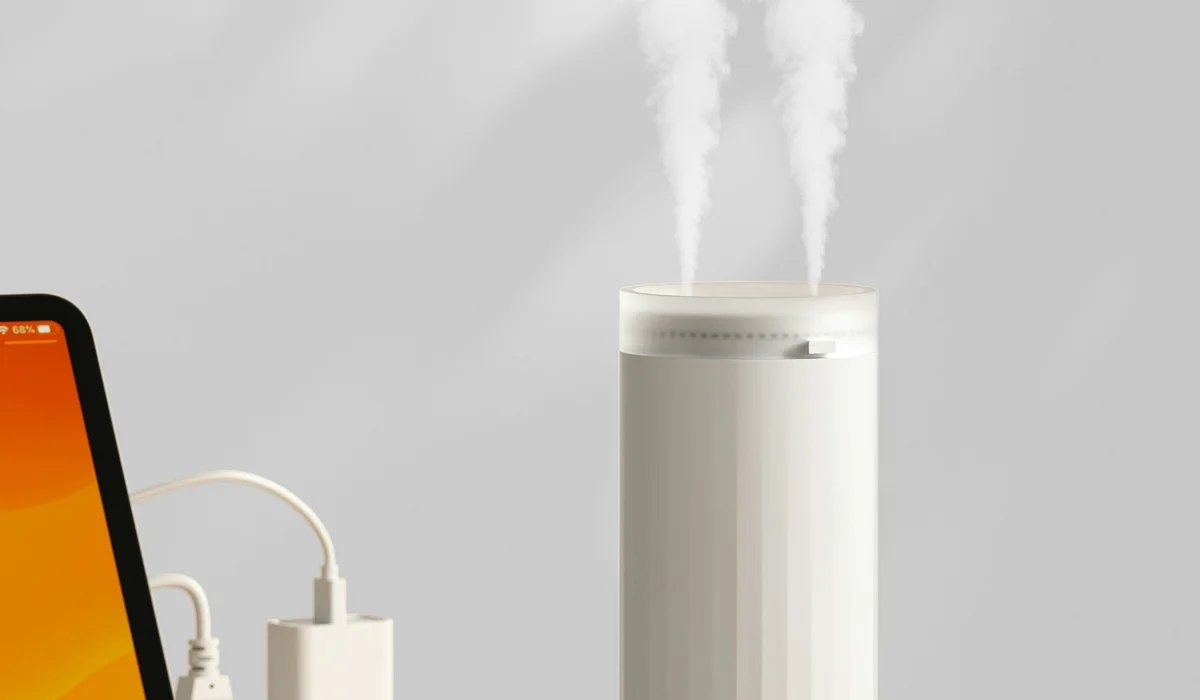
Hardwood Floors magazine notes that seasonal gaps can be minimized with a humidification system. A whole-house humidifier on the furnace treats every room; portable units help in a single room.
3. Size the humidifier realistically
Wood Floor Business points out that typical residential systems provide up to about 6 pints of water per hour, and less when paired with a heat pump. A leaky house may not reach the target on the coldest days, so set expectations accordingly.
4. Maintain it
Humidifiers need routine maintenance, as often as every month during the heating season, according to Wood Floor Business. A clogged pad or empty tank means dry air again.
5. Avoid local hot spots
Keep rugs and furniture from blocking heat registers in a way that blasts hot air across one section of floor. Space heaters and wood stoves dry the boards nearest them fastest, which makes hardwood floor gaps in winter worse in that spot.
6. Wait for spring before judging
Most seasonal gaps close as humidity returns. Note which gaps open in winter and check them again in early summer.
7. Check your warranty and records
Read the humidity range in your floor’s warranty. If the floor is new, ask the installer for the moisture readings taken at installation, which the Hardwood Floors article recommends recording.
How your heating system affects the gaps
The type of heat in the house changes how dry the air gets and how hard it is to add moisture back.
- Forced-air furnace. Moves a lot of dry air quickly, so hardwood floor gaps in winter often show up fastest in homes heated this way. A humidifier mounted on the furnace is the most effective fix.
- Heat pump. Delivers air that is warm rather than hot. Wood Floor Business notes that humidifier output is lower when connected to a heat pump, so it can take longer to reach your target humidity for hardwood floors.
- Radiators and baseboard heat. Do not move air as much, but still dry the room. Portable humidifiers usually suit these homes.
- Radiant floor heat. Heats the boards directly. Only use flooring the manufacturer approves for radiant heat, and follow its surface temperature limits.
- Wood stoves and fireplaces. Create very dry hot spots. Expect hardwood floor gaps in winter to be widest nearest them.
New floors: acclimation and installation timing
Gaps in hardwood floors installed recently deserve a closer look, because the conditions at installation set the starting point for every season that follows.
The Hardwood Floors article stresses recording moisture readings and jobsite conditions at installation, so later movement can be compared against them. Ask your installer for those readings, and keep them with your warranty paperwork.
Wood Floor Business also recommends that installers explain expected seasonal movement clearly, in writing, before the job. A floor installed in humid late summer will show more winter gapping than one installed in spring, and wide planks will show more than narrow strips. Knowing that in advance prevents a lot of worry in December.
If you are planning a new wood floor, keep the house at normal living temperature and humidity before delivery and during installation, so the boards match the conditions they will live in. Our overview of hardwood flooring installation methods covers nail-down, glue-down and floating options.
What is under the floor matters too
The space beneath a wood floor affects it all year. A damp crawlspace or basement can push moisture up into the boards in summer, causing cupping, while a heated, dry basement adds to winter shrinkage.
- Check crawlspaces for standing water, missing vapor barriers or wet insulation.
- Keep gutters and downspouts moving water away from the foundation.
- Run a dehumidifier in damp basements in summer.
When gaps in hardwood floors come with cupping in summer, the cause is often below the floor rather than in the room.
Room-by-room humidity tips
Humidity varies from room to room, so a single reading in the living room does not tell the whole story.
- Kitchens. Cooking adds moisture, so kitchen floors often gap less in winter than bedrooms.
- Bathrooms. Showers spike humidity briefly. Run the exhaust fan and keep wood floors outside the wet zone.
- Sunny rooms. Strong sun through windows heats and dries boards near the glass; rugs and blinds help.
- Closed-off rooms. Rooms with vents shut and doors closed can drift away from the rest of the house. Keep them heated and ventilated.
If one room gaps much more than the others, take a hygrometer reading there. A big difference in humidity for hardwood floors between rooms usually has a local cause.
A winter checklist
- Place a hygrometer in the main wood-floored room.
- Service or refill the humidifier before the heat comes on.
- Aim for the NWFA range, at the lower end in deep cold.
- Check registers and keep heat sources from blasting one area.
- Photograph any gaps in hardwood floors in January to compare in June.
What not to do about seasonal gaps
A few common reactions make seasonal gaps worse.
- Do not fill them with wood filler or caulk. When the boards swell in summer, the filler gets squeezed out or crushed, and the edges can be damaged.
- Do not wet-mop to add moisture. Standing water damages finish and wood; humidity belongs in the air, not on the floor.
- Do not overcorrect. Pushing humidity very high in cold weather risks condensation on windows and mold in walls.
- Do not run a humidifier blind. Without a hygrometer it is easy to overshoot, especially in small rooms with a powerful portable unit.
- Do not rush a refinish. Sanding while boards are shrunk can leave edges uneven once they swell.
If a refinish is planned anyway, timing it for spring or fall, when humidity is moderate, gives the best results. Whether your floor needs a light recoat or a full sand is covered in this comparison.
When gaps in hardwood floors need a pro
Call for an inspection if gaps stay open through summer, if they appeared within weeks of a new installation, if a few gaps are much wider than the rest, or if you see cupping or crowning. These patterns can point to installation moisture, a leak, a damp crawlspace or a subfloor problem.
A professional visit should include moisture readings of the wood and subfloor, a check of the space below the floor, and a look at how the floor was fastened. For permanent gaps, options range from inserting slivers of matching wood into wide joints to replacing boards. Our hardwood floor refinishing crews assess this before any sanding.

Repairing gaps that do not close
Unlike hardwood floor gaps in winter, permanent gaps in hardwood floors stay open after a full humid season. Once the cause has been found and fixed, there are a few repair routes.
- Wood slivers. Thin strips of matching wood are glued into the widest gaps, sanded flush and finished. This suits a handful of wide joints rather than a whole room.
- Board replacement. Individual damaged or badly gapped boards are cut out and replaced with new ones woven into the floor.
- Re-laying a section. Where many boards have spread apart, a section can be lifted, tightened and refastened, with new boards added to fill the width.
Repairs work best when the house has been at stable humidity for hardwood floors for several weeks, usually in spring or early fall. Doing them in the driest part of winter risks the repaired area swelling tight in summer.
Gaps in hardwood floors FAQ
Are gaps in hardwood floors normal in winter?
Yes. Thin, even gaps that open during the heating season and close in spring are normal seasonal movement, caused by boards losing moisture to dry indoor air.
What is the right humidity for hardwood floors?
NWFA guidelines call for 30 to 50 percent relative humidity and 60 to 80 degrees year round. Check your floor’s warranty, which may specify a narrower range.
Should I fill gaps in my hardwood floor?
Not if they are seasonal. Filler gets squeezed out when the boards swell in summer. Permanent gaps can be repaired by a professional.
Will hardwood floor gaps close on their own?
Seasonal hardwood floor gaps in winter usually close as humidity rises in spring and summer. Gaps that stay open all year need investigating.
Do wide plank floors gap more?
Yes. Gap size is proportional to board width, so a 5 in plank moves about twice as much as a 2 1/4 in strip.
Does engineered hardwood gap in winter?
It can, but less than solid wood in most cases, because its cross-layered core resists movement.
Next step: get your floor checked
If your gaps look bigger than seasonal or your floor needs a refresh, our hardwood floor refinishing team will take moisture readings and recommend the right fix. For new floors, see our engineered hardwood installation service, or start with an instant quote.