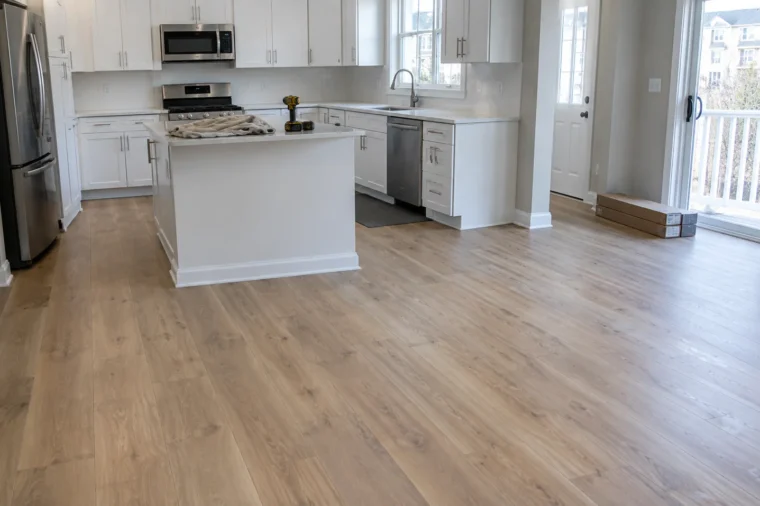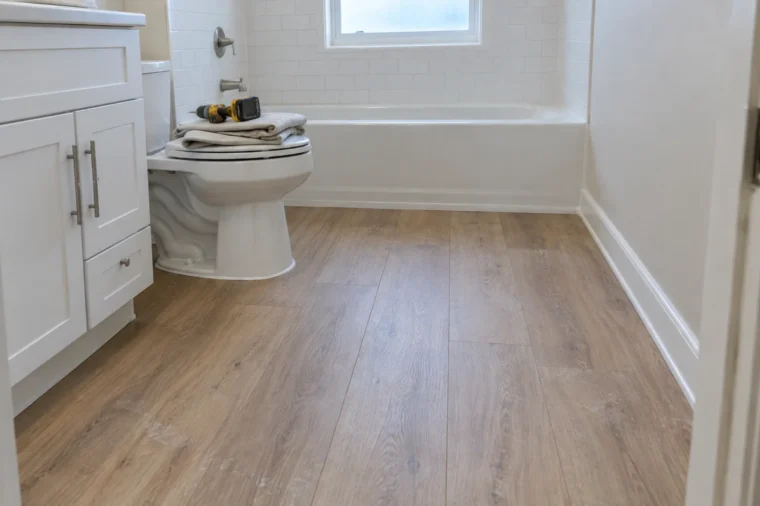
Hardwood floor installation typically costs $6 to $25 per square foot installed, with most Northern Virginia, Maryland, and DC homeowners landing between $10 and $18 per square foot once materials, labor, and basic subfloor prep are included. Engineered hardwood runs slightly less, usually $7 to $20 per square foot.
If you’ve started pricing out new floors, you’ve probably noticed the numbers all over the place; one site says $6, another says $25, and neither tells you which one applies to your living room. That’s not a data problem; it’s an every house is different problem. Your subfloor, your wood species, your layout, and whether you’re tearing out old carpet or tile all move the number. This guide breaks down exactly what drives your cost, how solid hardwood compares to engineered, what homeowners in Fairfax, Alexandria, and the rest of the DMV are actually paying right now, and where a stair banister replacement fits in if you’re doing a full renovation.
How Much Does Hardwood Floor Installation Cost in 2026?
Nationally, hardwood floor installation costs $6 to $25 per square foot, including materials and labor. Most homeowners end up in the $10–$16 range for a standard job, think a 3-bedroom home with a normal subfloor and no major surprises once the old flooring comes up.
| Project scope | Typical cost per sq ft | Typical total |
|---|---|---|
| Budget (domestic species, minimal prep) | $6–$10 | $6,000–$10,000 for 1,000 sq ft |
| Mid-range (standard prep, better materials) | $10–$16 | $10,000–$16,000 for 1,000 sq ft |
| Premium (exotic species, custom pattern) | $16–$25+ | $16,000–$25,000+ for 1,000 sq ft |
| Whole-home project (2,000 sq ft) | Roughly $14,700–$44,000 |
For a single room around 340 square feet, a typical living room, most homeowners spend somewhere between $2,500 and $7,500 total.
Solid Hardwood vs. Engineered Hardwood Installation Cost
This is the decision that moves your budget the most, so it’s worth a direct comparison before you pick a wood.
| Solid Hardwood | Engineered Hardwood | |
|---|---|---|
| Installed cost per sq ft | $8–$25+ | $7–$20 |
| Material only | $3–$16 | $3–$12 |
| Labor only | $4–$8 | $3–$8 |
| Can be refinished | Yes, multiple times | Usually once or twice, depending on veneer thickness |
| Works over concrete slabs | Not directly; needs a subfloor | Yes, with a vapor barrier |
| Best for | Main living levels, long-term homes | Basements, homes with concrete slabs, budget-conscious upgrades |
Engineered hardwood isn’t a lesser product; it’s a layered construction (plywood or fiberboard core, real hardwood veneer on top) built to handle moisture and temperature swings that would cup or gap solid wood. If you’ve got a slab-on-grade level or you’re renovating a basement, engineered is usually the only hardwood option that makes sense.
What Actually Drives Your Final Price
A quote isn’t just square footage times a number. A few line items move the total more than homeowners expect:
- Old flooring removal and disposal: $1 to $4 per sq ft, more if it’s tile or multiple layers.
- Subfloor repair or leveling: $900 to $3,000 if your installer finds soft spots, squeaks, or an uneven slab once the old floor is up.
- Installation method: nail-down and floating floors are the least labor-intensive; glue-down (common over concrete) adds cost for adhesive and prep time.
- Pattern: a straight-lay install is your baseline; herringbone or chevron patterns can add roughly 30% to labor because of the extra cutting and layout precision.
- Plank width and finish: wide-plank and hand-scraped finishes cost more in material than standard 2¼-inch strip flooring.
None of these are hidden fees if your installer walks you through them up front; they’re just the difference between a rough online estimate and what your house actually needs.
Hardwood Floor Installation Cost in Fairfax, Alexandria & the DMV
Local pricing tracks close to national mid-range wood flooring, with total project costs in the Fairfax area typically running $8 to $23–25 per square foot, broken down roughly as $3–$14 per sq ft for materials and $4–$8 per sq ft for labor. Alexandria and the broader DMV follow a similar pattern, since labor rates and material sourcing are largely regional rather than city-specific.
A few things nudge Northern Virginia pricing slightly above the national average: older housing stock (think 1960s–1980s Fairfax and Arlington homes) often needs more subfloor correction, and demand for installers stays high year-round given the area’s steady renovation pace. At Fixo DMV, we walk every job site before quoting; a fixed per-square-foot number without seeing your subfloor is a guess, not a quote.
Solid vs. Engineered Hardwood: Which One Fits Your Home?
If your home has a wood subfloor, good climate control, and you plan to stay long-term, solid hardwood earns its higher price tag; it can be sanded and refinished several times over 50+ years, so scratches and wear aren’t permanent.
If you’re finishing a basement, dealing with a concrete slab, or working with a tighter budget, engineered hardwood gets you the same look with better dimensional stability. Wood species matters too; ok remains the practical default in this region because it’s widely available, mid-priced, and rated well on the Janka hardness scale for everyday durability. Walnut and exotic species look striking but push you toward the top of the cost range.
Is Waterproof Laminate a Smart Alternative to Hardwood?
For some rooms, yes. Waterproof laminate flooring mimics the look of hardwood at a lower material cost, typically $2 to $7 per square foot, and handles moisture far better, which makes it a reasonable call for basements, mudrooms, or rental units where budget and durability matter more than resale prestige.
What it won’t do is add the same resale value or refinishing flexibility as real hardwood. If you’re renovating a primary living area in a home you plan to sell in the next several years, hardwood or engineered hardwood is usually the better long-term investment. Laminate makes the most sense as a practical choice for secondary spaces, not a wholesale swap for your main floor.
The Hardwood Floor Installation Process, Step by Step
- In-home assessment. A real installer measures the space, checks your subfloor, and confirms whether you need solid or engineered wood based on the level and moisture conditions.
- Old flooring removal. Carpet, tile, or worn laminate comes out, and the subfloor gets inspected for damage or unevenness.
- Subfloor prep. Repairs, leveling, and, for engineered installs over concrete, a moisture barrier go down before any wood touches the floor.
- Acclimation. Wood planks sit in the home for a few days so they adjust to your indoor humidity and temperature, which prevents gapping or buckling later.
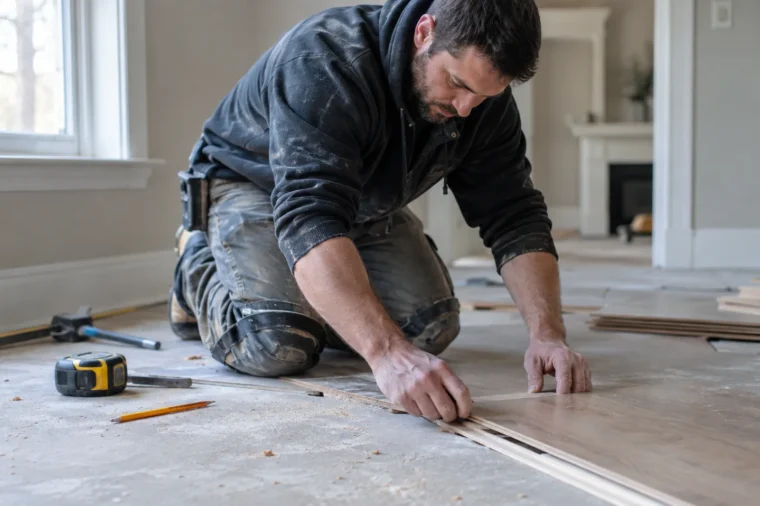
- Installation. Depending on the method, planks get nailed, glued, or floated into place, working room by room.
- Finishing and trim. Baseboards, transitions, and door-jamb cuts get completed, and prefinished floors get a final clean; unfinished floors are sanded and coated on-site.
Most single-room projects wrap in 1 to 3 days; a full-home install typically runs several days to two weeks depending on square footage and subfloor condition.
Don’t Forget the Stairs: Wooden Stair Banister Replacement in Virginia
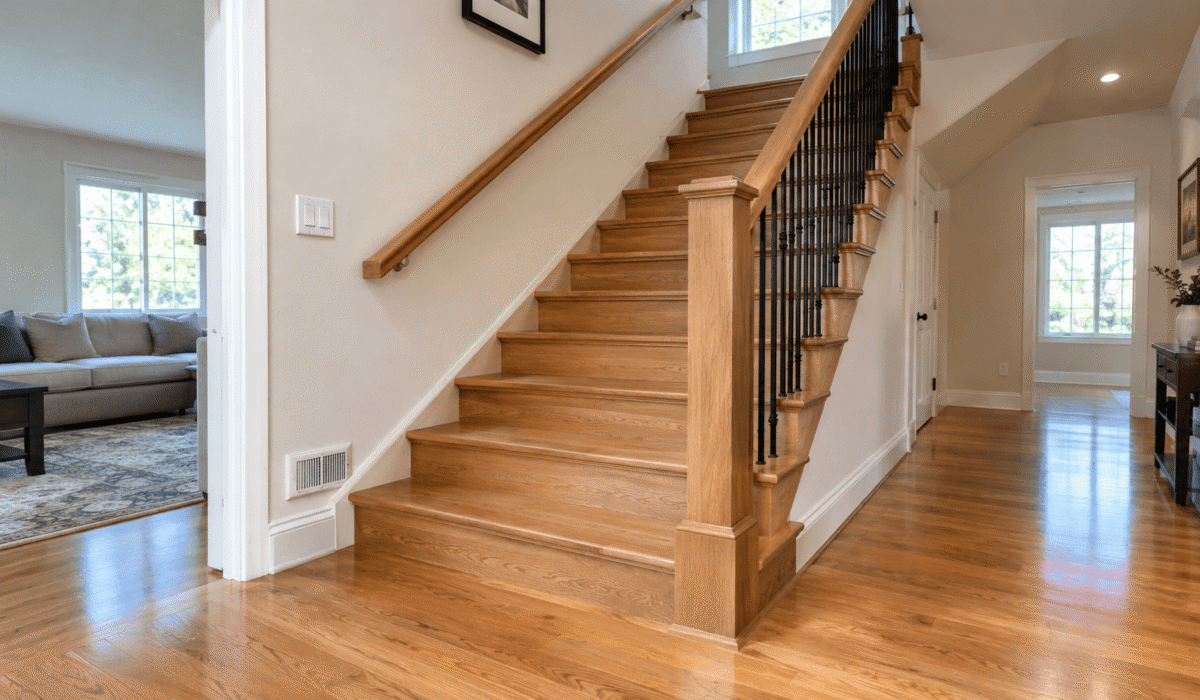
If you’re already redoing your floors, it’s worth looking at your stairs at the same time; a fresh hardwood floor next to a worn, wobbly banister tends to make the railing look older than it is. Wooden stair banister replacement in Virginia typically runs $300 to $1,200 for a straightforward handrail renovation, or $3,000 to $7,000+ for a full railing system replacement (newel posts, balusters, and handrail together), depending on staircase length and complexity.
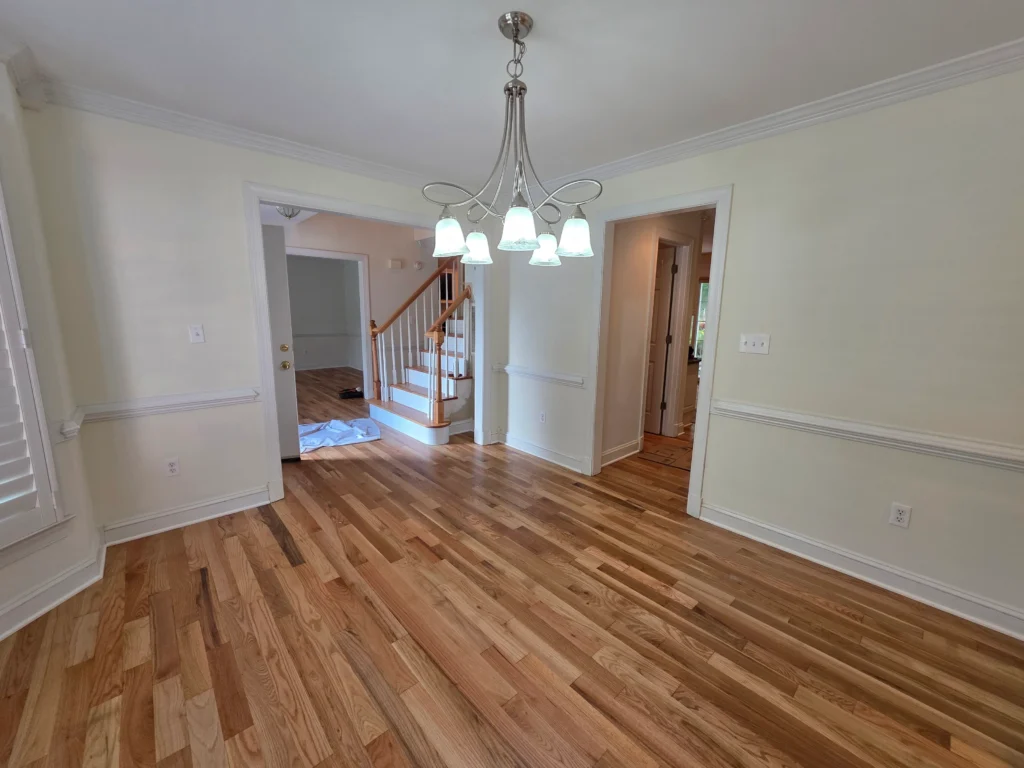
Beyond looks, Virginia code requires stair railings to be 34–38 inches high with baluster spacing under 4 inches. If your current banister predates that standard, it’s worth flagging during your flooring quote rather than treating it as a separate project down the road. Bundling the two jobs also means one crew, one timeline, and matching wood tones between your new floor and your stairs.
How to Get an Accurate Hardwood Flooring Quote
The fastest way to get a number you can actually trust is a free, in-home assessment, not a phone estimate. A good installer will check your subfloor, discuss solid vs. engineered based on your specific level, and give you a written quote that separates materials, labor, removal, and any prep work, so nothing shows up as a surprise mid-project.
Fixo DMV provides free on-site estimates across Northern Virginia, Maryland, and DC for hardwood, engineered hardwood, and stair/banister work. Reach out, and we’ll walk your space before we quote it.
Frequently Asked Questions
How much does hardwood floor installation cost per square foot?
Most homeowners pay $6 to $25 per square foot installed, with $10 to $16 covering a typical mid-range project. Your exact number depends on wood species, installation method, and how much subfloor prep your home needs.
Is engineered hardwood cheaper than solid hardwood to install?
Usually, yes, engineered hardwood runs $7 to $20 per square foot versus $8 to $25+ for solid hardwood. It’s also the more practical option over concrete slabs or in basements where solid wood isn’t recommended.
How long does hardwood floor installation take?
A single room typically takes 1 to 3 days. A full-home installation can take anywhere from several days to two weeks, depending on square footage, wood acclimation time, and subfloor condition.
Can you install hardwood floors over concrete?
Solid hardwood generally can’t go directly over concrete without a proper subfloor system. Engineered hardwood can, as long as a vapor/moisture barrier is installed first to protect against slab moisture.
Is waterproof laminate a good alternative to hardwood?
It’s a solid choice for basements, mudrooms, or budget-driven projects, since it resists moisture better and costs less upfront. For primary living spaces where resale value matters, hardwood or engineered hardwood typically remains the stronger long-term investment.
Do I need to replace my stair banister when I install new hardwood floors?
Not always, but it’s worth evaluating at the same time. If your current banister is loose, outdated, or doesn’t meet Virginia’s height and spacing code, replacing it alongside your flooring keeps wood tones consistent and avoids a second separate project later.
How do I get an accurate hardwood flooring quote in Northern Virginia?
Request a free in-home assessment rather than a phone estimate. An installer needs to see your subfloor and current flooring in person to give you a number that holds up once the project actually starts.
Ready for New Floors?
Whether you’re leaning toward solid oak, engineered hardwood, or want to tackle your stairs alongside your floors, getting an accurate picture starts with seeing your space in person. Fixo DMV offers free estimates across Northern Virginia, Maryland, and DC. Reach out to get a real number for your home, not a national average.
 4.9 on Google14 reviews
 Licensed & InsuredVirginia · Maryland · Washington, D.C.
 Workmanship GuaranteedInstallation backed in writing
 Locally OwnedServing NoVA, MD & D.C.