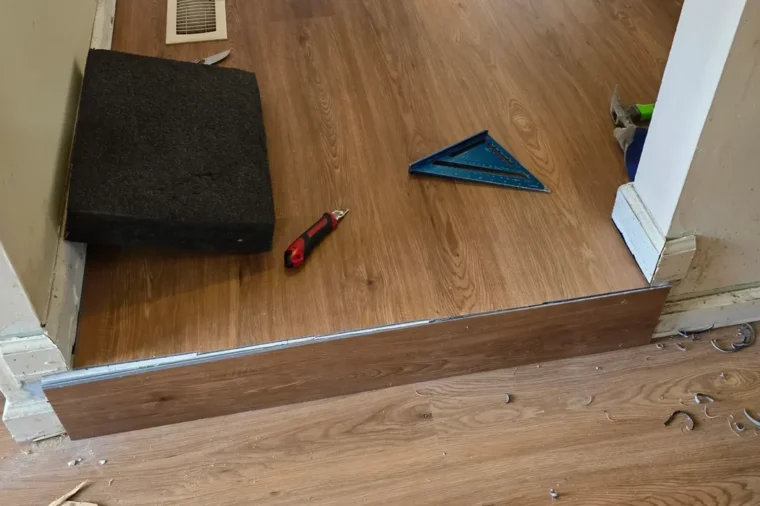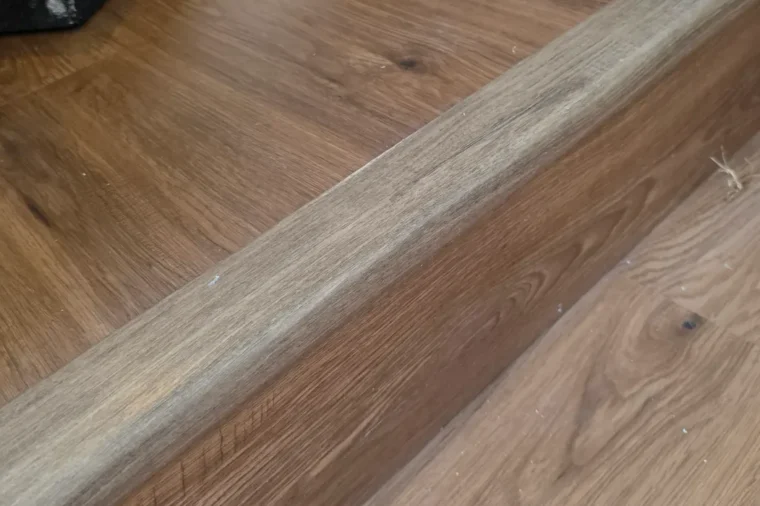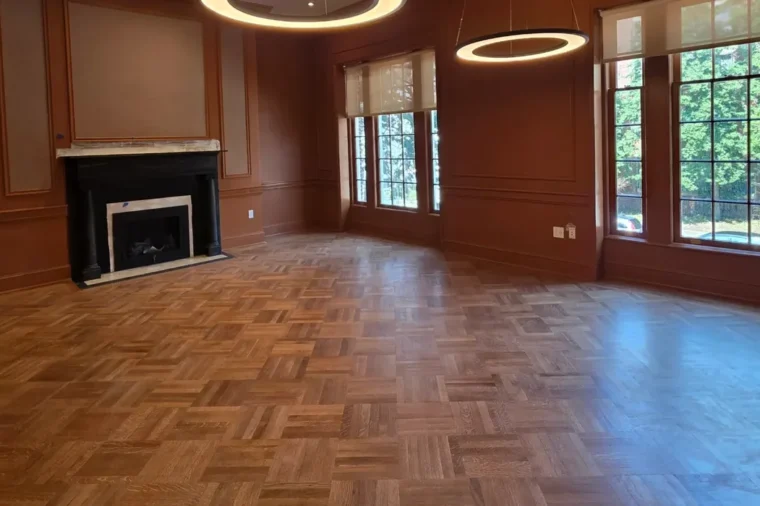
For most homes, the best Northern Virginia waterproof flooring is either rigid core luxury vinyl plank or porcelain tile. Both shrug off water, and they suit basements, kitchens, baths and laundry rooms. Sheet vinyl and luxury vinyl tile are budget-friendly waterproof options for smaller wet rooms. Laminate is only water-resistant, even when labeled waterproof. In this region, the floor is only half the answer: slab moisture, summer humidity and drainage decide whether a waterproof floor stays problem-free.
Northern Virginia homes deal with water in more ways than most people expect. Humid summers push moisture into basements, thunderstorms test gutters and grading, and a failed dishwasher hose or toilet supply line can soak a kitchen or bathroom in minutes. Condo owners in Arlington and Tysons also have to think about the unit below.
This guide ranks seven Northern Virginia waterproof flooring options, explains the difference between waterproof and water-resistant, and goes room by room through basements, kitchens, bathrooms, laundry rooms and condos. It also covers moisture prep, costs and warranty fine print. Alvin wrote it for FIXO, which installs waterproof floors from Arlington and Alexandria out to Loudoun and Prince William counties.
What this waterproof flooring guide covers
- Why water is a local issue
- Waterproof flooring by home type
- Waterproof versus water-resistant
- 7 best waterproof flooring options
- The best choice room by room
- Moisture prep that protects the floor
- What waterproof flooring costs
- Reading the warranty
- What to do after a leak
- What to expect on installation day
- Mistakes to avoid
- FAQs
- Choosing your floor
Key takeaways
- Rigid core luxury vinyl plank is the most popular Northern Virginia waterproof flooring because it is affordable, quick to install and looks like wood.
- Porcelain tile is the most water-tolerant floor of all and the long-term choice for showers, bathrooms and mudrooms.
- Laminate is water-resistant, not waterproof. Water that gets underneath can still swell its core.
- Even waterproof LVP needs a dry slab, a vapor barrier below grade and indoor humidity kept in check.
- Warranties usually cover spills on top of the floor, not flooding or water rising from below.
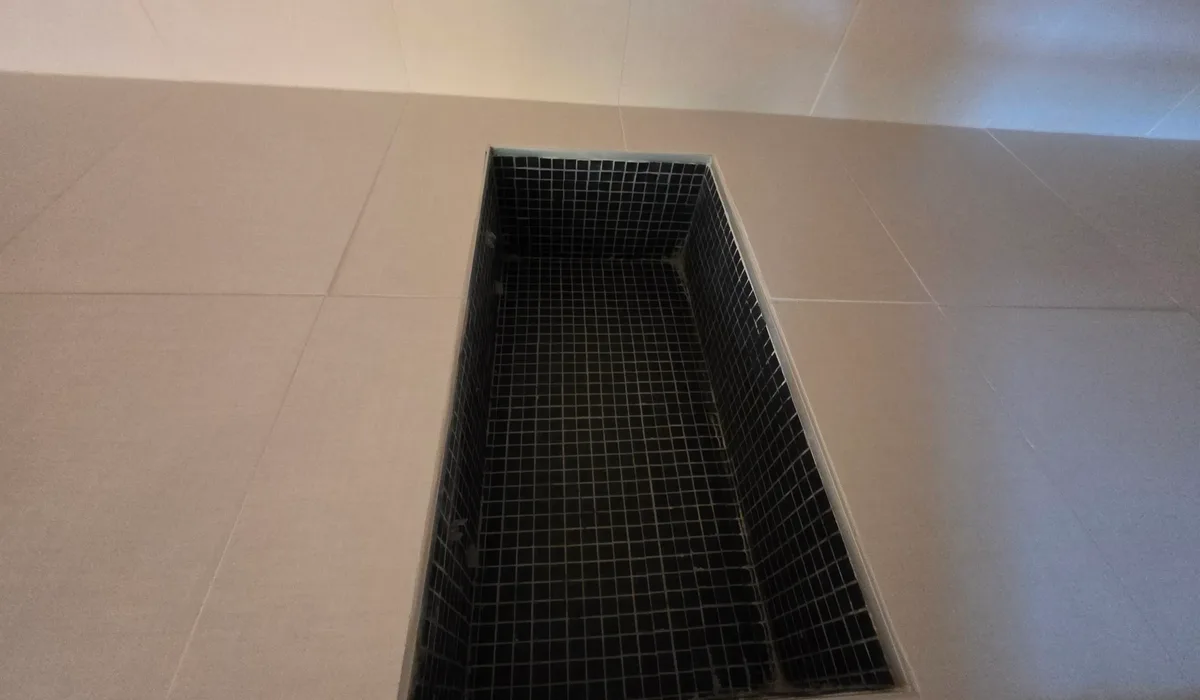
Why Water Is a Local Issue in Northern Virginia
A few local conditions make Northern Virginia waterproof flooring worth planning carefully.
- Humid summers. Long stretches of muggy weather raise indoor humidity, especially in basements without a dehumidifier.
- Heavy storms. Summer downpours overwhelm gutters, window wells and older drain lines.
- Basements everywhere. From 1950s ramblers in Annandale to new homes in Ashburn, many houses have finished or partly finished lower levels.
- Clay soils. Parts of the region, particularly in Fairfax County, have clay soils that drain slowly and hold water against foundation walls.
- Stacked living. Townhouses and condos mean a leak upstairs can travel to a neighbor’s ceiling.
If your street is near a stream or low area, check your address on FEMA’s flood map service center before finishing a basement.
Northern Virginia Waterproof Flooring by Home Type
The age and style of the house change which waterproof floor makes sense and how much prep it needs.
Mid-Century Ramblers and Split-Levels
Homes from the 1950s and 60s in Annandale, Springfield, Falls Church and Arlington often have older drain tile, original window wells and basements that were never meant to be living space. Basement flooring here should start with a hard look at drainage. Old 9 by 9 inch floor tiles may contain asbestos and should be tested before removal, or covered with a floating floor instead.
1970s to 1990s Colonials and Townhouses
Reston, Burke, Centreville and Herndon have many homes from this era. Original kitchen and bath subfloors are often OSB, which swells where earlier leaks reached it. Swollen panels need sanding or replacing before waterproof LVP or tile goes down, or the new floor will rock over the ridges.
Newer Loudoun and Prince William Homes
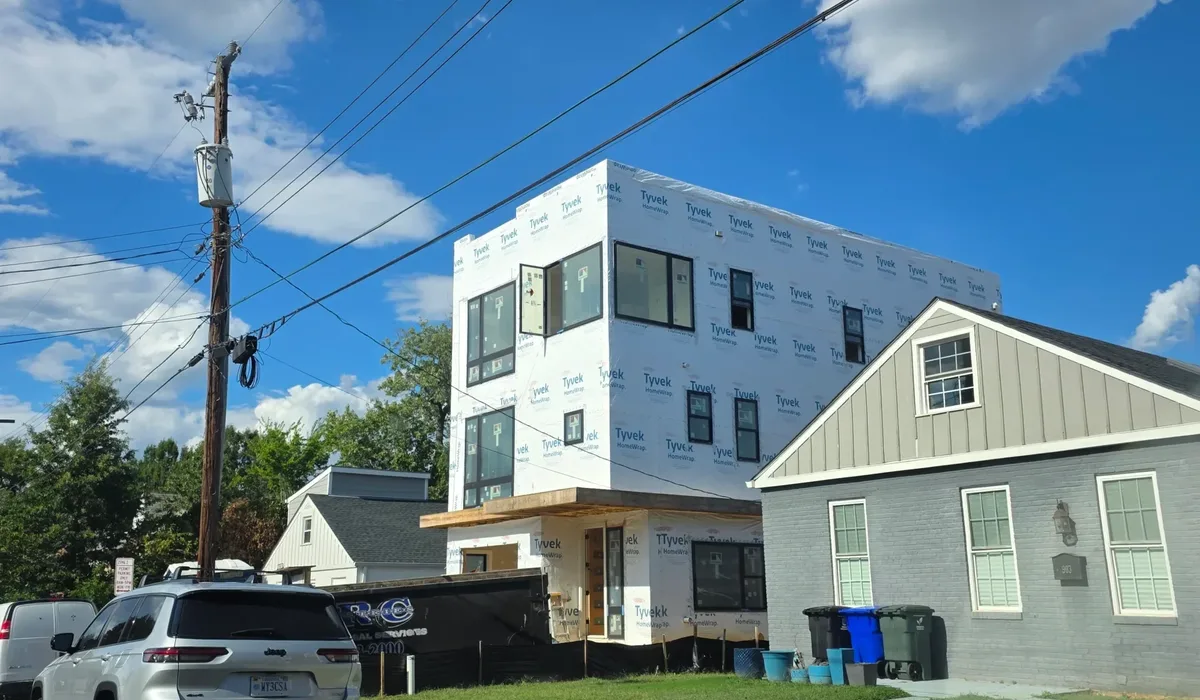
Ashburn, Brambleton, Leesburg and Bristow have younger houses with poured basement walls and sump pumps as standard. Northern Virginia waterproof flooring in these homes usually means swapping builder carpet in the basement for waterproof LVP, and replacing builder laminate in kitchens and laundry rooms.
High-Rise Condos
In Rosslyn, Ballston, Crystal City and Tysons, concrete slabs are generally dry, but sound rules and the unit below shape every decision. A waterproof floor that meets the board’s sound rating, with water shut-off valves you can reach quickly, is the safe combination.
Waterproof Versus Water-Resistant
Flooring labels use these terms loosely, so it pays to know what they mean in practice.
| Term | What it usually means | Examples |
|---|---|---|
| Waterproof | The material itself does not swell, rot or lose strength when wet | Rigid core vinyl, porcelain tile, sheet vinyl, rubber |
| Water-resistant | Resists surface spills for a set time if wiped up | Laminate, many engineered woods |
| Not water-tolerant | Swells, cups or stains when wet | Solid hardwood, standard laminate, carpet |
One catch applies to every floating floor: the planks may be waterproof, but water can still run through seams and gaps to the subfloor. That is why prep and fast cleanup matter as much as the label. Our explainer on how waterproof LVP really is goes into more detail.
7 Best Northern Virginia Waterproof Flooring Options
These are ranked by how well they handle water in a typical local home, balanced against cost and comfort.
1. Rigid Core Luxury Vinyl Plank
Waterproof LVP is the go-to choice for most rooms, and the product FIXO installs most often. SPC cores are dense and dent-resistant, the wood looks are convincing, and planks float over most subfloors with little disruption. Matching stair nosings let one floor run from basement to bedrooms. Pick a 12 to 20 mil wear layer for busy homes.
2. Porcelain Tile
Porcelain absorbs almost no water, does not mind standing water and lasts for decades. It is the best option for showers, bathroom floors and mudrooms, and it works well on basement slabs. It feels hard and cold, costs more to install and needs a stiff, flat base. See our tile flooring installation service for how FIXO handles membranes and waterproofing.
3. Luxury Vinyl Tile
Luxury vinyl tile uses the same waterproof cores as plank but in stone or concrete looks. It suits bathrooms and laundry rooms where a wood look feels out of place, and some lines allow grout-like spacers for a tiled appearance.
4. Sheet Vinyl
Sheet vinyl comes in wide rolls, so a small bathroom or laundry room can be covered with few or no seams. For the money, few floors are more watertight. It looks less realistic than plank and can tear under sharp loads.
5. Water-Resistant Laminate
Newer laminate lines have sealed edges and tighter joints, and some are sold as waterproof. They handle everyday spills better than older laminate and give the most realistic wood texture. But the core is still wood-based, so flooding or water underneath will damage it. Our article on whether laminate is waterproof explains what the labels promise.
6. Sealed or Coated Concrete
In unfinished basements, workshops and utility rooms, a sealed or epoxy-coated slab is simple and fully water-tolerant. It is hard and cold underfoot, and coatings need a clean, dry slab to bond.
7. Rubber Flooring
Rubber tiles and rolls are waterproof, cushioned and quiet. They make sense for home gyms, playrooms and laundry rooms in the basement, though rubber can trap moisture against a damp slab if the slab is not tested first.
The Best Northern Virginia Waterproof Flooring Room by Room
| Room | Top pick | Runner-up |
|---|---|---|
| Finished basement | Rigid core LVP over a vapor barrier | Porcelain tile |
| Kitchen | Rigid core LVP | Porcelain tile |
| Full bathroom | Porcelain tile | Luxury vinyl tile |
| Laundry room | Sheet vinyl or LVP | Porcelain tile |
| Mudroom or entry | Porcelain tile | 20 mil LVP |
| Rental unit | 20 mil LVP | Sheet vinyl |
Basements
Basement flooring takes the most thought in this region. Waterproof LVP over a vapor barrier is the usual pick for finished lower levels because it is warmer than tile and simple to replace in sections. Porcelain is the better choice where a basement bathroom or walk-out door brings regular water. Our waterproof basement flooring guide compares the options below grade, and good basement flooring always starts with a moisture test.
Kitchens
Kitchens see the classic slow leak behind a dishwasher or under a sink. Waterproof LVP handles that better than laminate or wood, and a quick response keeps water from spreading under the floor. Our kitchen flooring guide compares durability and comfort in more depth.
Bathrooms
Full bathrooms with showers or tubs are where porcelain tile shines. In powder rooms, LVP or luxury vinyl tile is fine. Our best bathroom flooring guide covers wet-room details.
Laundry Rooms
Washers fail without warning. Sheet vinyl or waterproof LVP, ideally with a drain pan under the washer, limits the damage. Our laundry room flooring guide has more tips.
Condos and Townhouses
In stacked homes, Northern Virginia waterproof flooring has to meet sound rules too. Plenty of condo boards insist on a sound-rated mat beneath any hard floor. Choose a waterproof floor and underlayment combination the board approves in writing.
Moisture Prep That Protects the Floor
The best Northern Virginia waterproof flooring still fails if the house keeps feeding it water. Before installation:
- Fix the source. Clean gutters, extend downspouts, regrade soil away from the foundation and repair leaks.
- Test the slab. Installers use relative humidity probes or calcium chloride kits on concrete, following the flooring maker’s limits.
- Use a vapor barrier. On concrete, a floating floor needs poly sheeting or an underlayment that has a barrier built in, unless the maker approves direct slab installs.
- Control humidity. The EPA’s guide to mold and moisture recommends keeping indoor humidity below 60 percent, ideally between 30 and 50 percent. A basement dehumidifier helps in summer.
- Check the sump pump. Test it before finishing a basement, and consider a battery backup.
- Flatten the subfloor. Dips let water pool and stress click joints. See our guide to subfloor leveling before flooring.
What Waterproof Flooring Costs
These are planning ranges drawn from FIXO’s published guides for the DC area. Your price depends on removal, prep and trim work.
| Floor | Typical installed range |
|---|---|
| Rigid core LVP | About $4 to $9 per sq ft |
| Sheet vinyl | About $4 to $8 per sq ft |
| Water-resistant laminate | About $5 to $9 per sq ft |
| Porcelain tile | About $16 to $20 per sq ft national average (Homewyse, May 2026) |
Our waterproof flooring guide compares lifespan and feel alongside price, and the LVP installation cost calculator prices your own rooms.
Reading the Warranty
A waterproof warranty is not flood insurance. Before you buy, read for:
- What is covered. Most cover topical spills and pet accidents on top of the floor.
- What is excluded. Flooding, water from below, hydrostatic pressure and mold under the floor are common exclusions.
- Installation rules. Coverage often depends on using the stated vapor barrier, expansion gaps and slab moisture limits.
- Room limits. Some products exclude full bathrooms, saunas or outdoor spaces.
Keep the receipt, the product name and a few spare boxes. They make a claim or a repair much easier.
What to Do After a Leak
Even the best Northern Virginia waterproof flooring needs a quick response when water gets loose.
- Stop the water. Shut the supply valve or main and switch off power to wet areas if it is safe to do so.
- Remove standing water. Wet-vac and towel the surface right away.
- Check the edges. Pull a section of baseboard or a transition to see if water reached the subfloor.
- Dry underneath. With floating floors, installers can lift planks near the wall, dry the subfloor with fans and dehumidifiers, and click the same planks back down.
- Document everything. Take photos for your insurer and the flooring warranty.
The ability to lift and relay planks is one reason waterproof LVP is popular in basements: a leak often means a day of drying instead of a new floor.
What to Expect on Installation Day
For most rooms, waterproof floors go in quickly. A crew moves furniture, removes the old floor, checks flatness and moisture, lays the vapor barrier or underlayment, installs the floor and fits trim. A 600 square foot basement or main level in waterproof LVP is often walkable the same evening. Tile takes longer because of mortar and grout curing, and a full bathroom typically takes several days. Our guide to vinyl installation steps walks through a typical job.
Mistakes to Avoid
- Choosing laminate for a basement because the box says waterproof.
- Laying waterproof LVP on a damp slab without a vapor barrier.
- Caulking the floor tight to the walls, which stops a floating floor from moving.
- Ignoring a slow leak because the planks themselves look fine.
- Skipping the sump pump and dehumidifier in a finished basement.
- Using thick carpet pad or foam under vinyl, which makes joints flex and fail.
Avoid those, and your basement flooring and kitchen floors will stay dry and solid.
Northern Virginia Waterproof Flooring FAQs
Which waterproof floor is best for a Northern Virginia basement?
Rigid core luxury vinyl plank over a vapor barrier suits most finished basements. Porcelain tile is better where a bathroom or walk-out door brings regular water. Test the slab for moisture first.
Is waterproof LVP really waterproof?
The planks do not swell or rot when wet. Water can still pass through seams to the subfloor, so leaks should be cleaned up quickly and slabs protected with a vapor barrier.
Is laminate waterproof?
No. Some laminate is water-resistant and handles spills for a set time, but its wood-based core can swell if water gets underneath. It is a poor choice for basements.
How much does waterproof flooring cost in Northern Virginia?
Rigid core LVP typically comes to $4 to $9 a square foot installed, with sheet vinyl at roughly $4 to $8. Porcelain tile averages roughly $16 to $20 nationally, before local prep and access costs.
Does waterproof flooring prevent mold?
Not by itself. Mold grows where moisture stays trapped, including under a waterproof floor. Fixing leaks, using a vapor barrier and keeping humidity under 60 percent are what prevent it.
Should a basement bathroom get tile or LVP?
Tile is the safer choice inside and around a shower, because it tolerates standing water and pairs with a waterproof membrane. In a basement powder room or a bathroom with only a toilet and sink, waterproof LVP works well and keeps the floor continuous with the rest of the lower level. Many homeowners use tile in the shower area and LVP everywhere else.
Can waterproof flooring go in a condo?
Usually, yes, but most condo boards want a sound-rated mat and written sign-off before a hard floor goes in. Ask for the building’s flooring rules before choosing a product.
Choosing Your Floor
Good Northern Virginia waterproof flooring starts with the room and the water risk it faces. Choose waterproof LVP for most living spaces and basements, porcelain tile for showers and mudrooms, and sheet vinyl for small utility rooms. Then protect the investment with slab testing, a vapor barrier, humidity control and a working sump pump.
FIXO installs waterproof floors across Fairfax, Arlington, Loudoun, Prince William and Alexandria. Read about vinyl flooring installation in Northern Virginia, see our LVP flooring installation service, or get a fixed price with the instant quote form.