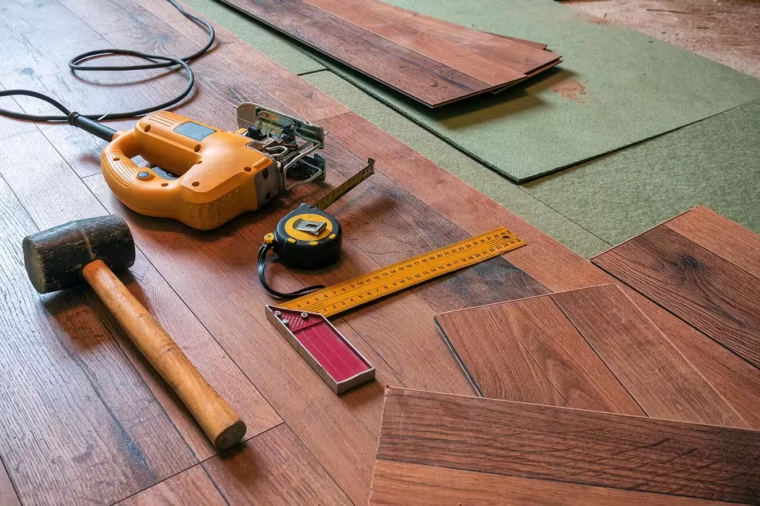
This LVP flooring installation cost calculator estimates the full installed price of luxury vinyl plank, not just the planks. Enter your room sizes, pick a plank grade and tell it what’s coming out, and it adds labor, removal, leveling, baseboard, transitions and stairs. Most DMV homes land between about $6 and $14 per square foot installed, depending mostly on plank grade, what’s underneath and how much trim work the job needs.
Most online tools multiply square feet by a single price and stop there, unlike this LVP flooring installation cost calculator. That’s why real quotes often come in higher than people expect. The planks are usually less than half of the bill. The rest is labor, tearing out the old floor, fixing the subfloor, trim and stairs, and those items change a lot from house to house.
This guide gives you the calculator first, then explains every input, shows three worked examples and covers the costs the calculator can’t see. Alvin wrote it for FIXO, using the same line items FIXO prices on LVP jobs around the DMV.
What this cost calculator covers
Key takeaways
- Planks are often less than half of the installed price. Labor, removal, prep and trim make up the rest.
- Plank grade moves the total most: entry, mid-grade and premium planks can differ by $3 or more per square foot.
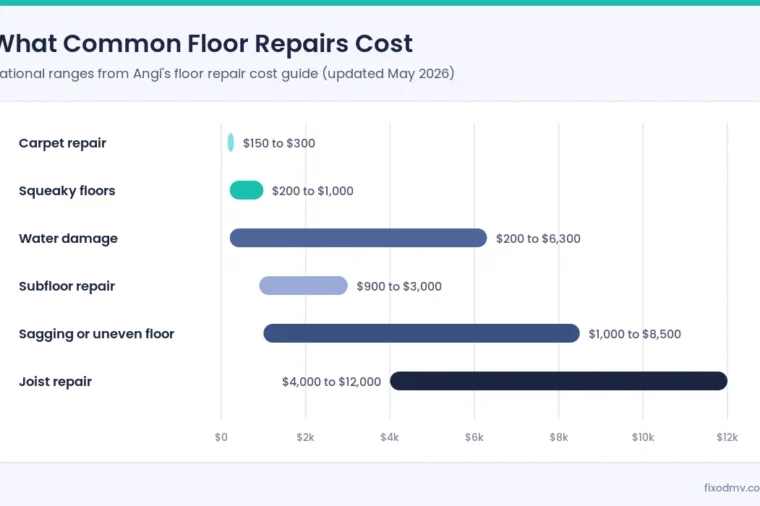
- Ceramic tile removal and subfloor leveling can add more than most homeowners expect.
- Stairs are priced per step and can add $600 to $1,500 or more to a typical flight.
- Use the LVP flooring installation cost calculator for budgeting, then get a measured, written quote before you commit.
LVP Flooring Installation Cost Calculator
Add up to four rooms, plus any closets or halls as extra square feet. The vinyl plank flooring cost calculator returns a low and high figure for each line item, a total range, and the installed price per square foot.
The ranges are planning figures for the DC metro area, based on the same line items in our LVP flooring installation cost guide. Small jobs often carry a minimum charge, so a single small room can cost more per square foot than the calculator shows.
What Each Input in the Calculator Means
Every input in the LVP flooring installation cost calculator matches a line on a real installer's quote. Here's what each one covers and why it moves the price.
Rooms and Extra Square Feet
The calculator multiplies each length by its width and adds them up. It also uses the room sizes to estimate wall length for baseboard. Closets, halls and small nooks can go in the extra box, but they won't count toward baseboard, so add them as a room if you plan to trim them.
Plank Grade
Grade is the single biggest driver of LVP installation cost. Entry or rental-grade planks with a thin wear layer run about $1.50 to $2.50 per square foot. Mid-grade rigid core with a 12 to 20 mil wear layer runs about $2.50 to $4. Premium wide planks with thicker wear layers run about $4 to $7. Wear layers and cores are covered in more depth in our LVP flooring explainer.
Waste Factor
You always buy more flooring than the room measures, because cuts at walls, doorways and the end of each row produce offcuts. About 8 percent covers simple rectangular rooms, 10 percent suits most homes, and 15 percent is safer for rooms with many angles, a diagonal layout or a pattern such as herringbone.
Old Floor Removal
Carpet and pad come up quickly, at roughly $0.75 to $1.25 per square foot including haul-away. Vinyl and laminate run about $1 to $2. Ceramic tile is the slowest and dustiest to remove, at about $2 to $5, and it often leaves a rough subfloor that needs extra prep.
Subfloor Leveling
Rigid-core LVP needs a flat base. Many products allow roughly 3/16 inch of dip or hump across a 10-foot span. Dips are filled with a cement-based leveler, at about $1 to $2 per square foot. If you don't know yet, leave it at zero and treat leveling as a likely add-on once an installer checks the floor.

Baseboards
You can reuse existing baseboards and add quarter round, or replace them. New primed baseboard installed runs about $4 to $8 per linear foot. The calculator estimates wall length from your room sizes and subtracts about 3 feet per doorway.
Transitions
Every spot where the new floor meets another floor, such as tile in a bathroom or carpet in a bedroom, needs a transition strip. The calculator uses about $35 to $60 per doorway for materials and fitting.
Stairs
Stairs are priced per step, at about $45 to $120, with open-sided stairs and custom nosings at the top of that range. A typical 13-step flight adds roughly $580 to $1,560.
How to Measure Rooms for Your LVP Installation Cost
Accurate inputs give the LVP flooring installation cost calculator something useful to work with. Measure each room wall to wall at its longest and widest points, in feet, and round up to the next half foot. For L-shaped rooms, split the room into two rectangles and enter them as separate rows.
- Include closets if they'll get the same floor.
- Measure under appliances if the floor will run under the fridge or range.
- Skip cabinets and islands. Most installers don't run floating LVP under fixed cabinets.
- Count doorways that will need a transition to another floor type.
- Count stair treads, not risers, if the stairs are part of the job.
If you'd rather work out the number of boxes than the cost, our flooring box calculator handles quantities, and the method is the same for vinyl plank.
Three Worked Examples From the Calculator
These examples run typical DMV projects through the vinyl plank flooring cost calculator with mid-grade rigid-core planks and a 10 percent waste factor.

Example 1: Condo Bedroom
A 12 by 11 foot bedroom plus a 10 square foot closet, carpet coming out, existing baseboards reused and one transition at the hall.
| Line item | Low | High |
|---|---|---|
| Planks (156 sq ft with waste) | $390 | $620 |
| Installation labor (142 sq ft) | $280 | $430 |
| Carpet and pad removal | $110 | $180 |
| One transition | $40 | $60 |
| Total | $820 | $1,290 |
That works out to about $5.75 to $9 per square foot. In practice, a room this size often hits an installer's minimum charge, and a condo may also ask for a sound-rated underlayment, which isn't in the calculator.
Example 2: Main Level With Stairs
Three rooms of 20 by 15, 14 by 12 and 12 by 10 feet, plus 40 square feet of hallway. Carpet comes out, 60 square feet need leveling, new baseboard goes in, four doorways get transitions and a 13-step stair is covered.
| Line item | Low | High |
|---|---|---|
| Planks (691 sq ft with waste) | $1,730 | $2,760 |
| Installation labor (628 sq ft) | $1,260 | $1,880 |
| Carpet and pad removal | $470 | $780 |
| Leveling (60 sq ft) | $60 | $120 |
| New baseboard (154 lin ft) | $620 | $1,230 |
| Transitions (4) | $140 | $240 |
| Stairs (13 steps) | $580 | $1,560 |
| Total | $4,860 | $8,580 |
About $7.75 to $13.65 per square foot. Notice that baseboard and stairs together add more than the labor for the main floor, which is why two quotes for the same rooms can show very different LVP installation cost totals.
Example 3: Basement on Concrete
One 30 by 20 foot basement room on bare concrete, 120 square feet of leveling, new baseboard and two transitions.
| Line item | Low | High |
|---|---|---|
| Planks (660 sq ft with waste) | $1,650 | $2,640 |
| Installation labor (600 sq ft) | $1,200 | $1,800 |
| Leveling (120 sq ft) | $120 | $240 |
| New baseboard (94 lin ft) | $380 | $750 |
| Transitions (2) | $70 | $120 |
| Total | $3,420 | $5,550 |
About $5.70 to $9.25 per square foot. Basements skip removal costs but often need moisture testing and sometimes a vapor barrier, which the installer prices after seeing the slab.
What the Calculator Can't See
No vinyl plank flooring cost calculator can price what's hidden until the old floor is up. Budget a cushion for these:
- Subfloor repair. Soft plywood near toilets, tubs or dishwashers has to be cut out and replaced.
- Moisture testing and vapor barriers. Concrete slabs in basements may need testing and a barrier.
- Underlayment. Many planks have an attached pad, but condos may require a separate sound-rated layer.
- Moving furniture and appliances. Some crews include it, others charge per room or per appliance.
- Door trimming. Doors may need trimming to clear the new floor height.
- Older floor coverings. Vinyl tile and its adhesive in older homes may need asbestos testing before removal.
A 10 to 15 percent contingency on top of the calculator's high figure is a sensible cushion for older homes.
LVP Installation Cost per Square Foot, Explained
Installers and websites quote per square foot because it's easy to compare, but the number hides what's included. A low per-square-foot price might cover planks and labor only, while a higher one includes removal, trim and transitions.
| What's included | Typical DMV range per sq ft |
|---|---|
| Installation labor only | About $2 to $3 |
| Planks plus labor | About $4.50 to $10 |
| Full job with removal and trim | About $6 to $14 |
When you compare per-square-foot quotes, make sure each one covers the same scope. The LVP flooring installation cost calculator shows the full job, so its per-square-foot figure lines up with the third row.
Ways to Lower Your LVP Installation Cost
Once the LVP flooring installation cost calculator shows your range, a few choices can bring it down. Some savings are easy, and some cost you later. These tend to be safe:
- Pick mid-grade over premium for bedrooms and low-traffic rooms, and save the thicker wear layer for kitchens and entries.
- Reuse baseboards if they're in good shape, adding quarter round to cover the expansion gap.
- Do several rooms at once. Larger jobs spread setup and minimum charges across more square feet.
- Remove carpet yourself if your installer agrees, though leave tile removal to the crew.
- Clear the rooms before install day so the crew isn't billing for moving furniture.
Savings that usually backfire include skipping leveling, choosing the thinnest wear layer for a busy kitchen, and installing over a damp slab without testing. Those shortcuts lead to gaps, clicking and early wear.
LVP Installation Cost by Room
Some rooms cost more per square foot than others, even with the same plank. Use these notes when you fill in the vinyl plank flooring cost calculator room by room.
| Room | What adds cost | Calculator tip |
|---|---|---|
| Kitchen | Moving appliances, cutting around cabinets, toe-kick trim | Enter only open floor, not under fixed cabinets |
| Bathroom | Pulling and resetting the toilet, tight cuts, moisture | Use 15% waste and ask about a toilet reset fee |
| Basement | Moisture testing, leveling, vapor barrier | Be generous with leveling square feet |
| Bedrooms | Carpet removal, closets | Add closets as extra square feet |
| Stairs | Per-step labor and nosings | Count treads only |
| Open main level | Long runs, transitions to tile | Count every doorway transition |
Kitchens and bathrooms often come in above the LVP flooring installation cost calculator's per-square-foot average, because so much of the work is cutting around fixtures. Bedrooms and open living areas usually come in below it, since crews can lay long, straight rows quickly. Mixing room types in one job evens that out, which is one reason whole-floor projects price better per square foot than single rooms.
How the Vinyl Plank Flooring Cost Calculator Compares With Other Floors
The same rooms cost different amounts in other materials. As a rough guide for the DMV, laminate tends to come in a little below LVP for planks of similar quality, engineered hardwood above it, and tile well above it once setting materials and labor are counted. The LVP flooring installation cost calculator is tuned to vinyl plank, so treat its figures as LVP-only, and see our tile installation cost guide for tile pricing.
In basements and kitchens, LVP installation cost often beats the alternatives because the planks need no sealing, tolerate moisture better than laminate and go down faster than tile. In dry bedrooms, laminate can be the cheaper choice for a similar look.
Comparing Your Estimate With Real Quotes
Use the line items from the LVP flooring installation cost calculator as a checklist when quotes arrive. A good quote lists each one, so you can see where two bids differ.
- Is the plank brand, line and wear layer named?
- Is removal and disposal included?
- How is leveling priced, and is moisture testing included over concrete?
- Are baseboards, quarter round and transitions listed?
- Are stairs priced per step?
- Is the contractor licensed for your area?
Licensing differs across the DMV. Virginia requires a DPOR license for jobs of $1,000 or more, which you can check with the DPOR license lookup. Maryland requires an MHIC license to install flooring. Our guide to choosing vinyl flooring contractors covers the rest of the vetting process.
LVP Installation Cost FAQs
How accurate is an LVP flooring installation cost calculator?
It's accurate enough for budgeting, usually within a few hundred dollars on a straightforward job, as long as your measurements and inputs are right. It can't see hidden subfloor damage, moisture problems or minimum charges, so treat the result as a range and confirm it with a measured, written quote.
What does LVP installation cost per square foot?
In the DC, Maryland and Northern Virginia area, labor alone runs about $2 to $3 per square foot. Planks plus labor run about $4.50 to $10, and a full job with removal, trim and transitions usually lands between about $6 and $14, depending on plank grade and prep.
Why might a real quote come in above the calculator?
Common reasons are a minimum charge on small jobs, subfloor repair, moisture testing on concrete, a required sound underlayment in condos, moving appliances, or a premium plank. Ask the installer to list each line item so you can compare it with the calculator's breakdown.
How much LVP should I buy for waste?
About 8 percent extra for simple rectangular rooms, 10 percent for most homes and 15 percent for rooms with many angles or a diagonal or herringbone layout. Keep a spare box or two after the job for future repairs.
Does the calculator include underlayment?
No. Many rigid-core planks have an attached pad, so no extra underlayment is needed over wood subfloors. Concrete may need a vapor barrier, and condos may require a separate sound-rated underlayment. Ask your installer whether either applies to your floor.
Is it cheaper to install LVP myself?
DIY removes the labor line, roughly $2 to $3 per square foot, but you'll need tools, time and the skill to level the subfloor and fit trim. Mistakes such as skipping the expansion gap or installing over a wavy subfloor can cost more to fix than professional labor.
Getting a Firm Price
An LVP flooring installation cost calculator gets you a realistic budget in a few minutes, and it shows where the money goes. The firm number comes from a measured visit, once someone has checked the subfloor, the doorways and the stairs.
FIXO crews put in luxury vinyl plank throughout the DMV for one fixed price, settled before the crew arrives. See our LVP flooring installation page, read up on the tools an install takes, or share your measurements on the instant quote form.
 4.9 on Google14 reviews
 Licensed & InsuredVirginia · Maryland · Washington, D.C.
 Workmanship GuaranteedInstallation backed in writing
 Locally OwnedServing NoVA, MD & D.C.