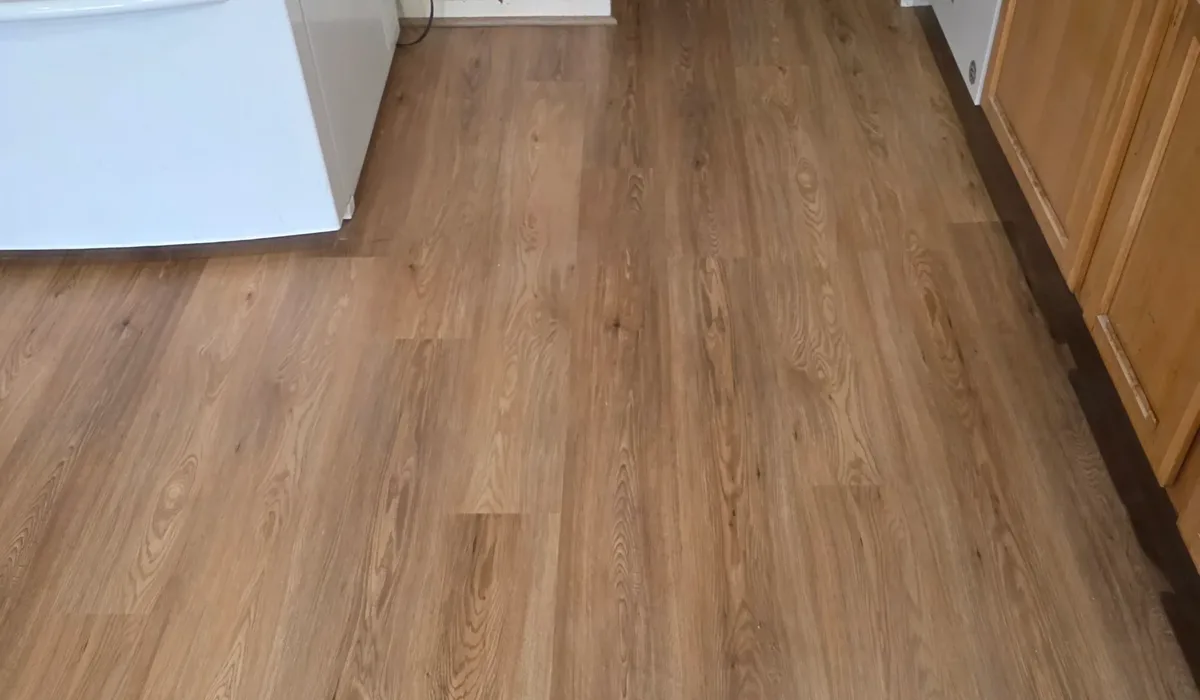
LVP installation in Bethesda MD usually costs in the $4 to $9 range per square foot installed, and a typical 600 square foot main level is done in a day. Montgomery County does not require a permit to replace floor coverings, but Maryland law does require the installer to hold a Maryland Home Improvement Commission (MHIC) license. In Bethesda, the real decisions are the plank grade, how flat the subfloor is, slab moisture in lower levels, and condo sound rules downtown.
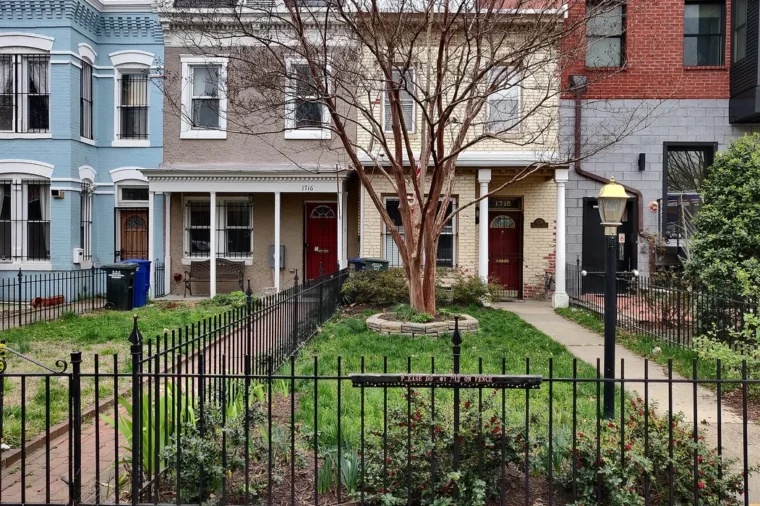
Bethesda has almost every kind of house a flooring crew can meet in one zip code: 1940s colonials and Cape Cods in Bethesda and Edgemoor, split-levels and ramblers from the 1950s and 60s, hillside homes with walk-out lower levels off River Road and Bradley Boulevard, new rebuilds on the same streets, and concrete condo towers around Bethesda Row and Woodmont. LVP installation in Bethesda MD looks a little different in each of them.
This guide walks through where luxury vinyl plank works best in Bethesda homes, the Maryland and Montgomery County rules that apply, how to pick a plank, what prep the floor needs, what the job costs and which questions to put to installers. Alvin wrote it for FIXO, which installs LVP across Bethesda, Silver Spring and the rest of the DC area.
What this Bethesda LVP guide covers
Key takeaways
- Replacing floor coverings appears on Montgomery County’s list of projects that probably need no permit, provided nothing structural changes.
- Maryland requires an MHIC license for anyone you pay to install wood, tile or other hard flooring, including LVP.
- Rigid core LVP needs a flat base, usually within 3/16 inch over 10 feet, so older Bethesda floors often need some leveling first.
- Lower levels on hillside lots need a slab moisture check and a vapor barrier under the planks.
- Downtown Bethesda condos often require a sound-rated underlayment and board approval before work starts.
LVP Installation in Bethesda MD by Home Type
The right plank, underlayment and prep depend on what the house is built on. These are the four situations FIXO sees most often in Bethesda.
| Home type | Where LVP usually goes | What to watch for |
|---|---|---|
| 1930s to 1950s colonial or Cape Cod | Kitchens, baths, finished basements | Original hardwood worth keeping, uneven joists, lead paint on trim |
| 1950s and 60s split-level or rambler | Main level, kitchens, lower family rooms | Several floor heights, many transitions, old vinyl tile underneath |
| Hillside home with a walk-out lower level | Lower level, mudroom, laundry | Slab moisture, low spots, drains |
| Condo near Bethesda Row or Woodmont | Whole unit | Sound rules, board approval, elevator booking |
Older Colonials and Cape Cods
Many pre-war Bethesda homes still have oak strip floors on the main level. If that wood is sound, refinishing it often makes more sense than covering it. LVP earns its place in the rooms where water is the problem: kitchens, bathrooms, mudrooms and basements. These houses also tend to have joists that have settled over 80 years, so a dip in the middle of a kitchen is common.
Split-Levels and Ramblers
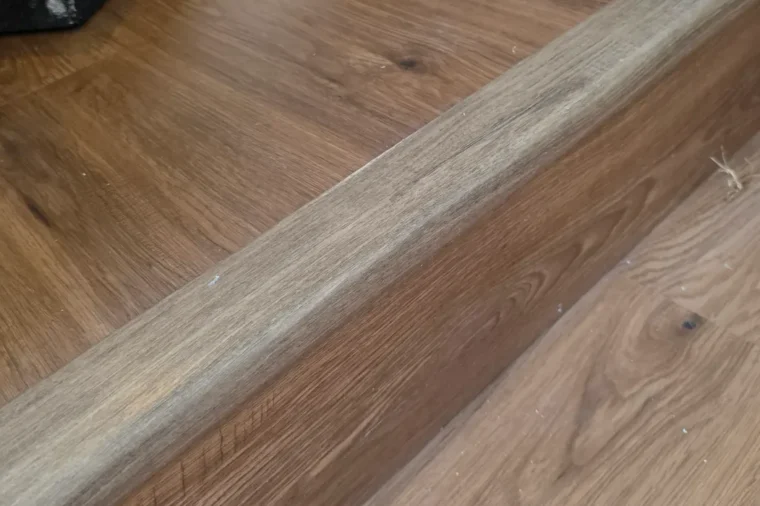
Mid-century houses in neighborhoods like Wood Acres and Bannockburn usually have carpet or old sheet vinyl on several half-levels. LVP is a good fit because one product can run through every level with matching stair nosings. The detail work is in the transitions, where each half-level meets the next.
Hillside Lower Levels
The walk-out lower levels on sloped lots near River Road and Bradley Boulevard sit partly below grade. Waterproof rigid core LVP is one of the best floors for that space, provided the slab is checked for moisture first.
Maryland and Montgomery County Rules
The paperwork for a Bethesda LVP job is light, but two rules matter.
Permits
Montgomery County’s Department of Permitting Services publishes a list of home projects that most likely need no permit, and floor coverings are on it. The county’s residential alterations page says the same about hardwood, tile and carpet when no structural changes are made. Moving walls, plumbing or finishing a basement is different and does need permits. Private covenants and homeowner associations can add their own rules, and the county does not enforce those for you.
The MHIC License
According to the MHIC answers published by Maryland’s Department of Labor, putting in tile, wood or any other hard flooring counts as home improvement work that needs a contractor license, while carpet does not. So the crew you pay to lay LVP in Bethesda ought to hand over an MHIC number without fuss, and you can look it up on the state’s license search. Our tile installation in Maryland guide covers the contract and deposit rules that come with that license.
Lead-Safe Work in Pre-1978 Homes
Removing baseboards, door casings or old flooring in a house built before 1978 can disturb lead paint. The EPA’s lead-safe RRP rule requires paid contractors who disturb painted surfaces in those homes to be certified and to follow containment and cleanup practices. Many older Bethesda homes fall into this group. Old 9-inch vinyl tiles or black mastic under carpet may also need asbestos testing before anyone scrapes them up.
Choosing the Right Plank
Most LVP sold for whole-home installs today is rigid core. Two cores dominate, and the wear layer matters more than either.
SPC or WPC
SPC (stone polymer composite) is dense and thin. It resists dents from furniture and appliances and hides small subfloor flaws better. WPC (wood polymer composite) is thicker and softer underfoot, a little warmer and quieter, but dents more easily. For kitchens and lower levels, SPC is usually the safer pick. For bedrooms over a crawl space, WPC feels nicer. Our LVP explainer goes deeper on the layers.
Wear Layer
The wear layer is the clear top film that takes the scuffs. A 12 mil wear layer suits most homes. Families with large dogs, a busy mudroom or a rental unit should look at 20 mil. Total plank thickness says very little about durability on its own.
Attached Pad
Many planks come with a cushioned pad already bonded to the back. That pad usually replaces a separate underlayment, except where a vapor barrier or a condo-approved sound mat is required.
Subfloor and Moisture Prep
Prep is where Bethesda jobs differ most, because the houses are so varied.
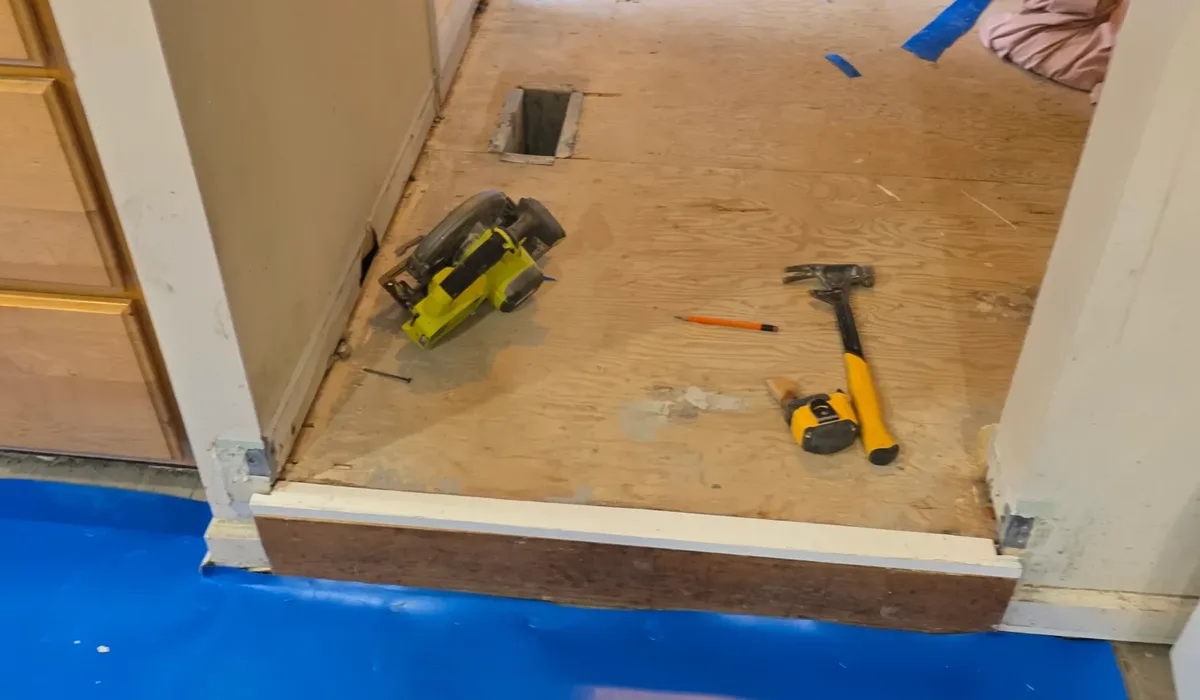
Rigid core planks only perform on a flat base, and most manufacturers set the limit at roughly 3/16 inch of variation over a 10-foot span. Older kitchens with settled joists, and slabs with trowel marks or patched cracks, often exceed that. High spots are ground or sanded down, and dips get a cement-based leveling compound. Our guide to subfloor leveling before flooring explains how installers measure and fix this.
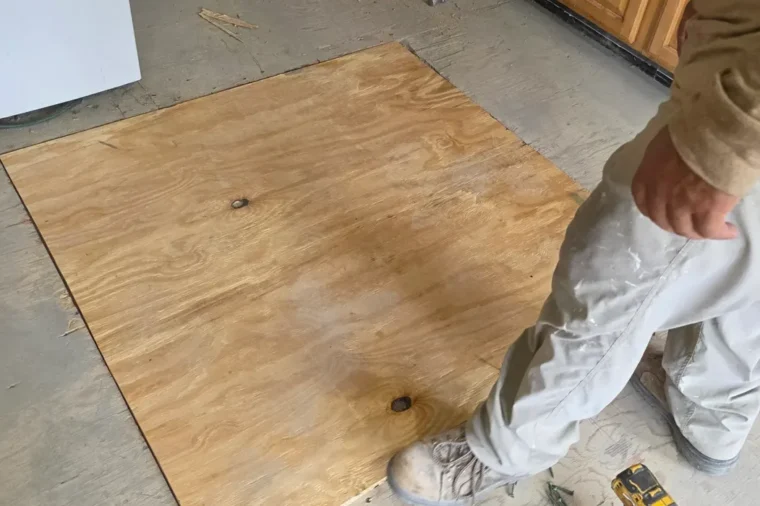
Loose or squeaky subfloor panels get screwed down to the joists. Any old carpet tack strip, staples and adhesive ridges come out, because a plank lays over every bump it sits on.
Lower Levels and Basements
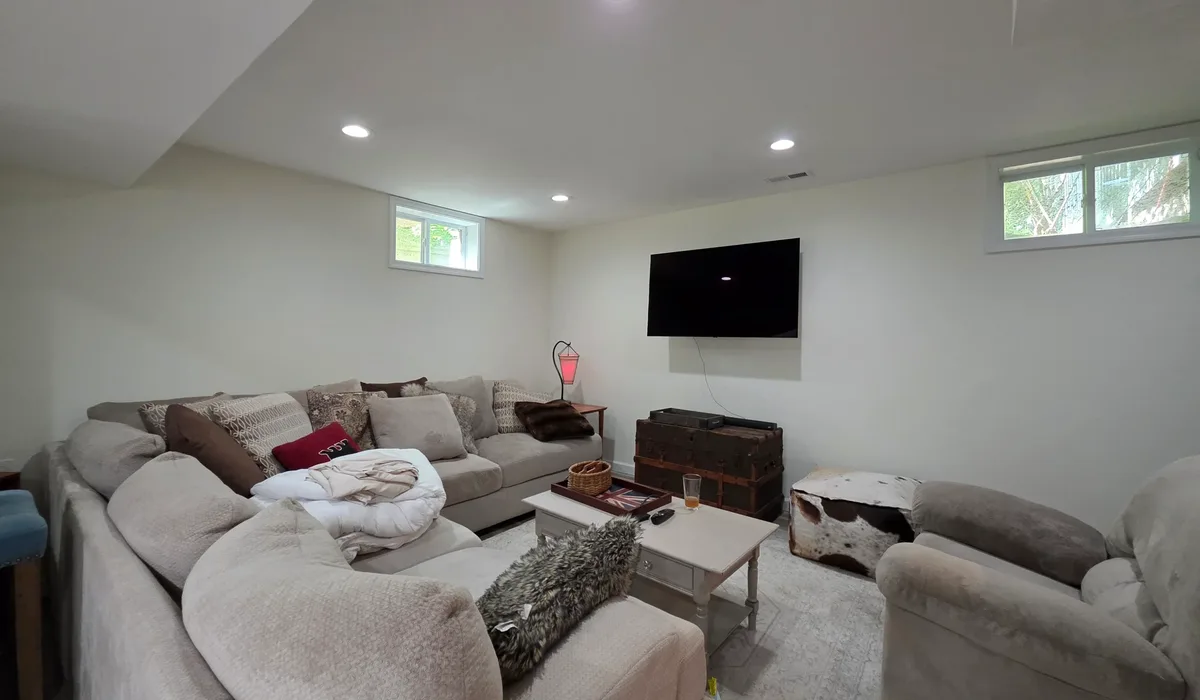
Below-grade rooms are where LVP installation in Bethesda MD pays off most, and where shortcuts cause the most trouble.
- Check the slab. A moisture test before install tells you whether a standard vapor barrier is enough.
- Fix water first. Planks are waterproof, but a slab that takes on water will grow mold under any floor. Gutters, grading and sump pumps come before flooring.
- Use a vapor barrier. On concrete, a 6 mil polyethylene sheet or an underlayment with a built-in barrier goes down first, unless the plank’s attached pad is rated for slabs.
- Mind the ceiling. Lower levels with low ceilings benefit from thin SPC rather than a thick build-up.
Our waterproof basement flooring guide compares LVP with tile and other options for these rooms.
Downtown Bethesda Condos
In concrete buildings near Bethesda Row, Woodmont Triangle and Wisconsin Avenue, the building rules shape the job more than the floor itself.
The International Building Code sets a minimum of 50 for both impact (IIC) and airborne (STC) sound ratings between units in multifamily buildings, and many associations write their own, higher number into the rules. Hard floors without a resilient underlayment rarely reach it. Ask management for the written flooring policy, the required rating, approval forms, insurance certificates and elevator booking rules before you choose a product, so the quoted underlayment is one the board will sign off on.
How Install Day Runs
A well-planned Bethesda LVP job follows the same order every time.
- Measurement. An installer measures each room, checks the subfloor and notes stairs, transitions and anything that needs moving.
- Material arrives with the crew. Rigid core LVP needs little or no acclimation compared with wood, but it should be stored flat in the conditioned house.
- Room prep. Furniture is moved and walls and doorways are protected.
- Removal. Old carpet, pad, tack strip or vinyl comes up and is hauled away.
- Subfloor work. Panels are screwed down, high spots ground and low spots filled.
- Underlayment. Vapor barrier or sound mat goes down where needed.
- Layout and install. Rows are planned so the end pieces are not slivers, then planks are clicked together with an expansion gap at the walls.
- Transitions, trim and stairs. Thresholds, reducers and stair nosings are fitted, and baseboards or shoe molding hide the expansion gap.
- Cleanup and walkthrough. The floor is vacuumed and checked with you before the crew leaves.
At FIXO, a two-person crew usually has a 600 square foot main level walkable the same evening. A whole home with stairs typically takes two days.
What LVP Costs in Bethesda
In the DC metro, luxury vinyl plank usually comes to roughly $4 to $9 a square foot once installed, with plank grade and prep doing most of the moving. Bethesda sits in that range, though older homes and condos tend to land toward the upper end because of leveling, trim work and building logistics.
| Line item | Typical DMV range |
|---|---|
| Carpet and pad removal | About $0.75 to $1.25 per sq ft |
| Vinyl or laminate removal | Roughly $1 to $2 per sq ft |
| Ceramic tile removal | About $2 to $5 per sq ft |
| Leveling low spots | About $1 to $2 per sq ft of area treated |
| Stairs with matching nosing | About $45 to $120 per step |
These are planning figures from FIXO’s LVP flooring installation cost guide. To run your own rooms, try the LVP installation cost calculator, then get a measured quote before you commit.
Questions to Ask Bethesda LVP Installers
- What is your MHIC license number, and is it current?
- Are you lead-safe certified for a home built before 1978?
- Who measures, and will that person be on the install crew?
- Is subfloor leveling included, or priced after you see the floor?
- Which underlayment or vapor barrier will you use, and why?
- Are removal, baseboards, transitions and stairs itemized on the quote?
- What workmanship warranty do you give, in writing?
A contractor who answers these without hesitation usually runs a tidy job. One who cannot give an MHIC number is not one to hire in Maryland.
Caring for LVP
LVP needs very little. Sweep or vacuum grit, which scratches the wear layer. Damp-mop with a cleaner made for vinyl and skip steam mops, wax and oil soaps. Put felt pads on chair legs and use a mat at the door from the garage or yard. Keep a box of spare planks, so a damaged board can be swapped years from now.
LVP Installation in Bethesda MD FAQs
Do I need a permit for LVP installation in Bethesda?
Usually not. Floor coverings are on Montgomery County’s list of projects that probably need no permit, provided no structural work is involved. Structural changes, new plumbing or a basement finish do need permits, and a condo board or HOA may ask for its own approval.
Does an LVP installer need a license in Maryland?
Yes. Maryland’s Home Improvement Commission treats hard flooring such as tile, wood and LVP as home improvement work that needs a contractor license. Get the MHIC number and look it up on the state’s license search before signing.
How much does LVP installation cost in Bethesda MD?
Most DMV projects land around $4 to $9 per square foot installed. Removal of tile, subfloor leveling, new baseboards, stairs and condo sound underlayment are the items that push a Bethesda job higher.
Can LVP go in a Bethesda basement?
Yes. Rigid core LVP ranks among the top choices for basements since water won’t harm the planks. The slab should be checked for moisture, any water problems fixed first, and a vapor barrier used unless the plank is rated for direct slab installs.
How long does LVP installation take?
A typical 600 square foot main level is finished and walkable the same day. A whole house with stairs usually takes about two days, plus any time a leveling compound needs to cure.
Is LVP allowed in Bethesda condos?
Most buildings allow it with conditions. Many insist on an underlayment with a minimum IIC sound rating, along with written board approval, proof of insurance and booked elevator time.
Planning Your Project
Good LVP installation in Bethesda MD starts with the house: its age, what is under the current floor, whether the room is below grade and who must sign off. Pick SPC with a wear layer of 12 to 20 mil for busy rooms, get the subfloor flat, and treat lower-level slabs for moisture.
FIXO installs luxury vinyl plank across Bethesda and Montgomery County. See our LVP flooring installation service, our flooring installation in Bethesda page, or price your rooms with our instant quote form.
 4.9 on Google14 reviews
 Licensed & InsuredVirginia · Maryland · Washington, D.C.
 Workmanship GuaranteedInstallation backed in writing
 Locally OwnedServing NoVA, MD & D.C.