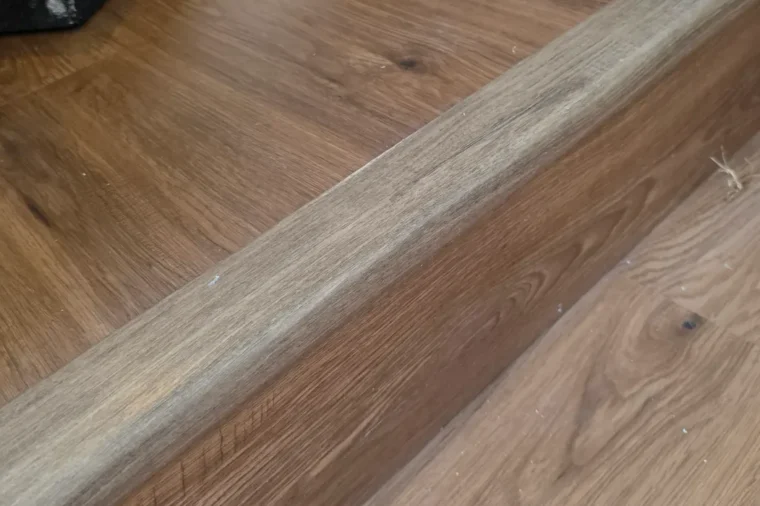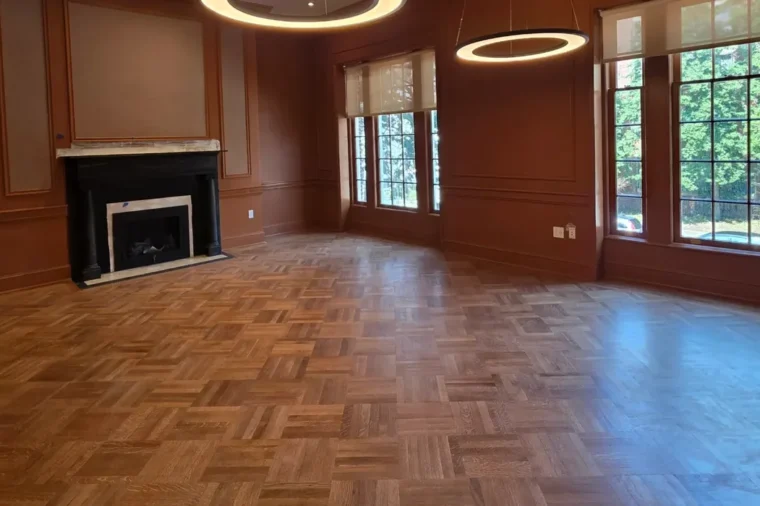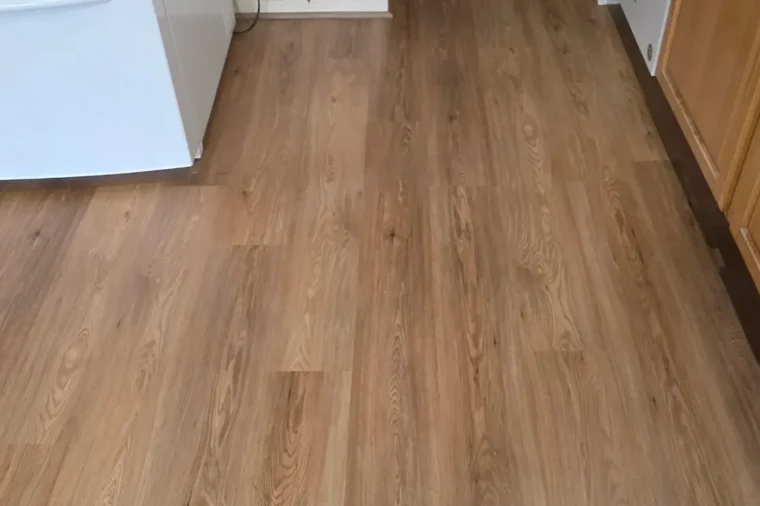
Tile installation in Maryland comes with more rules than most homeowners expect. The state treats tile and wood flooring as home improvement work, so the installer needs a Maryland Home Improvement Commission (MHIC) license, and the deposit can’t be more than one-third of the contract price. The floor covering itself usually doesn’t need a county permit, but moving plumbing or walls in a bathroom does. Ceramic and porcelain usually cost $12 to $25 a square foot once installed.
Most advice about tile is about grout color and layout. This guide is about the decisions that cost Maryland homeowners money when they’re skipped: the license, the contract, the county permit question, what’s hiding under old bathroom tile and how the floor below will hold up. It’s laid out as nine checks you can work through before you sign with anyone.
Alvin wrote it for FIXO, which installs tile and other floors in Montgomery County, Prince George’s County and across Maryland, Northern Virginia and Washington DC.
What this guide covers
- Check 1: The MHIC license
- Check 2: The contract and deposit
- Check 3: County permits
- Check 4: What’s under the old tile
- Check 5: Lead-safe work in older homes
- Check 6: Subfloor and waterproofing
- Check 7: Basement slabs
- Check 8: The right tile for each room
- Check 9: Price and schedule
- Questions to ask installers
- FAQs
- Planning your project
Key takeaways
- Maryland law counts tile and wood flooring as home improvement work, so the contractor needs an MHIC license. Carpet installation doesn’t.
- An MHIC contractor can’t take more than one-third of the price as a deposit or take any payment before the contract is signed.
- Montgomery County lists floor coverings as work that most likely needs no building permit, while interior alterations and plumbing changes follow other rules.
- Many older Maryland bathrooms have thick mortar-bed tile, which changes demolition time, floor height and price.
- Ceramic and porcelain tile installation in Maryland usually runs $12 to $25 per square foot installed, with natural stone higher.
Check 1: The MHIC License for Tile Installation in Maryland
The first check for tile installation in Maryland is the simplest, and it protects you more than any review site. The Maryland Department of Labor’s MHIC frequently asked questions state that installing tile, wood or other flooring requires a home improvement contractor license. Installing carpet is the exception and falls outside the definition.
That means anyone you pay for tile installation in Maryland should be able to give you an MHIC license number. Here’s how to use it:
- Look it up. The MHIC License Search on the Maryland Department of Labor site shows whether the license is current. You can also call the commission at 410-230-6231.
- Match the name. The business name on the license should match the name on the contract and the check you write.
- Know about the Guaranty Fund. Maryland runs a fund that may compensate homeowners for certain actual losses caused by licensed contractors. Hiring someone unlicensed means giving up that safety net.
Subcontracting is common in tile work. If the company you hire sends a separate tile setter, the company’s license still has to cover the job, so ask who will be on site.
Check 2: The Contract and the Deposit
Maryland spells out what a home improvement contract must contain. According to the Department of Labor’s guidance on MHIC contracts, the agreement has to be written, legible and signed by both sides, and it should include:
- A description of the work and the materials
- The contractor’s name, address and MHIC license number
- Approximate start and substantial completion dates
- The Guaranty Fund notice
- Notices for financing, arbitration or door-to-door sales when those apply
The deposit rule is the one people miss. A licensed contractor can’t accept more than one-third of the contract price up front and can’t take any payment before the contract is signed. After that, the payment schedule is up to you and the contractor. If a salesperson signs you up at your front door, the Door-to-Door Sales Act lets you cancel until midnight of the fifth business day, or the seventh for buyers 65 and older.
For the tile itself, ask the contract to name the tile, the grout, the setting materials and the backer or membrane. Vague lines such as “install tile per customer selection” leave too much room for substitution.
Check 3: County Permits and Local Rules
For tile installation in Maryland, the tile alone rarely triggers a permit. The work around it often does. Montgomery County’s permits required and no permits required list puts floor coverings and cabinet replacement on the no-permit side and interior alterations on the permit side. Plumbing work points to WSSC Water rather than the county.
| Part of the job | How it’s usually treated in Montgomery County |
|---|---|
| New floor tile over a sound floor | Floor coverings appear on the no-permit list |
| Moving or removing walls, reframing a bathroom | Interior alteration, listed as needing a permit |
| Moving a toilet, drain or shower valve | Plumbing, handled through WSSC Water |
| New circuits for heated floors | Electrical work, check the county’s electrical permit rules |
The county’s list notes that it doesn’t cover municipal or HOA rules. Rockville, Gaithersburg and Takoma Park run their own permit offices, so check with the city if you live inside one. In Prince George’s County, permits go through the Department of Permitting, Inspections and Enforcement (DPIE). Howard, Anne Arundel and Frederick counties each have their own offices too.
Condominium owners have one more step. Many Maryland condo associations ask for an alteration request, the installer’s insurance certificate and, for upper floors, a sound-rated underlayment beneath tile.
Check 4: What’s Under the Old Tile
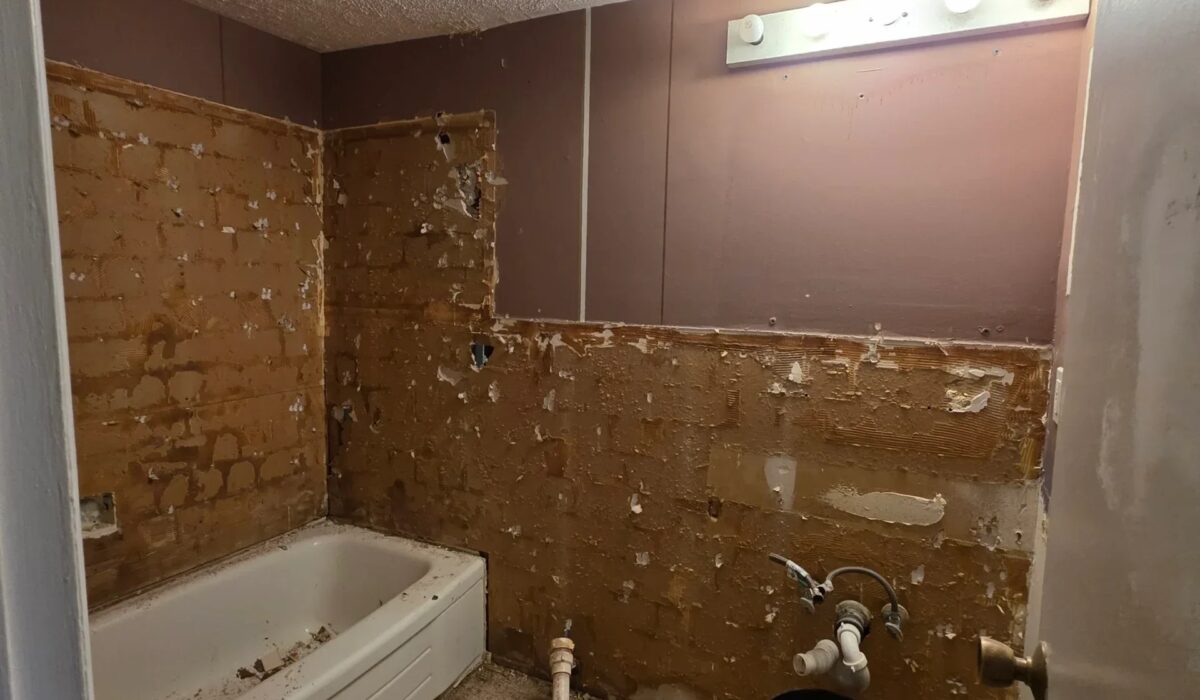
Older houses can hide a lot under a bathroom floor, and that shapes tile installation in Maryland more than any design choice. Cape Cods, ramblers and colonials from the 1940s through the 1960s in places like Silver Spring, Wheaton, Bethesda, Takoma Park and Hyattsville often have mortar-bed tile. That means the tile sits on a thick layer of sand and cement, sometimes reinforced with wire mesh, rather than on thin-set over board.
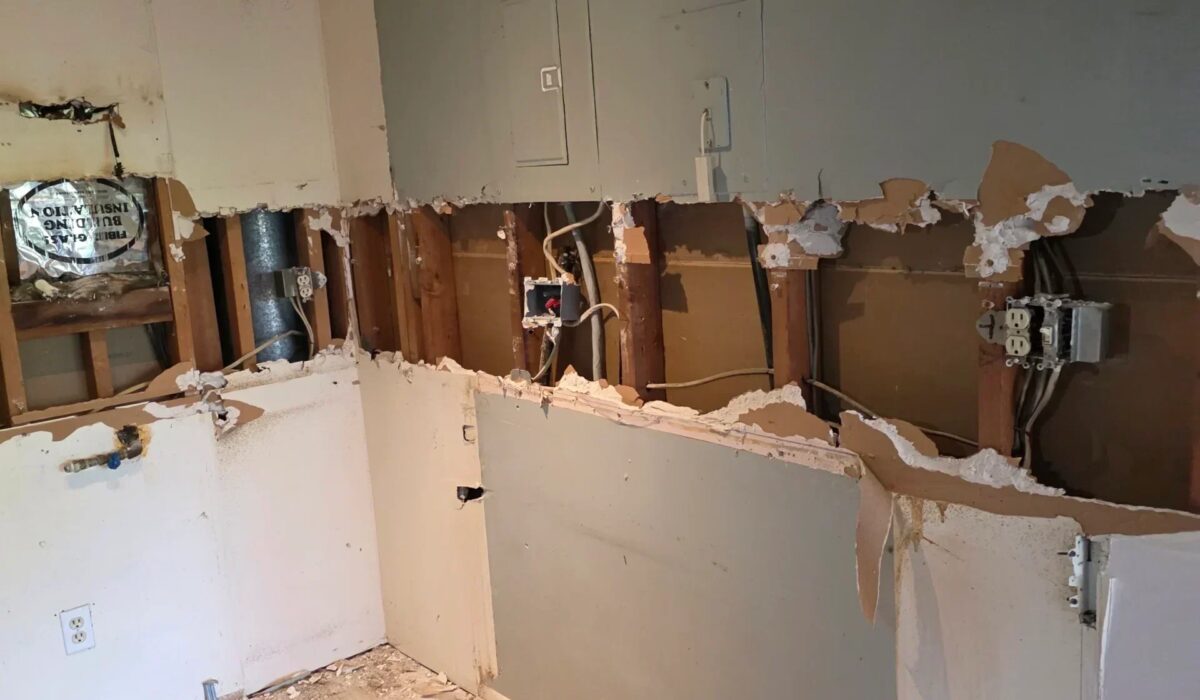
Mortar-bed floors and walls were built to last, and they often have. When they come out, though, the job changes:
- Demolition takes longer. Breaking out a mortar bed is heavier work than lifting thin-set tile, and there’s more debris to haul.
- The floor drops. Removing a thick mortar bed can leave the bathroom lower than the hallway, so the new floor has to be built back up to meet the threshold.
- Hidden problems surface. Old cast-iron drains, rotted subfloor near the toilet and undersized joists show up once the floor is open.
A good quote for tile installation in Maryland homes of this age includes an allowance for what’s found under the floor, so you aren’t surprised mid-job. Ask how the installer prices extra subfloor repair if the plywood near the toilet is soft.
Check 5: Lead-Safe Work in Pre-1978 Homes
A large share of Maryland’s housing was built before 1978, when lead paint was still in use. Federal rules require firms that disturb painted surfaces in those homes to follow lead-safe work practices under the EPA Renovation, Repair and Painting rule. A bathroom tile project often disturbs painted walls, trim and door casings, so the rule can apply even when the main job is the floor.
Ask whether the company is lead-safe certified, how it contains dust and how it cleans up at the end of each day. It matters most in homes with young children.
Check 6: Subfloor and Waterproofing
Tile is rigid, and it cracks when the floor beneath it flexes, so every tile installation in Maryland starts with the subfloor. Tile industry guidance commonly sets a deflection limit of L/360 for ceramic and porcelain and a stiffer L/720 for natural stone. In plain terms, stone needs a floor about twice as stiff as ceramic does. Older joists that feel bouncy may need reinforcement before stone goes down.
Over a sound wood subfloor, most installers use cement backer board or an uncoupling membrane under the tile. In showers, a waterproofing membrane under the tile does the real work, because grout and tile alone aren’t waterproof.
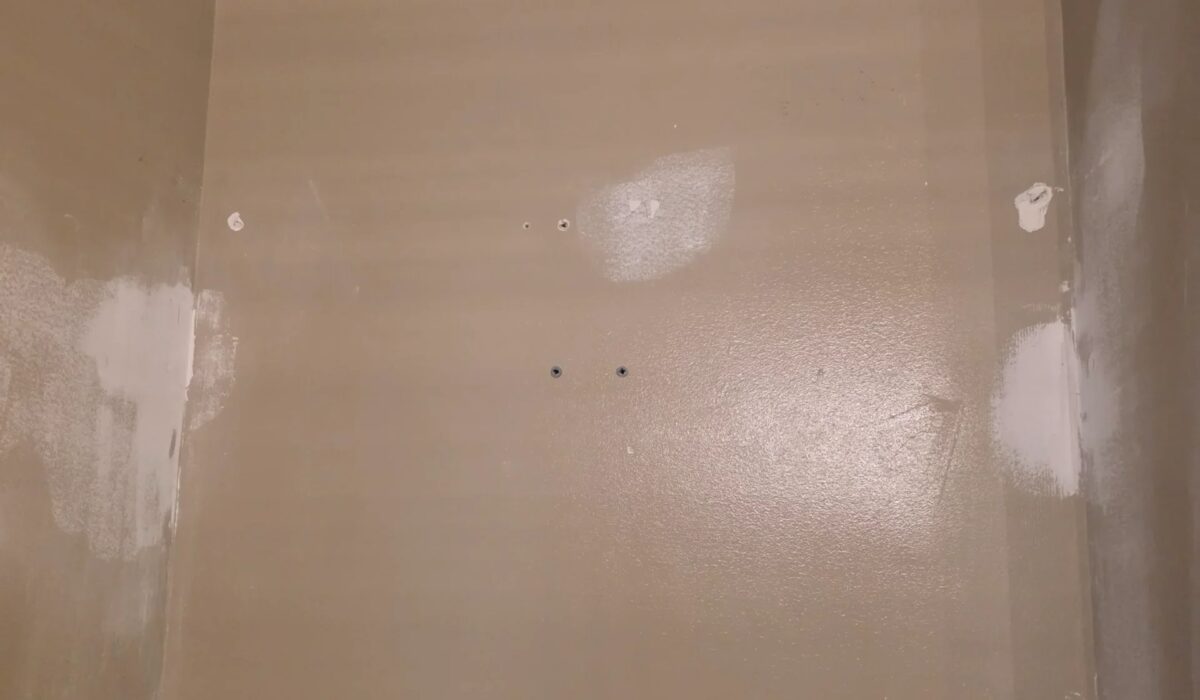
Ask the installer to name the products for each layer: backer or membrane, thin-set, grout and any sealer. Our guide to tile flooring installation mistakes shows what happens when one of those layers is skipped.
Check 7: Basement Slabs
Porcelain is one of the few floors that shrugs off a damp basement, which makes basement tile installation in Maryland popular. The slab still needs attention first:
- Cracks. Hairline shrinkage cracks can be bridged with a crack isolation membrane. Cracks that move or change width need a structural look before tile goes over them.
- Flatness. Large-format tile needs a very flat slab. Low spots get filled with a leveling compound.
- Water. If the basement takes on water in heavy rain, fix the drainage or sump first. Tile will survive water, but the room won’t be usable.
Check 8: The Right Tile for Each Room
Choosing tile is the fun part of tile installation in Maryland, but the right pick depends on the room and the season. Winter brings road salt and snowmelt to entries and mudrooms, and bathroom floors stay wet.
| Room | Good fit | Why |
|---|---|---|
| Bathroom floor | Matte porcelain, smaller tiles or mosaics in showers | More grip when wet; more grout lines for traction underfoot |
| Kitchen | Through-body or color-body porcelain | Chips show less; handles heavy traffic and dropped pans |
| Entry and mudroom | Textured porcelain with a darker grout | Stands up to salt and grit; hides winter dirt |
| Basement | Porcelain, often wood-look plank | Unaffected by humidity; works over slabs |
| Primary bath feature floor | Natural stone such as marble or slate | Looks rich; needs a stiffer floor and regular sealing |
For floors that get wet, look at the slip resistance figure on the spec sheet. The ANSI standard for ceramic tile uses a wet dynamic coefficient of friction of 0.42 or higher as the benchmark for level interior floors that are walked on when wet. Our guide to the best flooring for bathrooms compares tile with other waterproof options.
Check 9: Price and Schedule
Ceramic and porcelain tile installation in Maryland usually costs $12 to $25 a square foot with labor, while natural stone starts near $18 and can pass $35. The tile is often the smaller share of the bill. Labor, prep and the surprises under the old floor decide most of the total.
| Line item | Typical range |
|---|---|
| Ceramic or porcelain on a floor, labor included | to a sq ft |
| Marble, slate or other stone on a floor, labor included | From about to past a sq ft |
| Taking up thin-set ceramic | About to a sq ft |
| Removing a mortar-bed floor | Higher; usually priced after a look at the floor |
| Toilet pulled and reset with a new wax ring | Roughly 0 to 0 |
| Leveling compound for low spots | About to a sq ft where used |
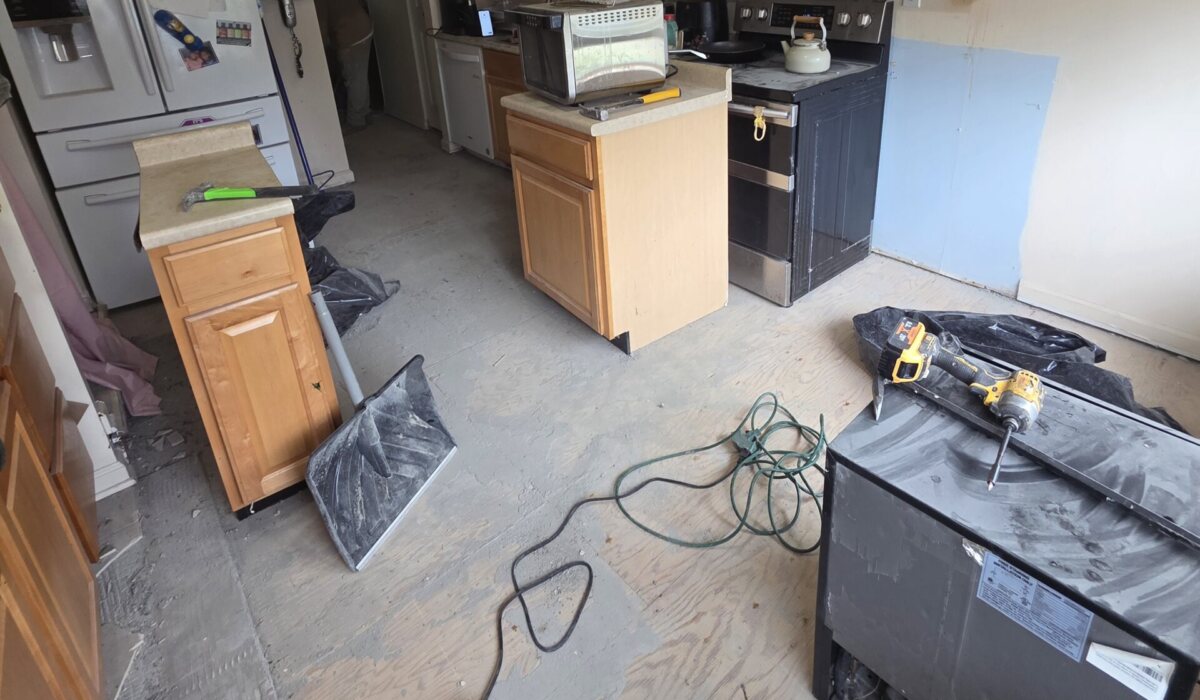
For tile installation in Maryland bathrooms, a small floor usually takes two to three days: one for removal and prep, one to set the tile and one to grout once the thin-set has cured. A kitchen takes longer because appliances move and the room is bigger. Our tile flooring installation cost guide walks through full project examples.
Questions to Ask Maryland Tile Installers
The nine checks above tell you what to look for. These questions help you hear it in a conversation, and the answers make quotes from different Maryland tile installers easier to compare side by side.
- “What’s your MHIC number, and is it in the company’s name?” A quick, confident answer is a good sign. Hesitation or a number in someone else’s name isn’t.
- “Who will set the tile?” Find out whether the person who measures also installs, or whether a subcontractor does the work.
- “What goes under the tile?” The answer should name a backer board or membrane and a thin-set, not just “the usual.”
- “What happens if you find a mortar bed or soft subfloor?” Ask for the price of extra demolition or plywood repair in writing before work starts.
- “How will you handle dust?” In older homes the answer should cover lead-safe practices. In any home it should cover plastic barriers and daily cleanup.
- “When can we use the room again?” Thin-set and grout need time to cure. A clear answer helps you plan a bathroom shutdown around family schedules.
- “What’s covered by your workmanship warranty, and for how long?” Cracked tiles and failed grout in the first year should be the installer’s problem, not yours.
Take notes during each visit. Maryland tile installers who answer the same questions in writing are much easier to hold to their word if something goes wrong. Tile installation in Maryland also tends to book up ahead of spring and the holidays, so start the conversations a few weeks before you want the work done.
One more point for owners planning tile installation in Maryland bathrooms alongside other work: if the job grows into a full remodel with new plumbing, wiring or walls, the permit picture changes. Ask the installer who will pull any permits and who will be present for inspections.
Tile Installation FAQs
Does tile installation in Maryland require a licensed contractor?
Yes. The Maryland Home Improvement Commission says installing tile, wood or other flooring requires a home improvement contractor license. Carpet installation is not covered by that definition. Ask for the MHIC number and check it with the commission’s License Search before you sign.
Do I need a permit to install tile in Montgomery County?
Usually not for the tile itself. Montgomery County lists floor coverings as work that most likely doesn’t need a building permit. Interior alterations such as moving walls do, and plumbing changes go through WSSC Water. Cities such as Rockville, Gaithersburg and Takoma Park have their own rules.
How much deposit can a Maryland tile installer ask for?
No more than one-third of the contract price, and nothing before the contract is signed. Payments after the deposit follow whatever schedule you agree on in writing. If someone asks for half or more up front, treat it as a warning sign.
What does tile installation in Maryland cost?
Ceramic and porcelain usually cost $12 to $25 a square foot with labor, and stone starts around $18 and can pass $35. Removing old tile, leveling, toilet resets and repairs under the old floor are priced on top. Older homes with mortar-bed tile tend to land at the higher end.
Can tile go directly on a basement slab?
Yes, on a sound, flat and reasonably dry slab. Hairline cracks are usually covered with a crack isolation membrane first, and low spots are leveled. Cracks that move or a basement that floods need attention before tile goes down.
How long does a bathroom tile floor take?
A small bathroom floor usually takes two to three days, covering removal, prep, setting and grouting. Mortar-bed removal, subfloor repair or a new shower can add several days. Grout and any sealer need time to cure before heavy use.
Planning Your Tile Installation in Maryland
Good tile installation in Maryland starts on paper: a licensed contractor, a contract that names every layer, a deposit within the legal limit and a clear answer on permits. After that, the floor under the tile matters more than the tile you pick.
FIXO installs ceramic, porcelain and stone tile in Maryland at a fixed price, quoted at a measurement visit. See our tile flooring installation page for what’s included, or our local pages for Bethesda and Silver Spring.
 4.9 on Google14 reviews
 Licensed & InsuredVirginia · Maryland · Washington, D.C.
 Workmanship GuaranteedInstallation backed in writing
 Locally OwnedServing NoVA, MD & D.C.