Flooring repair contractors fix damage in one area without replacing the whole floor: swollen or chipped planks, cracked tile, squeaks, soft spots, worn finishes and water damage. According to Angi’s May 2026 cost guide, most floor repairs cost $500 to $3,000, with homeowners paying about $1,100 on average. Simple fixes such as squeaks can cost as little as $200, while subfloor, joist or water damage can run into the thousands.
A damaged floor rarely needs to come out entirely. One swollen plank by the dishwasher, a cracked tile in the entry or a soft spot by the toilet can usually be repaired, often in a day. The hard part is knowing what the repair should cost, which kind of contractor to call, and whether the problem you can see is the real problem or just a symptom of one underneath.
This price list covers the 12 repairs flooring repair contractors handle most often, with the typical fix, a cost range where reliable figures exist, who should do the work and whether it’s a reasonable DIY job. Alvin put it together for FIXO from the repair calls our crews take in Virginia, Maryland and the District.
What this repair price list covers
Key takeaways
- Angi puts the typical floor repair cost at $500 to $3,000, with labor typically $60 to $120 an hour.
- Fix the source first. A new plank over a wet or soft subfloor will fail again.
- Leaks and structural problems come before flooring work, so the first call may be a plumber or an engineer.
- Maryland requires a home improvement license for tile and wood flooring work, Virginia requires a DPOR license on jobs of $1,000 or more, and DC requires a DLCP license.
- Leftover boxes from the original install are the best way to get a repair that matches.
Floor Repair Cost at a Glance
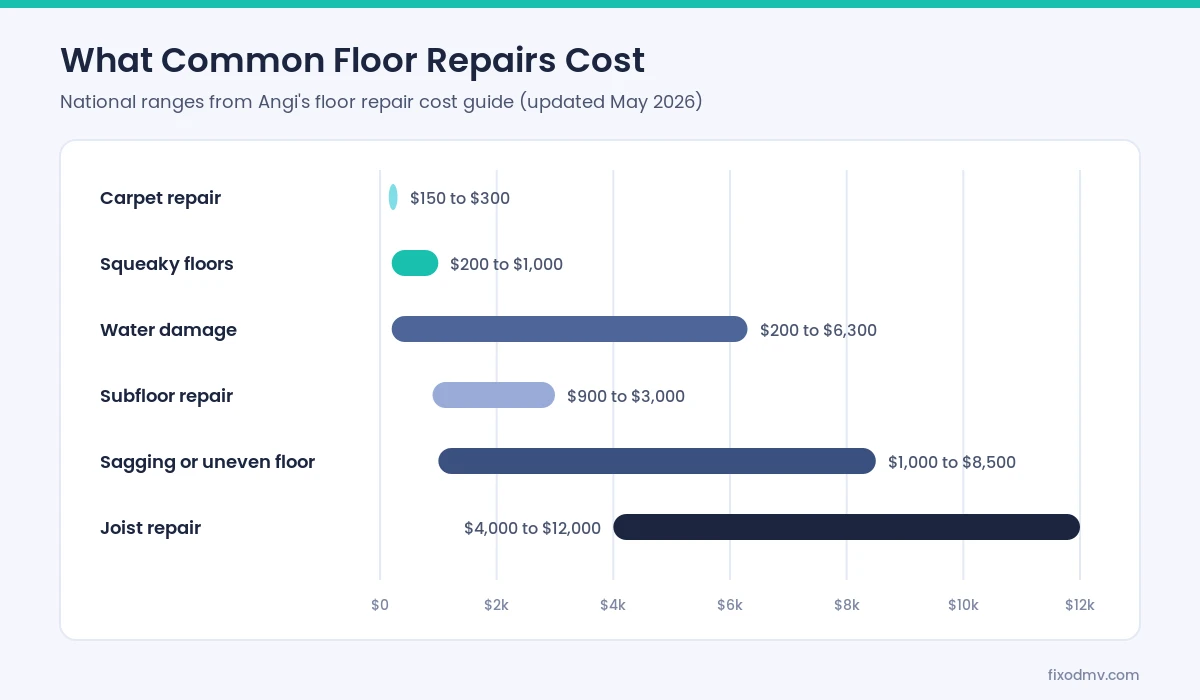
Floor repair cost swings widely because the same symptom can have a cheap cause or an expensive one. A squeak might need a few screws, or it might point to a cracked joist. Use these national ranges from Angi’s floor repair cost guide as a starting point, then expect a contractor to refine the number after seeing the floor.
| Repair | Typical national range |
|---|---|
| Most floor repairs overall | $500 to $3,000 (about $1,100 average) |
| Squeaky floors | $200 to $1,000 |
| Carpet repair | $150 to $300 |
| Hardwood refinishing | $1 to $8 per sq ft |
| Subfloor repair | $900 to $3,000, or about $3 to $10 per sq ft |
| Water damage repair | $200 to $6,300 |
| Sagging or uneven floors | $1,000 to $8,500 |
| Joist repair | $100 to $1,000 per joist; $4,000 to $12,000 for larger jobs |
| Contractor labor | $60 to $120 per hour |
Small jobs often carry a minimum charge, which pushes the floor repair cost per square foot up on tiny repairs, because a crew still has to drive out, bring tools and protect the room. That’s one reason it pays to group several small repairs into a single visit.
12 Repairs Flooring Repair Contractors Handle Most
Each repair below lists what it looks like, the usual fix flooring repair contractors use, what it tends to cost and who should handle it. Costs come from Angi where it publishes a figure. Where it doesn’t, the job is usually priced by the hour or as a small-job minimum.
1. Squeaky Floors
Looks like: creaks or pops when you walk over the same spots. Usual fix: screwing the subfloor to the joists from above with special break-off screws, or from below through an unfinished basement. Cost: $200 to $1,000. Who: a flooring contractor or carpenter. A few squeaks are a fair DIY job if you can reach the joists from below.
2. Swollen or Peaked Laminate
Looks like: raised seams, swollen edges or a ridge where planks push against each other. Usual fix: find the water or the missing expansion gap, then replace the damaged planks. Angi cites an average of about $1,240 for laminate repair. Who: a flooring repair contractor. Buckling has a handful of usual causes, covered in our laminate floor buckling article.
3. Damaged Vinyl Plank
Looks like: a gouge, burn or lifted plank in an otherwise good LVP floor. Usual fix: unclick the rows from the nearest wall, or cut out the damaged plank and glue in a new one. Cost: usually an hourly or minimum charge. Who: a flooring repair contractor. It’s simple on click-lock floors and harder on glue-down ones.
4. Cracked Tile
Looks like: a hairline or open crack in one or a few tiles. Usual fix: grind out the grout, break out the tile, scrape the old thin-set and set a new tile. Angi lists typical tile repair projects at about $300 to $675. Who: a tile or flooring repair contractor. Cracks in a line across several tiles usually mean subfloor movement, so that gets checked first.
5. Loose or Hollow Tile
Looks like: a tile that rocks or sounds hollow when tapped. Usual fix: lift the tile, clean both surfaces and reset it with fresh thin-set. Cost: usually a small-job price. Who: a tile installer. Several hollow tiles in one area often mean the original thin-set coverage was poor, as our article on tile installation mistakes shows.
6. Scratched or Worn Hardwood Finish
Looks like: dull traffic lanes, surface scratches and gray wear in front of sinks and doors. Usual fix: a screen-and-recoat for light wear, or a full sand and refinish for deeper damage. Cost: $1 to $8 per square foot. Who: a floor refinisher. Scratches through the finish into the wood need sanding, not just a fresh coat.
7. Damaged Hardwood Boards
Looks like: deep gouges, pet stains or split boards in one area. Usual fix: cut out the damaged boards and weave in new ones, then refinish the area so the color blends. Cost: usually hourly, plus refinishing. Who: a hardwood flooring contractor. Prefinished floors are harder to blend than site-finished ones.
8. Water-Damaged Floors
Looks like: cupped boards, swollen planks, loose tile or stains after a leak. Usual fix: stop the leak, dry the subfloor fully, then replace or refinish what can’t be saved. Cost: $200 to $6,300 depending on how far the water spread. Who: a plumber and water mitigation company first, then a flooring repair contractor.
9. Soft Spots and Subfloor Rot
Looks like: a spongy area near a toilet, tub, dishwasher or exterior door. Usual fix: lift the flooring, cut out the rotted subfloor, add blocking and new plywood, then reinstall the floor. Cost: $900 to $3,000, or about $3 to $10 per square foot. Who: a flooring contractor or carpenter.
10. Sagging or Sloping Floors
Looks like: a floor that dips toward the middle of a room, doors that swing on their own, or cracks in drywall above. Usual fix: sister or replace joists, add support beams or posts, then level the floor surface. Cost: $1,000 to $8,500 for sagging floors, and $100 to $1,000 per joist. Who: a structural engineer and framing contractor before any flooring work.
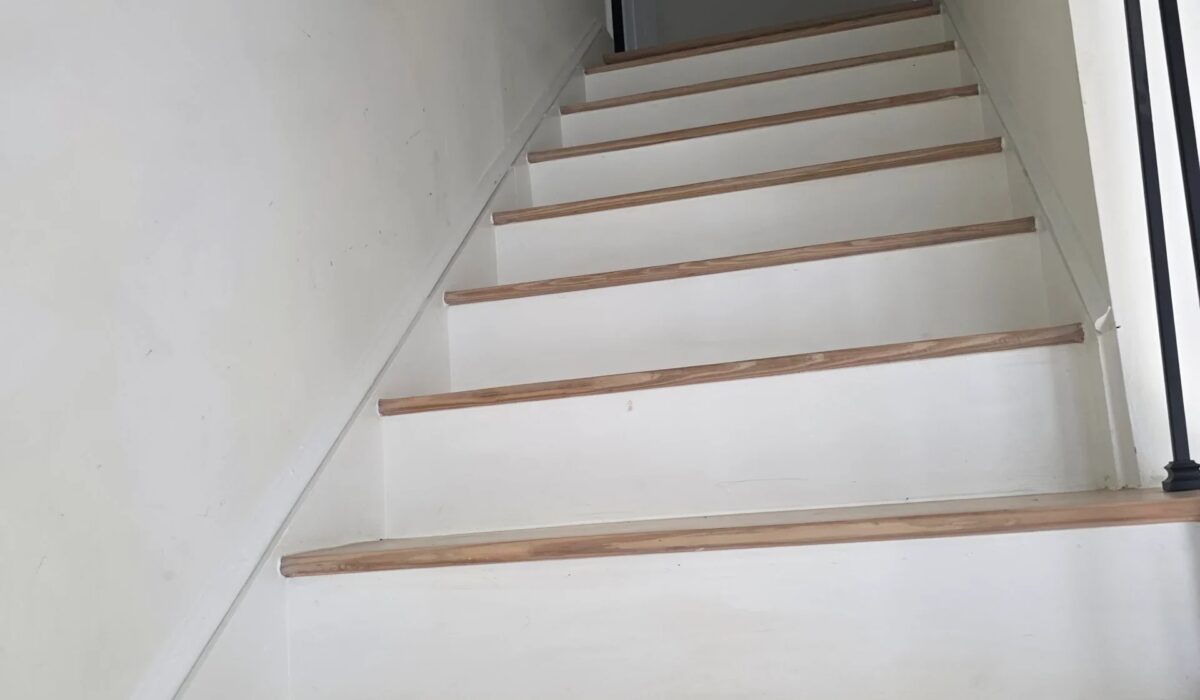
11. Loose or Creaking Stair Treads
Looks like: a tread that moves, creaks or has a split nosing. Usual fix: glue and screw the tread to the stringers, add blocking from below, or replace the tread. Cost: usually priced per tread. Who: a stair or flooring carpenter. Our guide to wood stair installers covers bigger stair projects.
12. Carpet Seams, Ripples and Snags
Looks like: split seams, ripples that trip people or a burned or stained patch. Usual fix: re-stretch the carpet with a power stretcher, re-glue seams or patch in a piece from a closet. Cost: $150 to $300, with Angi citing about $207 on average. Who: a carpet repair specialist.
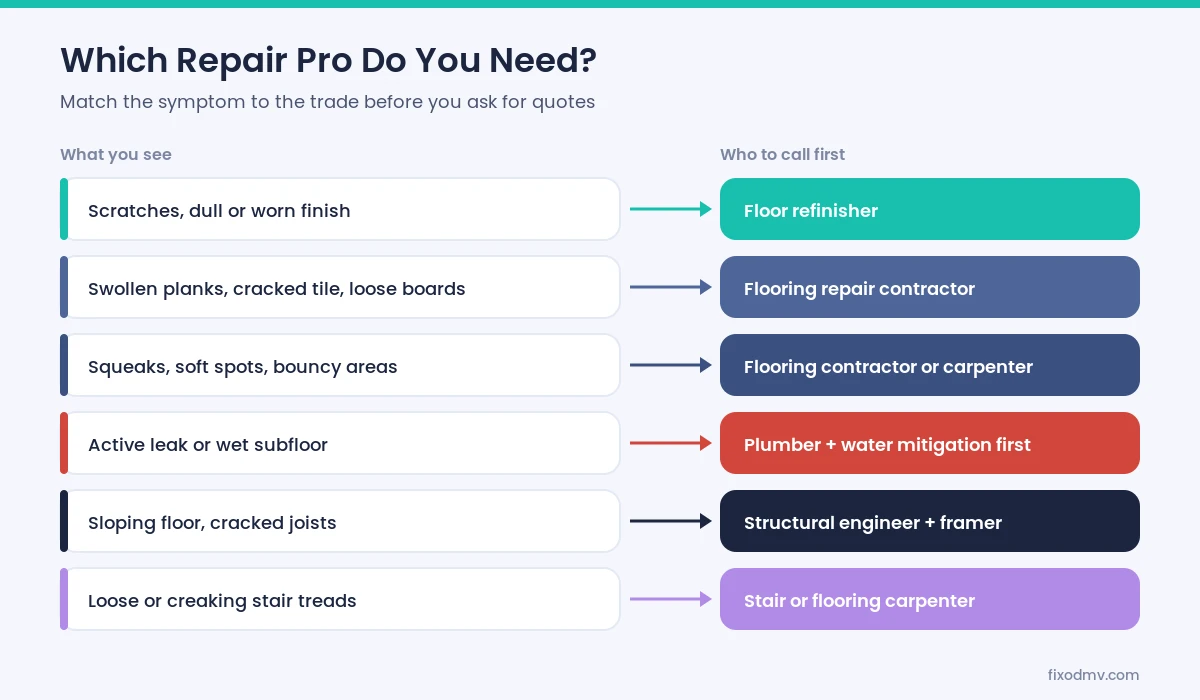
Which Repair Contractor Should You Call First?
The right first call depends on what caused the damage. Calling a flooring crew to a floor that’s still wet, or to a joist that’s cracked, wastes a visit and sometimes money.
- Surface wear only: a floor refinisher or flooring contractor.
- Damaged planks, boards or tiles: flooring repair contractors who work with that material.
- Squeaks and soft spots: a flooring contractor or carpenter who can open the subfloor.
- Active leaks: a plumber, then a water mitigation company to dry the structure.
- Sloping floors or cracked framing: a structural engineer, then a framing contractor.
Many flooring companies handle several of these. FIXO, for example, replaces planks, boards and tiles and repairs subfloors, but a cracked beam or an active leak needs the right specialist first.
Fix the Right Layer, Not Just the Top One
A floor is a stack: finish, flooring, underlayment, subfloor and framing. Each layer fails in its own way, and a lasting repair starts at the lowest layer that failed.
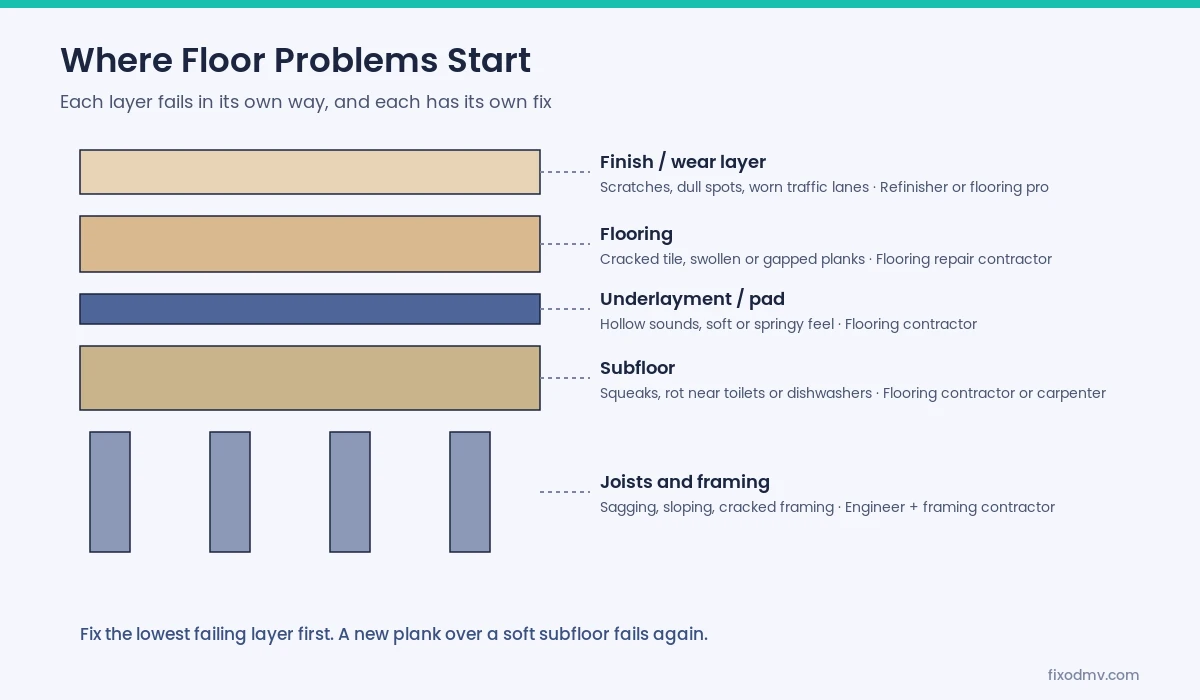
Replacing a cracked tile over a bouncy subfloor, or a swollen plank over a damp slab, buys a few months at best. Good flooring repair contractors check the layers below before they quote, by tapping tile, testing moisture or looking at the joists from the basement. If you are torn between patching and starting over, read floor repair or replace before you collect quotes.
Floor Repair Contractors vs Handymen: Who Should Do the Work?
A handyman can be a good fit for small, self-contained jobs, but floors punish guesswork. The difference between a general handyman and dedicated floor repair contractors usually shows up in three places: diagnosis, tools and matching.
- Diagnosis. Floor repair contractors see the same failures every week, so they’re more likely to spot a wet subfloor, a missing expansion gap or a joist problem behind the visible damage.
- Tools. Undercut saws, oscillating tools, moisture meters, tile saws and power stretchers make cleaner repairs than a general-purpose kit.
- Matching. Flooring specialists know how to source a close match, blend a refinish or borrow material from a closet.
A handyman is a reasonable call for re-gluing a loose transition strip, re-caulking along a tub or tightening a squeaky stair from below. Anything that involves cutting out planks, setting tile, refinishing wood or opening the subfloor is better left to floor repair contractors.
Licensing matters here too. In Virginia, a handyman without a DPOR license can’t legally take on a job worth $1,000 or more, and in Maryland, installing tile or wood flooring requires an MHIC license. Ask before work starts, because an unlicensed repair leaves you without the state’s consumer protections and can complicate an insurance claim.
Think about the warranty as well. Floor repair contractors who stand behind their work will usually guarantee the repair for a set period, while general handyman services often don’t cover callbacks on flooring.
How to Hire Flooring Repair Contractors
Repairs are small jobs, which makes them easy to give to whoever answers the phone first. A few checks before hiring flooring repair contractors protect you from a repair that fails or a bill that grows:
- Ask about the cause. A good contractor wants to know why the floor failed, not just where.
- Check experience with your material. Hardwood lacing, tile replacement and LVP plank swaps are different skills.
- Confirm the license. Each jurisdiction in the DMV has its own rules, covered below.
- Get proof of insurance. Condo buildings usually require a certificate before work starts.
- Ask how they’ll match the floor. They should ask for leftover boxes or bring samples.
- Get the scope in writing. Include what happens if they find more damage once the floor is open.
Contractor Licenses for Flooring Repair in VA, MD and DC
Flooring repair contractors in the DMV work under three different sets of rules. Check the one that applies to your address.
| Where | What the rule says | How to check |
|---|---|---|
| Virginia | Contractors need a DPOR license once a job reaches ,000 | Search the DPOR license database |
| Maryland | Tile, wood and other flooring installs need an MHIC home improvement license; carpet installs don’t | MHIC License Search |
| Washington DC | Home improvement contractors must be licensed with DLCP and be bonded and insured | DLCP website, Scout database or 202-671-4500 |
The Maryland rule comes from the state’s MHIC frequently asked questions. In DC, the Office of the Attorney General’s guidance on avoiding home improvement scams also notes that only licensed contractors can accept payment before a job is complete, and that the contract must include the contractor’s DC license number.
What a Good Floor Repair Quote Includes
A solid quote from flooring repair contractors spells out the repair, not just the price. Compare quotes on these points:
- The cause the contractor found, and how the repair addresses it
- The area and materials, including who supplies replacement planks, boards or tile
- Prep work such as moving appliances, pulling toilets or removing baseboards
- A price or hourly rate for hidden damage, such as rotted subfloor
- Refinishing or sealing needed to blend the repair
- Cleanup and disposal
- A workmanship warranty on the repair
A bid that is far cheaper than the rest usually skips the subfloor work or the blending. Those items tend to reappear once the old floor is up.
Getting Repairs to Match the Rest of the Floor
The biggest complaint about floor repairs isn’t cost, it’s appearance. New boards can be a shade off, new tile can come from a different dye lot, and a discontinued LVP line can be impossible to buy again.
These steps give a repair the best chance of blending in:
- Keep spare boxes. Leftover flooring from the original install is the closest possible match, and it lowers the floor repair cost too.
- Borrow from a closet. Planks or tiles from a closet or under an appliance can patch a visible area, with the new material going into the hidden spot.
- Refinish the whole room. On site-finished hardwood, sanding the full room blends new and old boards best.
- Break at a doorway. If no match exists, replacing a whole room up to a threshold looks intentional.
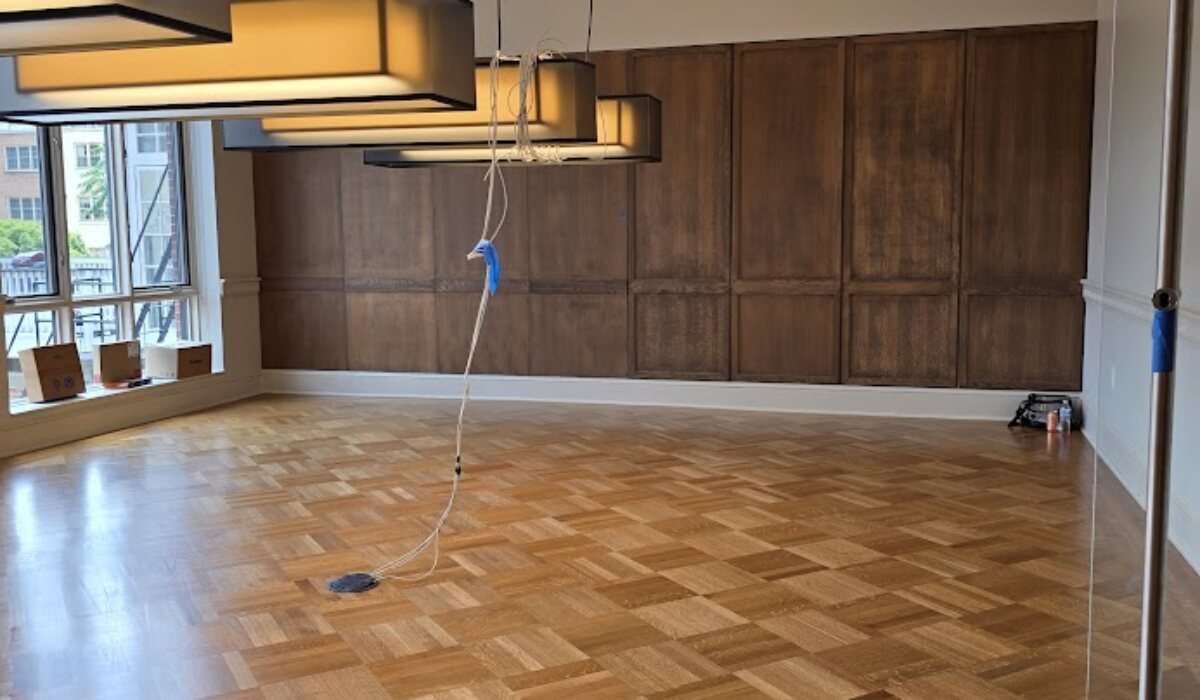
On older parquet and strip floors, flooring repair contractors can often salvage pieces from a less visible area and use them where they matter most.
Flooring Repair FAQs
How much do flooring repair contractors charge?
Angi’s May 2026 guide puts most floor repairs at $500 to $3,000, with an average of about $1,100 and labor typically $60 to $120 an hour. Small fixes such as squeaks can start around $200, while subfloor, joist and water damage repairs cost more.
What is the most common floor repair?
Squeaks, damaged planks or boards, cracked tile and worn finishes are among the most common. Water damage near kitchens, bathrooms and laundry rooms is also frequent, and it usually needs the most work because the subfloor has to dry or be replaced.
Can one damaged plank be replaced without redoing the floor?
Usually, yes. Click-lock LVP and laminate can be unclicked from the nearest wall, or a technician can cut the damaged plank free and glue a replacement in its place. Hardwood boards can be cut out and woven in. Matching is easiest with leftover boxes from the original install.
Should I call a plumber or a flooring contractor for water damage?
Call the plumber first to stop the leak, and a water mitigation company if the subfloor or walls are wet. Flooring repair contractors come in once everything is dry. Installing new flooring over a damp subfloor leads to mold, swelling and repeat failures.
Do flooring repair contractors need a license?
In the DMV, generally yes. Virginia requires a DPOR license on jobs of $1,000 or more. Maryland requires an MHIC license to install tile, wood or other flooring, though not carpet. DC requires home improvement contractors to be licensed with DLCP.
When is it time to replace instead of repair?
When damage covers much of the room, the flooring is discontinued and can’t be matched, the subfloor needs widespread replacement, or the floor is near the end of its life anyway. In those cases, the floor repair cost of repeated fixes often approaches the price of new flooring.
Getting Your Floor Fixed
The best flooring repair contractors start with the cause, fix the lowest failing layer and plan how the repair will match before they cut anything. Get the source handled first, compare quotes on scope rather than price alone, and hold on to spare flooring for the next time something happens.
FIXO fixes LVP, laminate, engineered hardwood and tile floors in homes throughout the DMV, and we agree on one fixed price before any tools come out. Browse our flooring services, or describe the damage through the instant quote form.
 4.9 on Google14 reviews
 Licensed & InsuredVirginia · Maryland · Washington, D.C.
 Workmanship GuaranteedInstallation backed in writing
 Locally OwnedServing NoVA, MD & D.C.