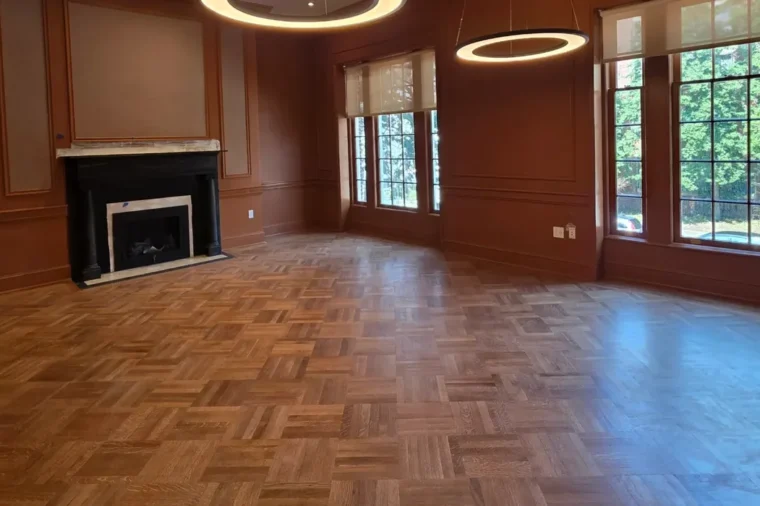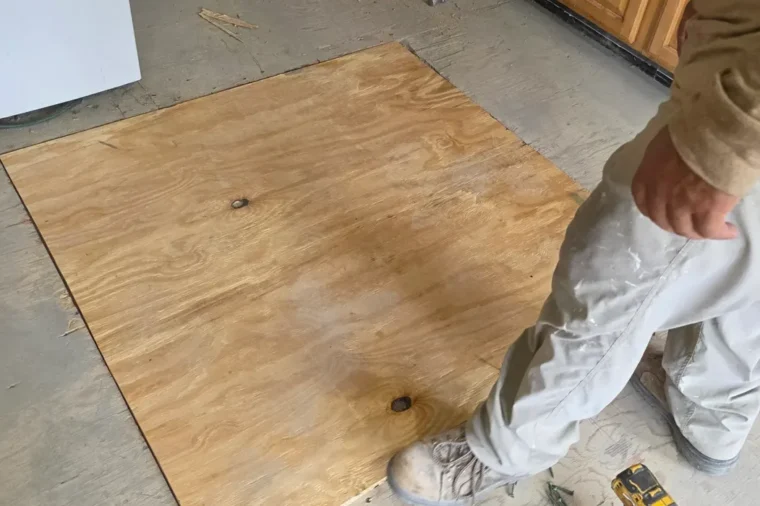
Linoleum flooring installation means gluing sheet or tile linoleum to a smooth, dry, flat underlayment, or clicking together floating linoleum panels. True linoleum is made from linseed oil, wood flour, limestone and pine rosin on a jute backing, so it needs about 48 hours to acclimate, the adhesive its maker specifies and careful seam cutting. Homewyse’s May 2026 estimate starts at about $4.72 to $6.40 per square foot installed.
Ask for linoleum at a home store and there is a fair chance you will be shown vinyl. The two names have been mixed up for decades, but they are different materials that go down differently and age differently. Real linoleum has come back into favor with homeowners who want a natural, long-lasting resilient floor, much of it sold under Forbo’s Marmoleum brand.
This guide explains what linoleum is, the three formats it comes in, each step of a sheet installation, what it costs and how to look after it. Alvin wrote it for FIXO, a flooring company serving homeowners across the DC, Maryland and Northern Virginia area.
What this linoleum guide covers
Key takeaways
- Linoleum is a natural material made mostly from linseed oil; vinyl is PVC. Many people still use the word linoleum for both.
- Sheet linoleum gives the fewest seams but takes the most skill; tiles and click panels are simpler to lay.
- The subfloor must be smooth, flat and dry, because every bump shows through and moisture attacks the jute backing.
- A yellow cast on new linoleum is normal and fades with light exposure.
- Clean with a pH-neutral cleaner; strong alkaline products can damage the surface.
What Linoleum Is (and What It Isn’t)
Linoleum was patented in the 1860s and is still made in much the same way. Linseed oil, pressed from flax seed, is oxidized and mixed with pine rosin, wood flour, ground limestone and pigments, then pressed onto a woven jute backing and cured for weeks in heated drying rooms. Forbo, the best-known maker, sells its linoleum as Marmoleum, and the company notes that Marmoleum contains no plasticizers.
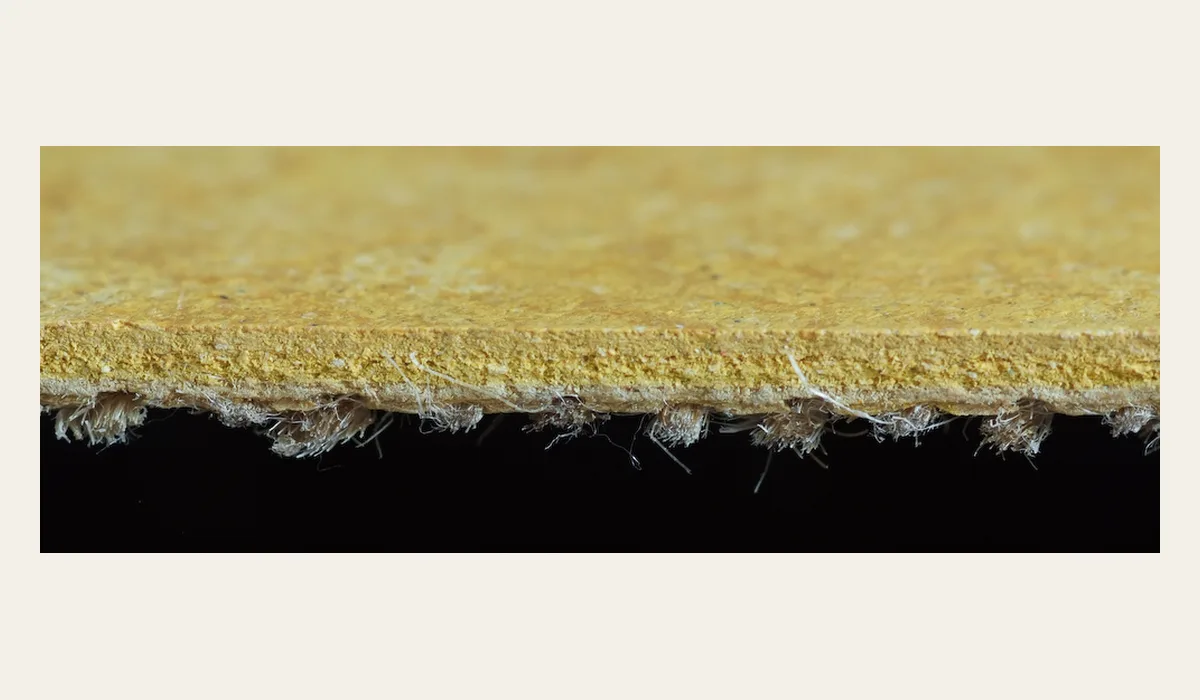
Vinyl, by contrast, is made from PVC. Sheet vinyl and luxury vinyl plank are often called linoleum in everyday speech, but they are made, installed and cleaned differently. If a quote says linoleum, ask for the brand and product line so you know which material you are actually buying.
Two traits set real linoleum apart. Its color runs through the full thickness of the wear layer, so light scratches don’t reveal a different color underneath. And it is made largely from renewable raw materials, which is why it is common in schools, hospitals and green building projects.
Sheet, Tile or Click: Three Ways to Install Linoleum
Linoleum comes in three formats, and the format decides how the linoleum flooring installation goes.
| Format | How it goes down | Good for | Watch for |
|---|---|---|---|
| Sheet | Glued to the underlayment in rolls about 2 meters (6.5 feet) wide | Kitchens, large rooms, few seams | Heavy rolls, skilled seam cutting, possible seam welding |
| Tile | Glued down square by square | Patterns, borders, checkerboards | More joints for water to find |
| Click panels | Linoleum bonded to a fiberboard core, floated like laminate | Living areas and bedrooms, quick installs | Not meant for rooms with standing water |
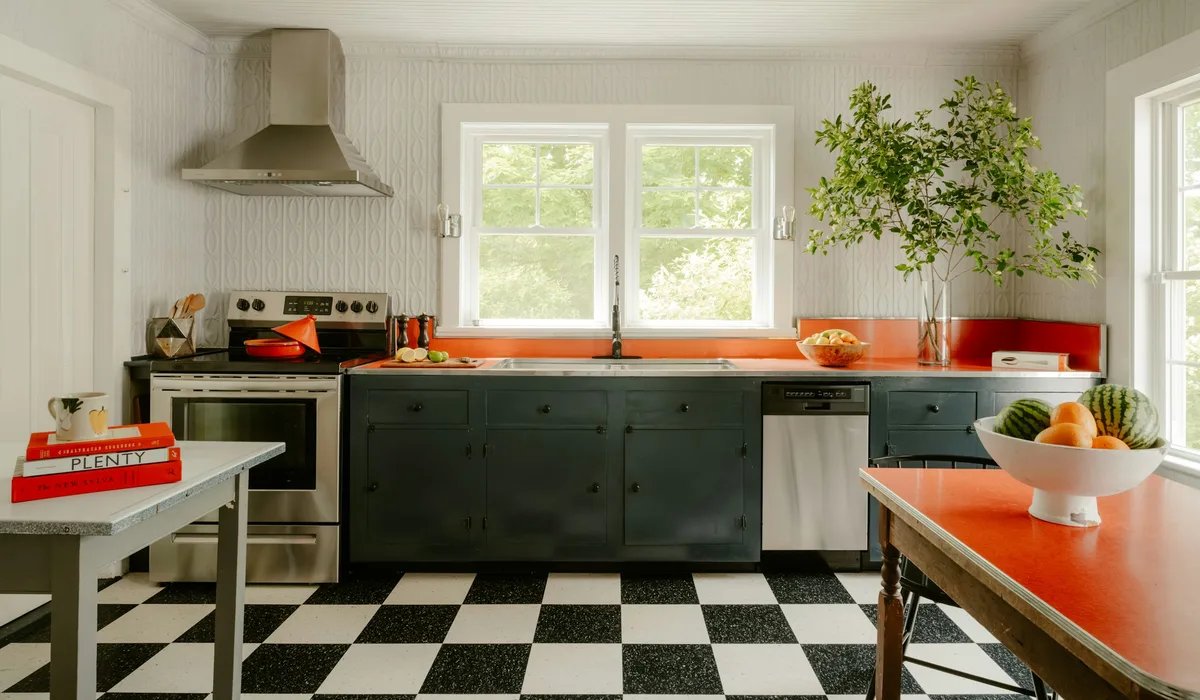
Sheet is the classic choice and gives the cleanest look with the fewest joints. Tiles make patterns easy; a checkerboard kitchen is a classic linoleum tile layout. Click panels need no adhesive, but because the core is wood fiber, check the maker’s list of approved rooms before putting them in a kitchen or laundry room.
Choosing Marmoleum and Other Linoleum Products
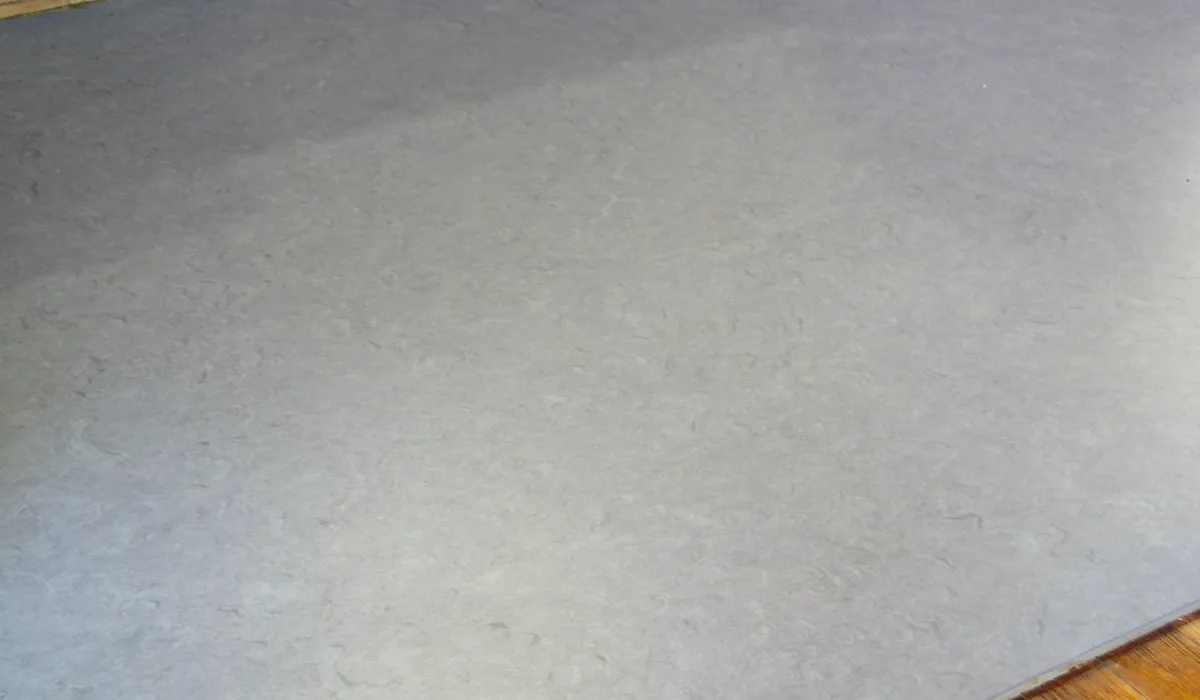
Forbo’s US range shows how the formats map to real products. Marmoleum Sheet is the glue-down roll goods, Marmoleum Modular covers glue-down tiles and planks, and Marmoleum Cinch LOC Seal is the floating click system. Each has its own installation guideline and approved adhesives, so the product name on your quote tells the installer which instructions apply.
Color is where Marmoleum stands out. The marbled patterns that gave the brand its name come in dozens of shades, alongside solid and textured designs, and tiles in two contrasting colors make borders, stripes and checkerboards simple. Order samples, and look at them in daylight for a few days, since fresh samples can carry the yellow cast described below.
Whichever product you choose, order all of it from the same production run and keep a few spare pieces. Matching a later order exactly is difficult, and spares make small repairs easy.
Where Linoleum Works Best
A linoleum flooring installation suits rooms with steady traffic and occasional spills rather than standing water:
- Kitchens: warm and quiet underfoot, and sheet linoleum keeps seams to a minimum. See our best kitchen flooring comparison.
- Laundry and mudrooms: durable and easy to clean, as long as spills don’t sit. Our laundry room flooring guide compares options.
- Kids’ rooms and playrooms: bright solid colors, softer than tile and free of plasticizers.
- Home offices and studios: rolling chairs are fine on glued sheet or tile.
- Commercial spaces: schools, clinics and offices have used linoleum for decades.
Be more cautious in full bathrooms and on damp basement slabs. Moisture coming up through concrete can break down the adhesive and the jute backing, so basements often do better with a waterproof vinyl plank. Our basement flooring guide explains the slab checks.
Preparing the Subfloor for Linoleum Flooring Installation
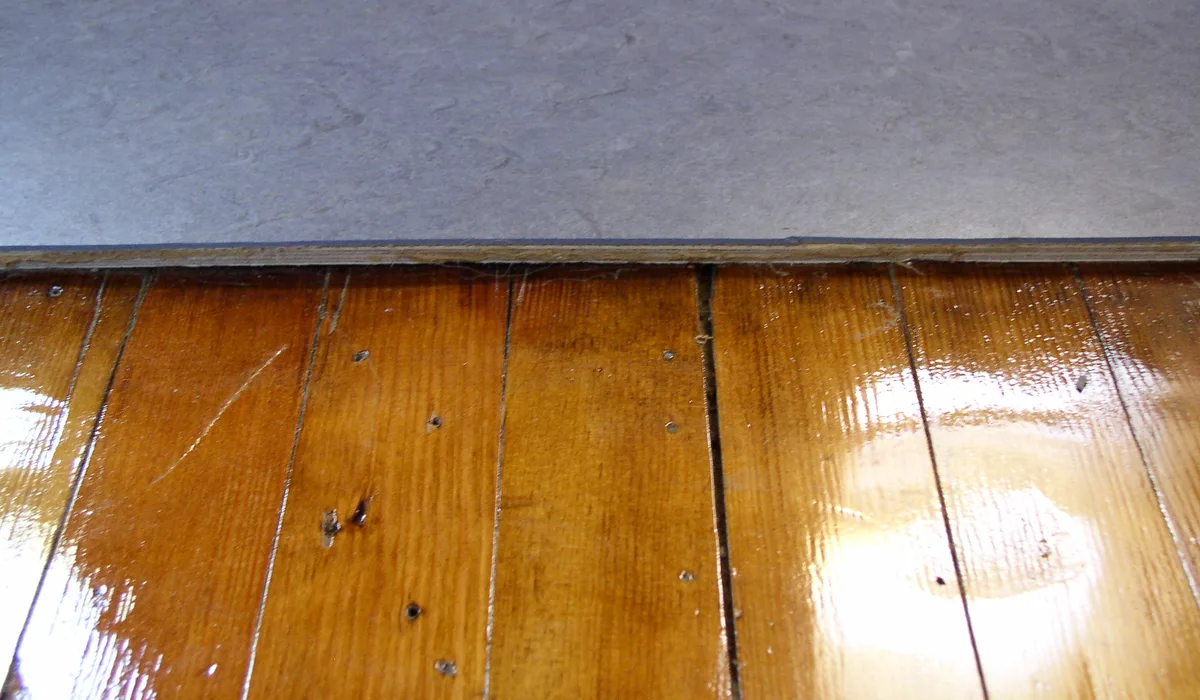
Linoleum is thin and flexible, so it mirrors whatever is under it. A screw head, a grout line or a ridge of old adhesive will show through within weeks. Most of the work in a good linoleum flooring installation happens before the flooring is even unrolled.
Acclimate the Material and Room
Forbo’s general guidelines call for the room to be climate controlled at a minimum of 65°F, with the flooring and adhesive conditioned in the space for at least 48 hours before work starts. Rolls should be stored standing upright.
Wood Subfloors
Over joists, linoleum usually goes on a layer of smooth underlayment-grade plywood fastened on a tight pattern, with seams and fastener heads filled and sanded flush. Old floors are generally removed rather than covered.
Concrete Slabs
Concrete must be tested for moisture before any adhesive goes down. For Forbo’s Sustain 885m adhesive, the technical data sheet sets a limit for moisture vapor emission of no more than 8 lb for every 1,000 square feet over a 24-hour test, or an internal relative humidity of 85% or lower. Cracks and low spots get patched and leveled.
Old Flooring
Sheet flooring and black adhesive in older homes can contain asbestos. Have a sample tested before removal, and don’t sand or dry-scrape suspect material.
7 Steps of Sheet Linoleum Flooring Installation
Tiles and click panels follow simpler routines, but sheet goods show the full process. Here is how a careful installer lays sheet linoleum, based on Forbo’s published guidance.
1. Check Conditions
Confirm the room temperature, the moisture test results and that the material has acclimated. Rolls are laid out in sequence by roll number, since Forbo sets tolerances for sequencing to avoid shade differences between rolls.
2. Prepare the Underlayment
The surface is swept and vacuumed. Any patching compound has to be fully dry, and every fastener and seam is checked one more time by hand.
3. Plan the Seams
Seams are placed away from doorways and the main walking path, and parallel to the light where possible so they are less noticeable.
4. Cut and Relax the Sheets
Each length is cut a little long and back-rolled to release the tension from the roll, then the ends are scribed to the walls. Forbo recommends installing sheet linoleum one sheet at a time.
5. Spread Adhesive and Roll
Adhesive goes down with the notched trowel the maker specifies, and the sheet is laid into it within the adhesive’s working time. It is then rolled with a heavy floor roller in both directions to push out air and ensure full contact.
6. Cut and Close the Seams
The second sheet overlaps the first by about 1/2 to 3/4 inch, and the seam is cut through or scribed so the edges meet tightly as the adhesive cures. Forbo notes that welding often isn’t needed when seams are cut well, but heat welding or a chemical seam sealer can be used where a sealed floor is wanted.
7. Clean, Protect and Wait
Wet adhesive is wiped off the surface right away. Forbo’s guidance keeps heavy traffic and rolling loads off for at least 72 hours, and the new floor shouldn’t be wet-washed for the first 48 hours.
Forbo’s US installation library has the full instructions for each Marmoleum product, and they are worth asking your installer about.
How Long Linoleum Flooring Installation Takes
A single kitchen or laundry room usually takes two to four days from start to finish. The first day or two goes to removing the old floor, testing concrete and preparing the underlayment, while the linoleum acclimates in the room. Laying the sheet itself often takes less than a day in a small room. Then the floor needs the cure time described above before heavy furniture and appliances go back.
Plan the linoleum flooring installation around those waiting periods. Kitchens are the trickiest, because the refrigerator and range have to stay off the floor until the adhesive can take rolling loads. Click panels are much quicker, since there is no adhesive to cure, and a room can be back in use the same day.
Why New Linoleum Looks Yellow
Many homeowners are surprised when new linoleum looks yellowish, especially in blues, grays and greens. Forbo calls this drying room yellowing. It forms while the material cures in the drying rooms during manufacture, and Forbo’s Marmoleum FAQ says it disappears once the floor is exposed to natural or artificial light.
There is no fixed timetable, and putting finish on the floor won’t speed it up. Rugs and furniture slow it down underneath, so leave new linoleum uncovered for a while, and rotate rugs once they go down. It’s a normal trait of the material, not a defect in the linoleum flooring installation.
Linoleum Installation Cost
For a typical project, Homewyse’s May 2026 estimate starts at about $4.72 to $6.40 per square foot, covering basic labor, supplies such as adhesive and underlayment, and debris disposal. Your linoleum installation cost will move with these factors:
| Factor | Effect on price |
|---|---|
| Format | Click panels and plain sheet are simplest; patterned tile layouts take longer |
| Old floor removal | Glued vinyl, tile and suspect older floors add time and disposal cost |
| Underlayment | New plywood or leveling compound adds material and labor |
| Seam welding | Adds a step where a sealed floor is wanted |
| Room shape | Cabinets, islands and many corners mean more scribing and waste |
| Moisture testing | Required on concrete before gluing |
Because sheet linoleum takes specialist skill and fewer installers handle it, local availability can affect the price as much as the material. Get two or three written quotes that name the exact product, adhesive and underlayment.
DIY or Hire a Professional?
Click panels are a reasonable DIY project for a handy homeowner, much like laminate. Sheet linoleum is a different matter. The rolls are heavy and stiff, scribing to walls and cabinets takes practice, and a badly cut seam can’t be fixed without replacing material.
That is why the linoleum installation cost for sheet goods is mostly skilled labor. If you hire out, ask how many linoleum floors the crew has installed, not just vinyl, and whether they follow the maker’s adhesive and seam instructions.
Linoleum vs Vinyl and LVP
Linoleum, sheet vinyl and luxury vinyl plank are all resilient floors, but they suit different priorities.
| Feature | Linoleum | Sheet vinyl | LVP |
|---|---|---|---|
| Main material | Linseed oil, wood flour, rosin, limestone, jute | PVC | PVC with a rigid or flexible core |
| Color | Runs through the wear layer | Printed surface | Printed surface |
| Water | Resists water when installed correctly; edges and seams need care | Waterproof sheet | Waterproof plank |
| Looks | Solid colors and marbled patterns | Many prints | Wood and stone looks |
| Install | Glue-down sheet or tile, or click | Glue-down or loose lay | Mostly click, some glue-down |
If you want a wood look and full waterproofing, LVP is usually the better fit; our LVP explainer covers it. If you want natural materials, through-body color and a classic resilient floor, linoleum is hard to beat.
Caring for a Linoleum Floor
Linoleum rewards gentle, regular care, much as the vintage poster below advised generations of homeowners.
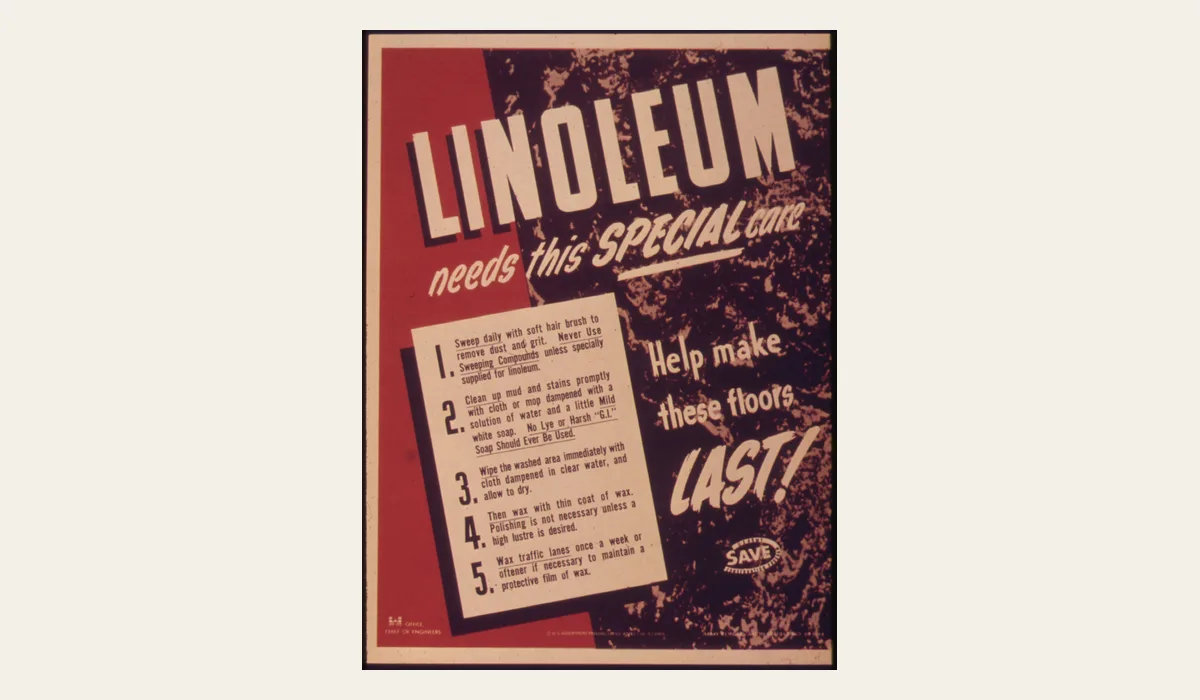
- Dust mop or vacuum often. Grit is what dulls the factory finish.
- Use a pH-neutral cleaner. Forbo recommends its own neutral pH cleaner; avoid ammonia, strong alkaline strippers and harsh solvents.
- Don’t flood the floor. Use a damp mop, not a bucket of water, and wipe spills quickly so water doesn’t reach the seams and edges.
- Protect from furniture. Felt pads and wide casters prevent dents in the softer surface.
- Restore rather than replace. Worn traffic areas can often be cleaned and refinished with the maker’s products.
For damage beyond cleaning, our repair or replace guide helps you decide on next steps.
Linoleum Flooring FAQs
Is linoleum the same as vinyl?
No. Linoleum is made mainly from linseed oil, wood flour, pine rosin and limestone on a jute backing, while vinyl is made from PVC. The names are often mixed up, so check the brand and product line on any quote.
How much does linoleum flooring installation cost?
Homewyse’s May 2026 estimate starts at about $4.72 to $6.40 per square foot for basic installation with supplies and disposal. Removing old floors, new underlayment and complex layouts add to that.
Can linoleum go in a bathroom?
Glue-down sheet linoleum can work in a bathroom with careful seams and sealed edges, but click panels are not meant for rooms with standing water. Many homeowners choose tile or vinyl for full bathrooms.
How long does linoleum flooring last?
Well-installed linoleum is known for a long service life, often decades, especially with regular pH-neutral cleaning and periodic maintenance of the finish.
Why does my new linoleum look yellow?
It is drying room yellowing, a temporary cast from the curing process. Forbo says it disappears once the floor is exposed to light, so keep new floors uncovered where possible.
Can I install linoleum over an existing floor?
Sometimes, but the surface must be smooth, flat, dry and firmly bonded, because linoleum shows every bump. Most installers remove the old floor or put down new underlayment first.
Is Linoleum Right for Your Home?
Linoleum is a good choice if you value natural materials, solid or marbled colors and a floor that can be maintained rather than replaced. A successful linoleum flooring installation depends on the prep: a smooth, dry, flat base, acclimated material, the right adhesive and well-cut seams.
If you’re weighing linoleum against vinyl plank, tile or laminate, FIXO can help you compare. Send your room sizes through the instant quote form and mention linoleum, or browse our flooring installation services.
 4.9 on Google14 reviews
 Licensed & InsuredVirginia · Maryland · Washington, D.C.
 Workmanship GuaranteedInstallation backed in writing
 Locally OwnedServing NoVA, MD & D.C.