A vinyl plank floor stays looking new with three habits: dry-clean grit away several times a week, damp-mop with a pH-neutral cleaner instead of vinegar, ammonia, wax or oil soap, and keep rubber-backed rugs, bare furniture legs and long hours of direct sun off the surface. The plank core is waterproof, but the thin wear layer on top is what gets scratched, dulled or stained.
Luxury vinyl plank, or LVP, has become the go-to floor for busy homes in the DC area because it handles spills, pets and kids better than laminate or hardwood. It is low maintenance, not no maintenance. The printed design sits under a clear wear layer, and once that layer is worn, scratched or hazed by the wrong product, it cannot be sanded and refinished.
This guide explains how to clean vinyl plank floors week to week, which products manufacturers approve and ban, what to do about stains, pets, sun and furniture, and how LVP scratch repair and plank replacement work. Alvin wrote it for FIXO, which installs and repairs vinyl plank floors around Northern Virginia, Maryland and Washington DC, using the published care guides of Shaw, LL Flooring and Flooret as the source for each rule.
What this LVP care guide covers
Key takeaways
- Grit is the main enemy. Sweep, dust mop or vacuum with the beater bar turned off before any wet cleaning.
- Use a pH-neutral cleaner made for vinyl. Shaw lists ammonia, vinegar and harsh or abrasive products as damaging to the surface.
- Rubber and latex rug backings can permanently stain vinyl. Choose colorfast rugs with non-rubber backings.
- Put felt pads at least 1 inch wide on furniture legs and use broad casters at least 2 inches in diameter on rolling chairs.
- Close blinds during peak sun hours. Fading from sunlight is excluded from typical vinyl warranties.
Why Vinyl Plank Floor Care Is Different
Every vinyl plank floor is a sandwich of layers. At the bottom, a rigid or flexible core gives the plank its strength and water resistance. A printed film creates the wood or stone look. On top sits the wear layer, a clear vinyl film usually measured in mils, often finished with a urethane coating that may include aluminum oxide for scratch resistance.
That top layer is what you are caring for. It does not absorb water, so spills are rarely a disaster, but it can be:
- Scratched by sand and grit tracked in on shoes, then ground in underfoot
- Hazed by wax, polish, oil soap or too much cleaner left to dry
- Stained by chemicals in rubber mats and some casters
- Dented by narrow furniture legs and heavy rolling loads
- Faded by years of direct sunlight
Unlike hardwood, a worn wear layer cannot be sanded back. The only fix for deep damage is replacing planks, which is why prevention matters more with LVP than with most floors. Our explainer on what LVP flooring is covers the layers and wear ratings in more depth.
A Vinyl Plank Floor Cleaning Schedule
This schedule shows how to clean vinyl plank floors in a typical family home. Entryways, kitchens and homes with pets may need the daily and weekly tasks more often.
| How often | Task | Tools |
|---|---|---|
| Daily or every other day | Remove grit from entries, kitchen and pet areas | Soft broom, microfiber dust mop or robot vacuum |
| As it happens | Wipe spills and pet accidents | Paper towel or soft cloth, vinyl-safe cleaner |
| Weekly | Vacuum the whole floor, then damp mop | Vacuum with beater bar off, microfiber flat mop, pH-neutral cleaner |
| Monthly | Check felt pads, shake out mats, clean along baseboards | Replacement pads, crevice tool |
| Twice a year | Move furniture, rotate rugs, deep clean | Furniture sliders, cleaner, soft scrub pad |
| Yearly | Inspect seams near doors, tubs and appliances for lifting or water | Flashlight, your eyes |
Vinyl Plank Floor Care After Installation
A new vinyl plank floor needs a little extra attention in its first few weeks. Construction dust is fine and gritty, so vacuum it up with a soft head rather than wet mopping it into the bevels. Shaw advises against saturating or wet cleaning a new floor for the first 5 days.
Put felt pads on furniture before it goes back into the room, leave the HVAC on its usual settings, and store a box of leftover planks somewhere dry. Write down the brand, collection and color name too. If a plank ever needs replacing, that record is the difference between an exact match and a close guess on your vinyl plank floor.
How to Clean Vinyl Plank Floors Step by Step
Here is how to clean vinyl plank floors without leaving streaks. This routine works for rigid core (SPC and WPC) and flexible glue-down planks alike. If your manufacturer’s guide says something different, follow theirs, since care instructions are part of most warranties.
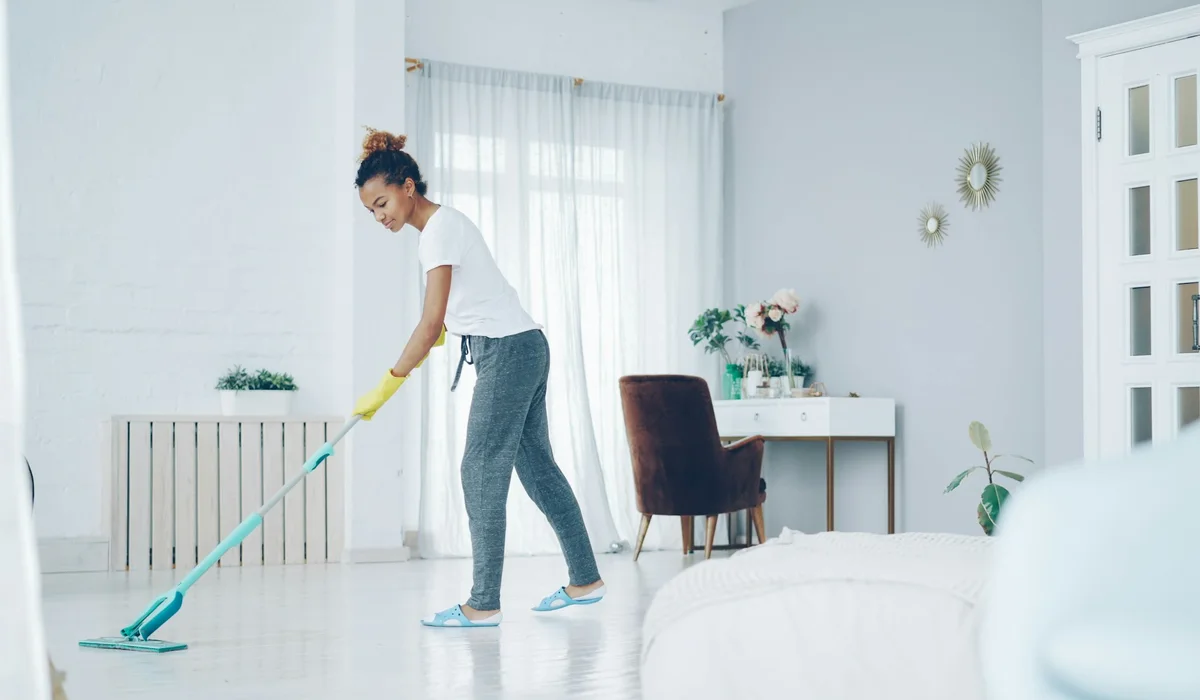
- Dry clean first. Sweep, dust mop or vacuum the whole floor. Mopping over grit turns the mop into sandpaper.
- Mix the cleaner as directed. More is not better. Extra cleaner leaves a sticky film that attracts dirt and looks hazy.
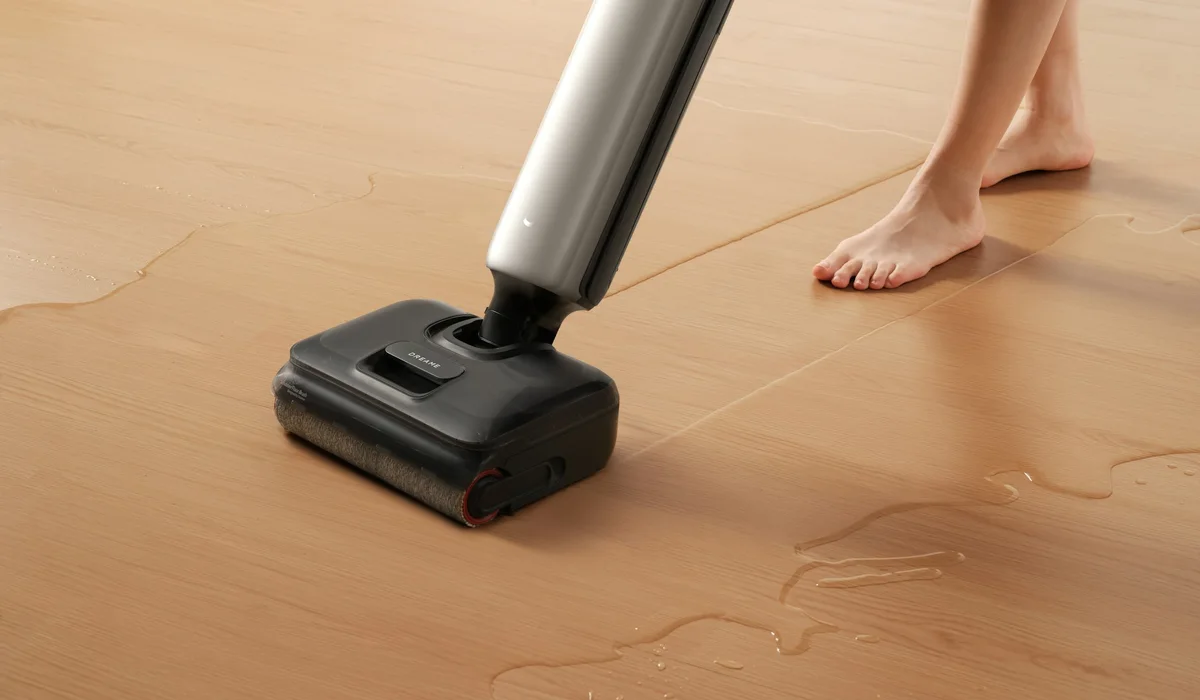
- Damp mop, don’t flood. Wring the microfiber pad until it is barely damp. Standing water can seep into seams at the walls and edges even on waterproof planks.
- Follow the grain. On textured planks, mop in the same direction as the texture. On beveled planks, wipe along the bevels so cleaner does not pool in the grooves.
- Rinse if needed. If the floor looks streaky, go over it again with a pad dampened in plain water.
- Dry glossy floors. LL Flooring advises wiping high-gloss finishes dry right after damp cleaning to prevent water marks. A fan or air mover speeds drying on any finish.
Anyone learning how to clean vinyl plank floors for the first time tends to overdo the liquid. A barely damp mop, used often, beats a soaking wet mop used rarely.
Cleaners: What to Use and What to Avoid
Manufacturers agree on most products and disagree on a couple, so check your own care guide when in doubt. Picking the right bottle is half of knowing how to clean vinyl plank floors safely. Here is how the published guides line up.
| Product | Verdict | Why |
|---|---|---|
| pH-neutral cleaner made for vinyl or LVP | Use | Recommended by Shaw and Flooret for routine wet cleaning |
| Isopropyl alcohol on a white cloth | Use for spots | Shaw lists it for solvent-type spots such as ink or marker |
| Ammonia-based cleaners | Avoid | Shaw and Flooret both warn against them |
| Vinegar | Check your brand | Shaw says avoid; Flooret allows diluted white vinegar occasionally |
| Wax, polish, “mop and shine” | Avoid | Leaves a dull, hazy film on the wear layer |
| Oil soaps | Avoid | Shaw says not to use them on its resilient floors |
| Steel wool, scouring pads, abrasive powders | Avoid | Scratch the surface permanently |
| Bleach or harsh solvents | Avoid | Can discolor the surface; Shaw lists harsh chemicals as damaging |
The Shaw vinyl care page and the LL Flooring rigid vinyl plank guidelines are good references if you are unsure which brand you have.
Steam Mops, Robot Vacuums and Beater Bars
Steam mops are where brands split. LL Flooring allows residential steam mops on its rigid vinyl plank at the lowest setting with a soft pad, as long as the mop is not held in one spot. Flooret does not allow them on its Modin line, noting that steam can dull the finish over time. If your care guide is silent, skip the steam; a damp microfiber mop does the same job on a vinyl plank floor with no risk.
Vacuums are fine and better than brooms for grit in bevels. Turn off the rotating beater bar or use a hard-floor head with a soft brush or felt, since stiff bristles scuff the wear layer.
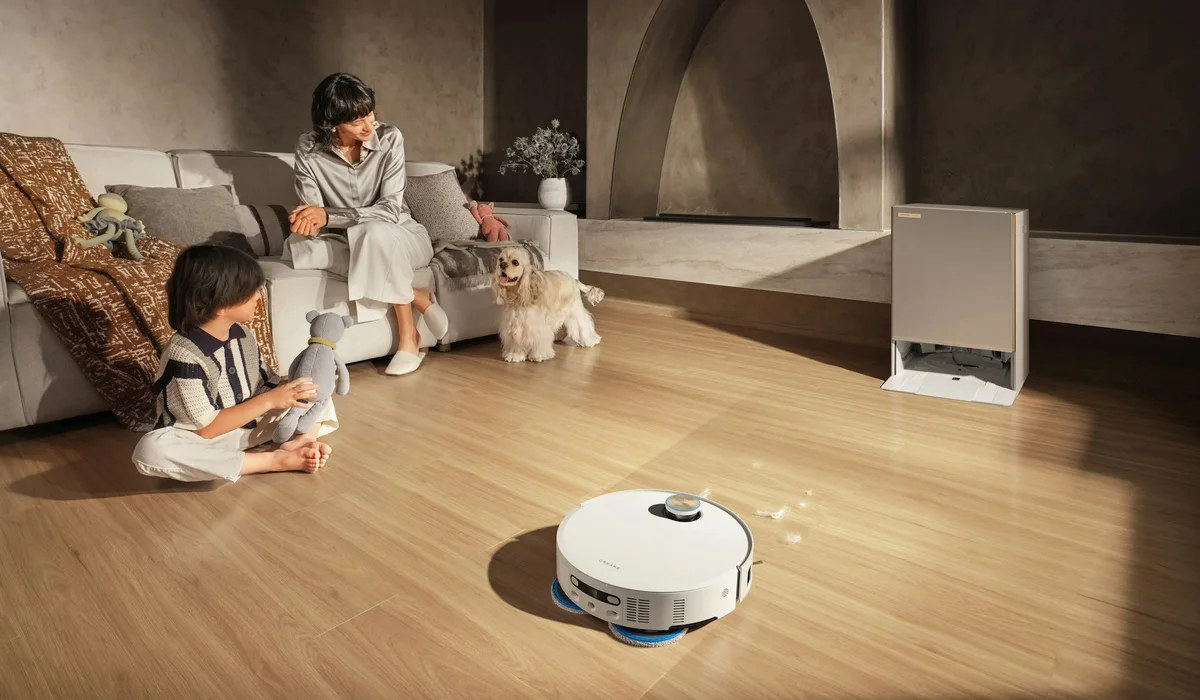
Robot vacuums and mops work well for daily grit control. Choose models with soft rubber or bristle rollers and set robot mops to a low water flow so they leave the floor damp, not wet.
Stain and Spot Guide
On a vinyl plank floor, work from the gentlest method up, and test anything new in a closet or under the fridge first.
| Stain | What to do |
|---|---|
| Pet urine or vomit | Blot up right away, clean with a vinyl-safe disinfecting cleaner, rinse and dry. Do not let urine sit, since it can reach seams. |
| Wine, juice, coffee | Blot, then clean with pH-neutral cleaner. Repeat rather than scrubbing hard. |
| Grease or cooking oil | Wipe up excess, then use a degreasing vinyl cleaner diluted as directed. |
| Ink, marker, crayon | Isopropyl alcohol on a clean white cloth, rubbed gently. |
| Black heel scuffs | Rub with a dry microfiber cloth or a clean tennis ball. |
| Gum or wax | Harden with an ice cube in a bag, then lift with a plastic scraper. |
| Yellow patches under a rug | Often a reaction to a rubber backing. This is usually permanent, so prevention is the only answer. |
Protecting the Floor: Mats, Pads and Furniture
Most long-term damage to a vinyl plank floor comes from what sits or rolls on it. The manufacturers’ rules are specific:
- Mats at every exterior door. Walk-off mats on both sides of the door catch grit before it reaches the floor. Shaw specifies mats without latex or rubber backings because certain rubber compounds can permanently stain vinyl.
- Rugs with safe backings. Pick colorfast rugs with cotton, jute, felt or vinyl-safe pads.
- Felt pads under furniture. Flooret recommends felt pads at least 1 inch across on all legs, replaced when worn. Shaw asks for cups at least 2 inches wide under heavy pieces.
- Broad casters. Rolling chairs and carts need wide, non-staining casters at least 2 inches in diameter, or a non-studded, non-rubber chair mat.
- Never drag appliances. When moving a fridge, range or piano, lay plywood or hardboard panels and walk the load across them.
- Trim pet nails. Short nails cause far fewer fine scratches.
After a new install, Shaw recommends waiting at least 24 hours before moving heavy objects back onto the floor.
Sunlight, Heat and Humidity
A vinyl plank floor holds up well to humidity, but sunlight and temperature extremes still matter:
- Sun: UV light fades the printed layer over time, and the clear coat only slows it. Use blinds, drapes or UV window film on south and west windows, and rotate rugs so the floor ages evenly. Shaw’s warranty excludes color or sheen changes from natural light exposure.
- Heat: Shaw ties its warranty to keeping the floor between 65°F and 85°F after installation. Very hot rooms, such as sunrooms with no climate control, can make planks expand and gap or peak.
- Humidity: Water won’t harm the planks themselves, but very damp basements can still cause mold under the floor if water gets beneath it. Keep a dehumidifier running in summer.
Water, Spills and Leaks
A waterproof plank does not mean a waterproof vinyl plank floor. The planks shrug off spills, but water that runs to the walls, under a door or down a seam can collect underneath, where it can damage a wood subfloor or grow mold.
- Wipe spills promptly, both for the floor and to prevent slips.
- Shaw advises not to saturate or wet clean a newly installed floor for the first 5 days.
- Check around dishwashers, fridge water lines, toilets and tubs once a year.
- If water gets under the planks from a leak, Flooret’s guidance is to lift the affected planks, dry the subfloor and reinstall. If the subfloor is damaged or moldy, bring in a pro before reinstalling.
Our LVP waterproof flooring guide explains where water resistance ends and why perimeter details matter in kitchens and baths.
LVP Scratch Repair and Plank Replacement
Good LVP scratch repair starts with judging how deep the damage goes:
| Damage | Fix | DIY? |
|---|---|---|
| Light surface scuffs | Clean, then buff with a microfiber cloth | Yes |
| Fine scratches in the wear layer | Manufacturer scratch-reducing product, such as the one LL Flooring sells for its planks | Yes |
| Deeper scratches, small chips | Color-matched repair marker or fill stick, wiped flush | Yes, with care |
| Gouges, burns, deep dents | Replace the plank | Edge planks yes; middle planks usually a pro job |
For LVP scratch repair, clean the scratch first, then work the filler or marker in gently and wipe off the excess before it sets. Test the color in an out-of-sight spot.
Replacing a plank on a click floor near a wall is simple: remove the baseboard, unclick rows back to the damaged plank, swap it and reassemble. A damaged plank out in the open floor usually has to be cut out and the new piece glued in place, which takes skill to look invisible. That is why it pays to keep a box of spare planks from the original install.
LVP scratch repair is rarely covered by warranty. Shaw’s vinyl warranty, for example, excludes surface scratches, so those repairs are on the owner. FIXO’s flooring repair contractors guide explains when replacing planks makes more sense than living with the marks.
Warranty Rules Most Owners Miss
A 20 or 30 year residential warranty sounds generous, but most cover manufacturing defects, not wear and tear. Common exclusions in published vinyl warranties include:
- Floors not installed and maintained according to the instructions in the box
- Indentations from heavy loads without proper protectors
- Color changes from sunlight exposure
- Damage from rooms not kept within the stated temperature range
- Surface scratches and stains from rubber or improper cleaners
Keep your receipt, the product name and the care guide in one place. If you ever file a claim, the manufacturer will ask how the floor was cleaned. Dated photos of the vinyl plank floor taken right after installation help as well.
Vinyl Plank Floor Care by Room
| Room | Main risk | What to do |
|---|---|---|
| Entry and mudroom | Grit, salt, wet boots | Non-rubber walk-off mats inside and out, sweep daily in winter |
| Kitchen | Grease, dropped items, appliance moves | Washable mat at the sink, degreasing vinyl cleaner, plywood when moving appliances |
| Bathroom | Water at tub and toilet edges | Bath mat with safe backing, check caulk at the tub yearly |
| Basement | Humidity, occasional leaks | Dehumidifier, watch the perimeter after heavy rain |
| Home office | Chair casters | Wide casters or a non-studded, non-rubber chair mat |
| Pet areas | Accidents, nails, water bowls | Clean accidents fast, trim nails, use a tray under bowls |
For homes with dogs and cats, the FIXO roundup of the best flooring for dogs and pets shows how LVP stacks up against other options.
Vinyl Plank Floor Care FAQs
What is the best way to clean a vinyl plank floor?
Remove grit first with a soft broom, dust mop or vacuum with the beater bar off, then go over it with a damp microfiber mop and a vinyl-safe, pH-neutral cleaner. Wring the mop well so the floor dries within a minute or two.
Can I use vinegar on vinyl plank floors?
It depends on the brand. Shaw lists vinegar-based products as damaging to its luxury vinyl, while Flooret allows diluted white vinegar now and then. A purpose-made vinyl cleaner is the safe choice for regular use.
Is a steam mop safe for LVP?
Some brands allow it on the lowest setting and others forbid it. Check your care guide, and if it says nothing, use a damp microfiber mop instead.
Why does my vinyl plank floor look cloudy?
Cloudiness usually comes from cleaner residue, wax or a “mop and shine” product. Clean with plain water or a residue-removing vinyl cleaner, use less product next time and avoid wax or polish.
How do I fix scratches on luxury vinyl plank?
LVP scratch repair for fine marks can be done with a manufacturer scratch product or a color-matched repair marker. Deep gouges need the plank replaced, which is easiest near a wall on click-together floors.
What kind of rugs are safe on vinyl plank?
Colorfast rugs with natural fiber, felt or vinyl-safe backings. Avoid rubber or latex backed mats, which can leave permanent yellow stains.
Keep Your Floor Looking New
Good vinyl plank floor care comes down to keeping grit off, using the right cleaner, protecting the surface from rubber, sharp legs and sun, and fixing water problems quickly. Do that and LVP will look good for many years.
If your floor is past saving or you are planning a new one, FIXO handles LVP flooring installation and plank repairs for homes across the DMV. Get a price through the instant quote page.