Slate floor restoration brings a dull, hazy or flaking slate floor back by deep cleaning it, stripping old coatings, repairing chipped or loose tiles, regrouting and resealing with a penetrating sealer. Most slate floors that are still well bonded can be restored rather than replaced. Sealing alone averages about $1.23 to $2.33 per square foot nationally, and stripping, repairs and regrouting add to that.
Slate is one of the toughest natural stones you can put on a floor, which is why so many entry halls, kitchens and sunrooms in the DC area still have slate laid decades ago. What wears out first is rarely the stone itself. It’s the sealer, the grout and whatever coating someone rolled on to make the floor shine. That’s good news, because those layers can be removed and replaced.
This guide shows how to read what your slate floor is telling you, decide between restoring and replacing, and follow the seven steps of a proper slate floor restoration. Alvin prepared it for the FIXO blog, drawing on stone and tile jobs around Virginia, Maryland and DC.
What this guide covers
Key takeaways
- Haze, yellowing and peeling usually come from old sealers and cleaner residue, not damaged stone. They can be stripped away.
- White powder on slate is often efflorescence, a sign of moisture moving up from below. Find the source before sealing.
- Penetrating sealers protect slate without forming a peeling film. Topical coatings are the most common cause of a ruined finish.
- A water drop test tells you when to reseal. Most homes need it every one to three years.
- Acidic cleaners such as vinegar or lemon break down the seal and can etch stone, so stick to pH-neutral products.
Diagnose the Slate Floor Before Restoring It
Every slate floor restoration starts with figuring out which layer has failed. The symptom on the surface points to the cause, and the cause decides the fix. Washing a floor that actually needs stripping just moves the problem around.
| What you see | Likely cause | Usual fix |
|---|---|---|
| Dull gray film that returns after mopping | Cleaner residue or worn-out sealer | Deep clean, then reseal |
| Shiny patches that look yellow or plastic | Old topical sealer, acrylic finish or wax | Strip with a stone-safe stripper |
| Coating peeling in flakes | Topical sealer that trapped moisture | Strip, let dry, switch to a penetrating sealer |
| White powder or crust on tiles or grout | Efflorescence from moisture below the floor | Find and fix the moisture, then clean with a suitable remover |
| Thin layers of stone lifting off | Natural cleft layers loosened by wear, moisture or salt | Re-bond or trim the flakes, fill with tinted epoxy |
| Cracked tiles in a line | Subfloor movement or a crack in the slab | Replace tiles after checking what’s below |
| Hollow sound when tapped | Tile no longer bonded to the mortar | Lift and reset the tile |
| Dark, crumbling or missing grout | Worn grout, often never sealed | Regrout |
| Water soaks in and darkens the stone | No sealer left | Clean and reseal |
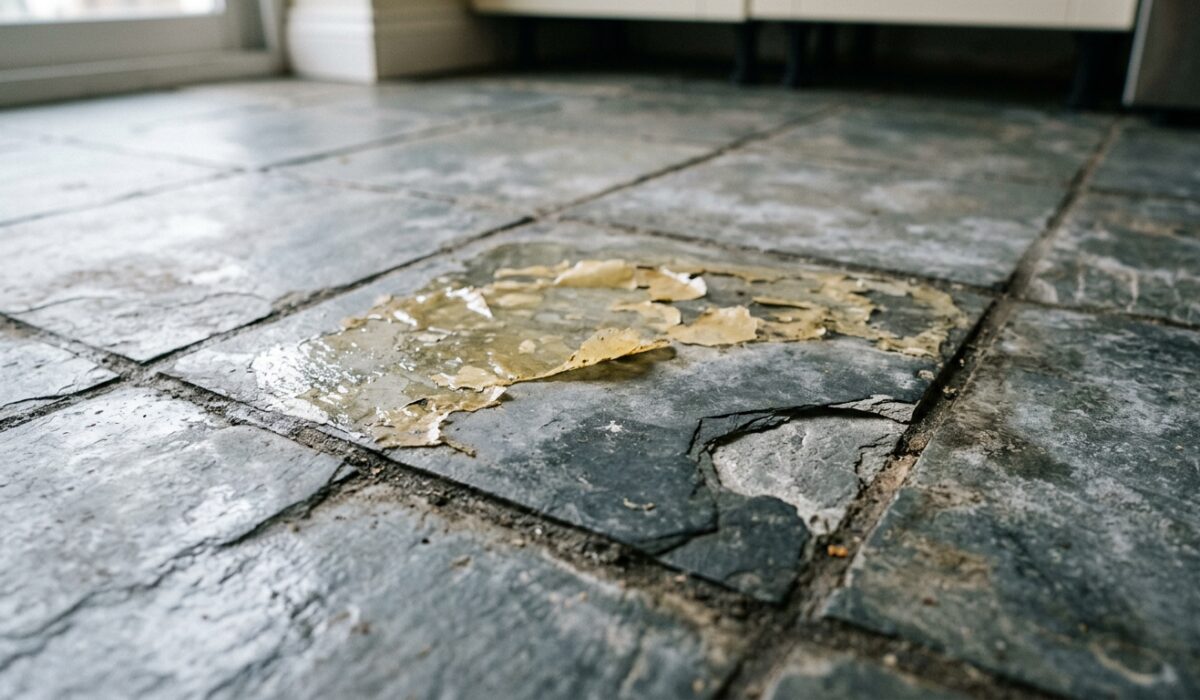
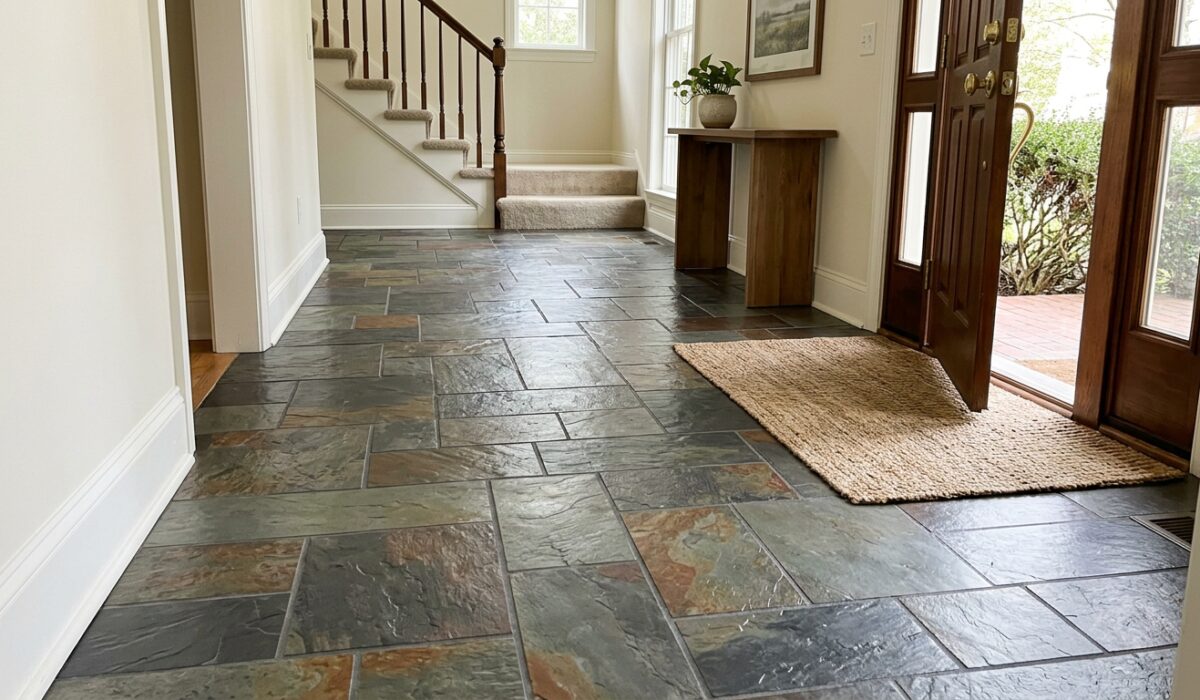
The photo above shows the most common case: a glossy topical coating that has yellowed and lifted, plus a chipped corner where the top layer of stone has come away. Neither problem means the floor has to go. Both are routine parts of slate floor restoration.
Should You Restore Slate Floors or Replace Them?
Choose slate floor restoration when the tiles are still bonded and the damage sits on the surface. Haze, old coatings, worn grout, small chips and a handful of cracked or hollow tiles are all fixable, and restoring keeps a floor that would cost far more to replace.
Replacement is the better call in a few situations:
- Widespread hollow tiles. If tapping turns up loose tiles all over the room, the bond has failed broadly and spot repairs won’t hold.
- Cracks that keep coming back. Repeated cracking in a line usually means the subfloor or slab is moving. That has to be fixed first, which often means lifting the floor anyway.
- Water damage underneath. A wood subfloor that has rotted under a leaking dishwasher or toilet needs replacing, and the slate above it comes up with it.
- A remodel is coming. If the kitchen layout is changing, restoring slate that will be cut around new cabinets rarely pays off.
The same restore-or-replace logic applies to other materials too, and our article on floor repair versus replacement walks through it.
Slate Floor Restoration in 7 Steps
A complete slate floor restoration follows the same order on almost every job. Skipping ahead, such as sealing before the floor is fully clean and dry, locks dirt and moisture under the new sealer.
1. Inspect and Test
The installer walks the floor and taps each tile to find hollow spots, marks chips and cracks, and checks the grout. A few drops of water on several tiles show whether any sealer is left. If the floor has an unknown coating, a test patch with stripper in a corner shows what will come off and how easily.
2. Deep Clean
The floor gets scrubbed with a stone-safe alkaline or pH-neutral cleaner using a floor machine or stiff brushes, then rinsed and pulled up with a wet vacuum. Slate’s uneven cleft surface traps dirt in its texture, so this step often takes two passes. Acidic cleaners stay out of it entirely.
3. Strip Old Coatings
Acrylic finishes, waxes and topical sealers come off with a stripper made for natural stone. Thick or layered coatings can need more than one application and plenty of rinsing. This is the step that removes yellowing and peeling, and it’s usually where a dull floor first starts to look like slate again.
4. Repair Chips, Flakes and Loose Tiles
Loose flakes get glued back down with a stone adhesive or trimmed off if they’re too thin to save. Chips are filled with an epoxy tinted to the stone. Cracked and hollow tiles are cut out and replaced. Leftover tiles in a garage or attic are the best match. Otherwise the installer looks for a slate with similar color and thickness and places it where it’ll be least noticed.
5. Regrout
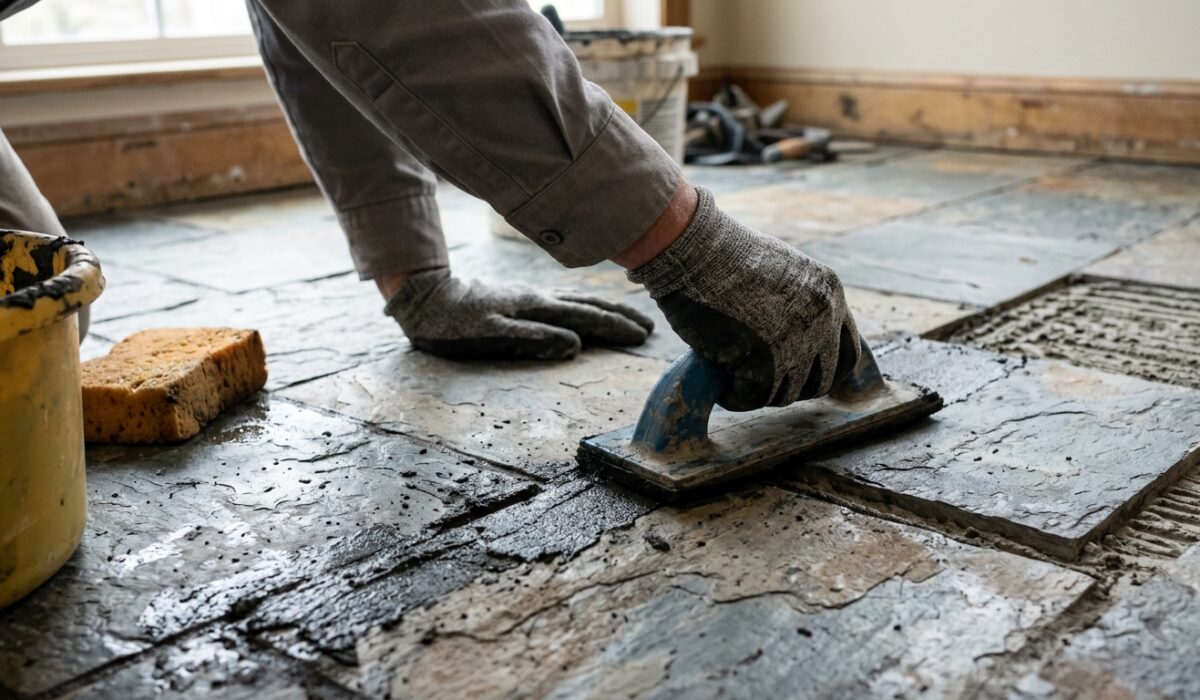
Worn grout is raked out well down into the joint and replaced, usually with a sanded grout for the wider joints slate floors often have. Sealing the slate before grouting keeps the grout from staining the face of the stone. A grout color close to the darkest tones in the slate tends to look the most natural.
6. Let the Floor Dry
Slate holds water after cleaning and stripping. Sealing too soon traps that moisture, which can cause cloudiness or efflorescence later. Many manufacturers suggest waiting about 24 hours after the last wet cleaning, and longer in a cool or damp room.
7. Seal
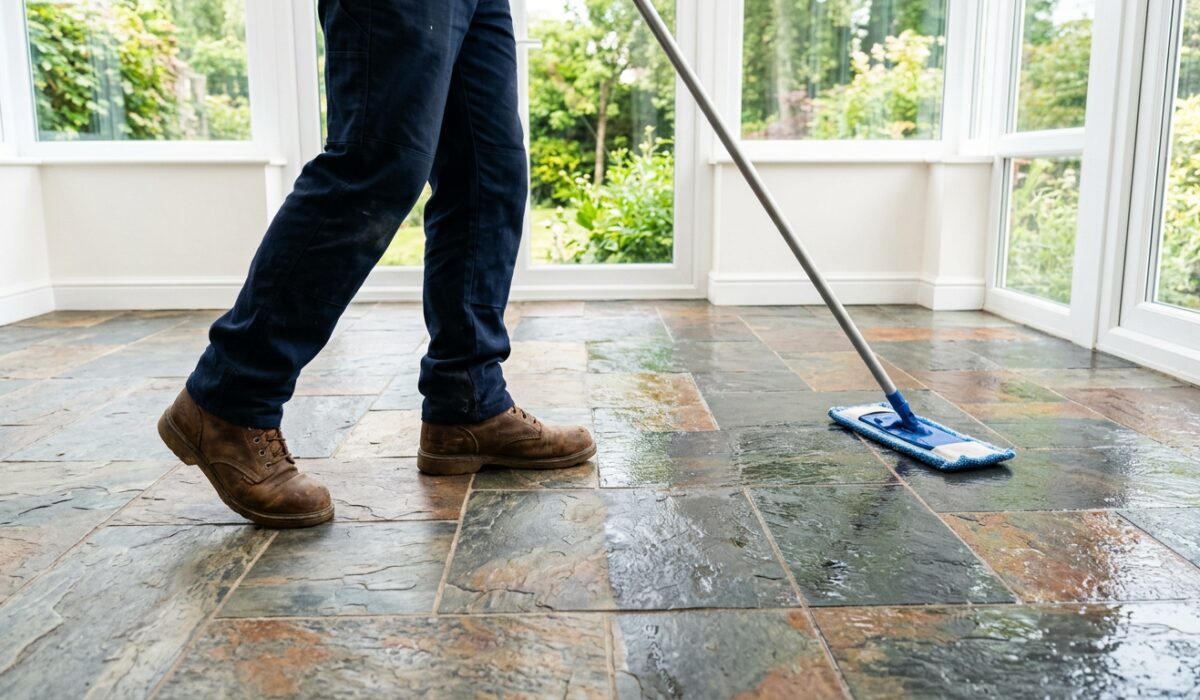
The last step of slate floor restoration is sealing. A penetrating sealer goes on in even coats, sits for the dwell time on the label, often around 10 to 15 minutes, and then all the excess is buffed off before it dries. Leftover sealer on the surface turns sticky and hazy. A second coat goes on where the stone absorbed the first quickly.
Choosing a Sealer for Slate Floor Sealing
The sealer you pick decides how the floor looks and how long the slate floor restoration lasts. Slate floor sealing products fall into three groups:
| Sealer type | How it looks | How it holds up | Best for |
|---|---|---|---|
| Penetrating (impregnating) | Natural, close to the unsealed stone | Sits inside the stone, so it can’t peel; reapply every few years | Most indoor slate floors |
| Color-enhancing penetrating | Richer, darker, “wet” look without gloss | Same as penetrating | Owners who want the colors to stand out |
| Topical (film-forming) | Shiny or satin coating on top | Wears in traffic lanes, can yellow, peel and trap moisture | Rarely the right choice on floors |
MSI’s slate care guidance recommends a penetrating sealer rather than a topical one for exactly those reasons. If you like a darker look, test an enhancer on a spare tile or in a closet first, because the change is permanent until the stone wears.
What Slate Floor Restoration Costs
Slate floor restoration is priced after an inspection because the work depends on what failed. Homewyse’s slate floor sealing cost estimate puts the national average for sealing alone at $1.23 to $2.33 per square foot as of May 2026, covering cleaning, applying sealant and polishing under favorable conditions. Each extra step adds to that base.
| Factor | Effect on the price |
|---|---|
| Clean and reseal only | Lowest cost; often a one-day job for a single room |
| Stripping old coatings | Adds labor and chemicals; layered coatings cost more |
| Regrouting | Usually priced per square foot or per room |
| Tile replacement and flake repair | Priced per tile or per repair; matching stone adds time |
| Efflorescence and moisture issues | Source has to be fixed first, which may involve other trades |
| Access and furniture | Kitchens with appliances and heavy furniture take longer |
Even with stripping, repairs and regrouting, restoring usually costs well below new stone. Our tile flooring installation cost guide lists installed prices for new slate and other natural stone if you want to compare.
DIY or Professional Slate Floor Restoration
A light slate floor restoration, cleaning and resealing a small entry floor with no coating on it, is a fair weekend project for a careful homeowner. You need a stone cleaner, brushes, a wet vacuum, a penetrating sealer and the patience to let the floor dry fully.
Bring in a professional when the job includes any of these:
- Stripping an unknown or layered coating
- Regrouting more than a few joints
- Replacing cracked or hollow tiles
- White powder that keeps coming back
- Large rooms, where a floor machine saves days of scrubbing by hand
The biggest DIY mistake is using the wrong product. Acidic or all-purpose cleaners and a glossy topical sealer cause most of the damage that restoration later has to undo. The same thinking applies to stone in businesses; our article on commercial flooring restoration covers larger spaces.
Keeping Slate Looking Good After Restoration
After slate floor restoration, the floor stays good-looking with a simple routine:
- Dust mop often. Grit acts like sandpaper on the sealer and the stone.
- Use pH-neutral cleaner. Skip vinegar, lemon juice, bleach and other acidic cleaners, which break down the seal. Steam mops aren’t recommended either.
- Use mats at doors. They catch grit and, in winter, road salt.
- Put felt pads on furniture. Chairs dragged across slate chip the edges of the cleft.
- Test the seal. Put a few drops of water on the busiest areas. If they bead, the seal is fine. If the stone darkens and soaks it up, it’s time to reseal. Most homes need that every one to three years.
These care points come from MSI’s slate care guidance and match what installers see on restored floors year after year.
Slate Floor Restoration Room by Room
The same seven steps apply everywhere, but each room puts different stress on slate. Knowing what a room does to the stone helps you restore slate floors so they hold up longer the second time around.
Entry Halls and Mudrooms
Entries take the most grit and, in DC-area winters, the most road salt. Salt residue can leave white marks that look like efflorescence and wear sealer away quickly in the walking path. Slate floor restoration here should include a careful rinse to remove salt before sealing, and a good mat inside and outside the door afterward.
Kitchens
Kitchen slate deals with grease, spills and dropped pans. Grease builds up in the cleft texture and turns the floor dull, so the deep clean often takes longer. Chips near the sink and range are common and are usually filled with tinted epoxy. A penetrating sealer helps oil and wine wipe up before they soak in.
Sunrooms
Sunrooms swing hot and cold, and strong sun bakes topical coatings until they yellow and peel. They are one of the most common places to find a peeling finish over slate. Stripping the old coating and switching to a penetrating sealer usually solves the problem for good.
Bathrooms
Bathroom slate stays wet, so grout and sealer matter most. Check the grout around the tub and toilet closely during the inspection, and reseal more often than in dry rooms. Water that gets under loose tiles can damage a wood subfloor, so hollow tiles near fixtures should be reset quickly.
Patios and Porches
Outdoor slate goes through freeze and thaw cycles every winter, which can pop loose tiles and widen cracks in the mortar bed. Restoring an exterior floor often means more resetting and repointing, and the sealer must be rated for outdoor use. Indoor and outdoor slate floor restoration follow the same order, but outdoor work depends on dry weather.
Slate Floor Restoration FAQs
Can a dull slate floor be restored?
Usually, yes. Dullness most often comes from cleaner residue, worn sealer or an old topical coating rather than damage to the stone. Deep cleaning, stripping and resealing with a penetrating sealer bring the color back in most cases. Cracked or hollow tiles can be replaced during the same job.
How much does slate floor restoration cost?
Sealing alone averages about $1.23 to $2.33 per square foot nationally, according to Homewyse’s May 2026 estimate. Full slate floor restoration with stripping, repairs and regrouting costs more and is usually priced after an inspection, since the work depends on what has failed.
How often should a slate floor be sealed?
Most homes need resealing every one to three years, depending on traffic. Test by putting a few drops of water on the floor. If they bead up, the seal is working. If the stone darkens and absorbs the water, it’s time to reseal.
What causes white powder on slate?
White powder or crust is often efflorescence: mineral salts carried up by moisture from the slab or mortar below and left behind as the water evaporates. Clean it off with a suitable product, but find and fix the moisture source first. Sealing over it can trap the problem.
Can you fix flaking slate?
Yes, within limits. Thick flakes can be glued back with a stone adhesive, thin ones are trimmed off, and the spot is filled with tinted epoxy. Slate naturally splits in layers, so some flaking is normal, but widespread flaking may mean moisture or salt is attacking the stone.
Should slate be sealed with a glossy coating?
Usually not. Glossy topical coatings wear unevenly, yellow over time, peel and can trap moisture. A penetrating sealer protects the stone from inside without a film. If you want richer color, choose a penetrating color enhancer instead of a gloss.
Planning Your Slate Floor Restoration
A successful slate floor restoration starts with reading the floor correctly: is it the coating, the grout, the bond or moisture from below? Once that’s clear, the steps are predictable, and the stone itself almost always has years of life left.
FIXO inspects slate floors, then cleans, strips, repairs, regrouts and seals them at a fixed price agreed before work starts. If you’d rather replace the floor, our tile flooring installation team can quote new stone or porcelain, and you can request a quote online.
 4.9 on Google14 reviews
 Licensed & InsuredVirginia · Maryland · Washington, D.C.
 Workmanship GuaranteedInstallation backed in writing
 Locally OwnedServing NoVA, MD & D.C.