Every commercial floor eventually reaches the same crossroads. The lobby has lost its shine, the restaurant kitchen has cracked grout lines, the office corridor shows gray traffic lanes, and someone asks the expensive question: do we fix it or tear it out? Commercial flooring restoration is often the smarter answer, but not always. Choosing wrong in either direction costs money, whether that means paying for a full replacement you didn’t need or pouring maintenance dollars into a floor that has already failed underneath.
This guide is written for business owners, property managers, and facility teams across the U.S. It explains what restoration really involves for each floor type, how to tell a restorable floor from one that needs replacing, what commercial tile installation and quarry tile systems require when replacement is the right call, and how to plan the work without shutting down your operation.
Quick answer: Restore a commercial floor when the surface is worn but the structure underneath is sound, meaning the tiles are still bonded, the boards are solid, and there is no active moisture problem. Replace it when the substrate has failed, damage is widespread, the space has changed use, or the existing material cannot meet today’s safety or sanitation requirements. A professional on-site assessment with a small test area is the most reliable way to decide.
Key Takeaways
- Commercial flooring restoration renews an existing floor through repair, deep cleaning, refinishing, polishing, regrouting, or resealing, without tearing it out.
- Restoration typically costs a fraction of replacement and causes far less downtime, which matters as much as the invoice for revenue-generating spaces.
- Each floor type has its own restoration method. A process that revives terrazzo can damage vinyl, and a finish that protects hardwood is wrong for quarry tile.
- Replacement is the better investment when there is substrate failure, persistent moisture, widespread cracking, or a new use for the space.
- In restaurant kitchens, commercial quarry tile installation with epoxy grout and a coved base remains the durable, health-code-friendly standard.
What Is Commercial Flooring Restoration?
Commercial flooring restoration is the process of returning a worn floor in a business, institutional, or multi-tenant property to a clean, safe, and serviceable condition while keeping the original material in place. Depending on the floor, that can mean sanding and refinishing hardwood, diamond-honing terrazzo, stripping and refinishing vinyl composition tile (VCT), regrouting ceramic or quarry tile, or grinding and polishing concrete.
It sits between two other activities that often get confused with it:
| Routine Maintenance | Restoration | Replacement | |
|---|---|---|---|
| Goal | Keep the floor clean day to day | Reverse accumulated wear and damage | Install a new floor system |
| Typical work | Sweeping, auto-scrubbing, damp mopping, spot cleaning | Refinishing, honing, polishing, regrouting, resealing, repairs | Demolition, substrate prep, new material, installation |
| Frequency | Daily to weekly | Every few years, depending on traffic | Once per floor life cycle |
| Downtime | None to minimal | Hours to a few days, often after hours | Days to weeks |
| Relative cost | Lowest | Moderate | Highest |
The key point is that restoration fixes what routine cleaning cannot reach, such as worn-through finish, trapped soil under old coatings, eroded grout, and surface scratches. However, it cannot fix a failed subfloor or a slab that is pushing moisture into the floor above.
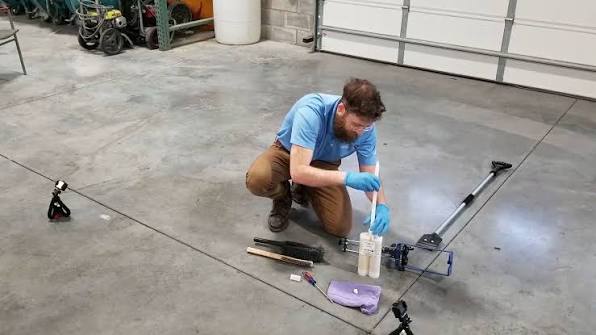
Signs Your Commercial Floor Needs Restoration, Not Just Cleaning
If a floor still looks tired after a thorough cleaning, the problem is usually below the surface layer your janitorial crew can reach. Watch for these signals:
- Dull traffic lanes with shiny edges: The finish has worn through where people walk most, while corners still hold old coats.
- Yellowing or cloudy finish: Aged coatings or layers of recoat applied over residue.
- Sticky or tacky feel after mopping: Detergent or finish residue that was never fully rinsed or stripped.
- Dark, eroded, or missing grout: Water and cleaning chemicals are now reaching the setting bed beneath the tile.
- Etched or dull spots on stone and terrazzo: Acidic spills or the wrong cleaners have attacked the surface.
- Gray, splintering, or exposed wood: Hardwood finish has worn down to bare boards.
- Buildup along baseboards and door edges: Years of recoating without a full strip.
A few symptoms point past restoration toward replacement, and these deserve a professional look before anyone quotes a refinish:
- Tiles that sound hollow when tapped, or that crack in a line (often a sign of substrate movement)
- Boards that are cupped, buckled, or soft underfoot
- Recurring white powder, bubbling, or adhesive failure over concrete (a moisture warning sign)
- Widespread cracked or loose tiles across a large area rather than in one spot
Restoration Methods by Floor Type
Most commercial buildings contain several flooring systems under one roof: terrazzo at the entry, VCT in the corridors, ceramic tile in the restrooms, and quarry tile in the kitchen. Each needs its own approach.
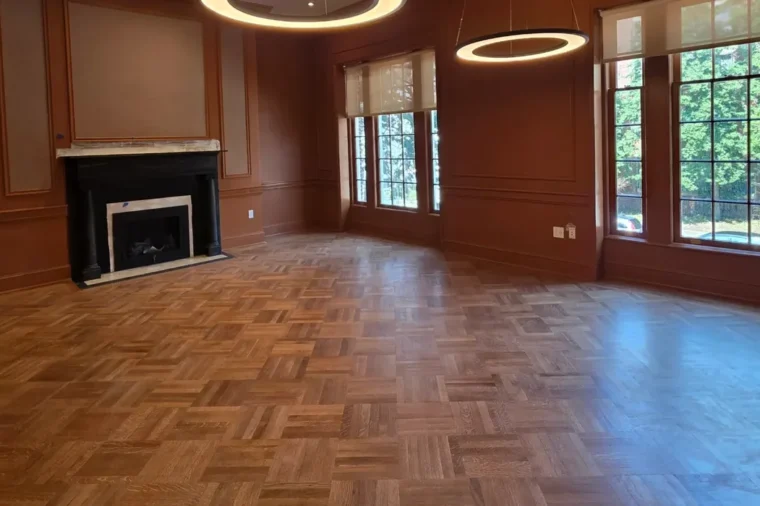
Commercial Hardwood
Hardwood in offices, restaurants, retail stores, and historic buildings is one of the most restorable surfaces there is.
- Screen and recoat: When only the top coat is worn, the surface is lightly abraded and a fresh coat of commercial-grade finish is applied. This is typically a one-day job with no sanding down to bare wood.
- Full sand and refinish: When the finish has worn through or scratches reach the wood, the floor is sanded to bare wood, repaired, and rebuilt with multiple coats of finish.
- Board replacement: Damaged or water-stained boards can be cut out and replaced before refinishing.
Water-based, low-VOC finish systems help reduce odor and allow faster return to service, which is important in occupied buildings.
Ceramic, Porcelain, and Quarry Tile
Tile itself rarely wears out. The grout and sealer usually fail first. Restoration typically includes:
- Deep cleaning with equipment designed for textured tile and grout joints
- Removing and replacing failed or eroded grout, often upgrading to a chemical-resistant epoxy grout in wet or food-service areas
- Replacing cracked or loose tiles individually
- Applying a penetrating sealer to tile and grout where the manufacturer recommends it
Terrazzo and Natural Stone
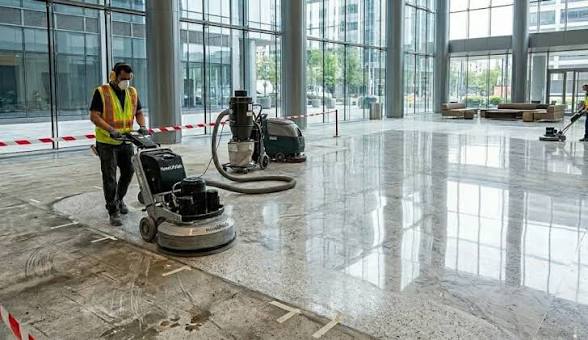
Terrazzo lobbies and stone entries were built to last generations, and restoration can often make them look better than they have in decades. The process usually involves diamond grinding or honing to remove scratches and etching, filling cracks and voids, polishing to the desired sheen, and sealing. Terrazzo that has been coated with wax for years may need that coating removed before the stone itself can be refinished.
Polished and Sealed Concrete
Warehouses, showrooms, and retail spaces with exposed concrete can be restored by repairing cracks and spalled areas, grinding away old coatings and stains, applying a densifier, and polishing or recoating. Because anything bonded to concrete depends on the slab’s moisture condition, moisture testing is a critical first step.
VCT, Sheet Vinyl, and Luxury Vinyl
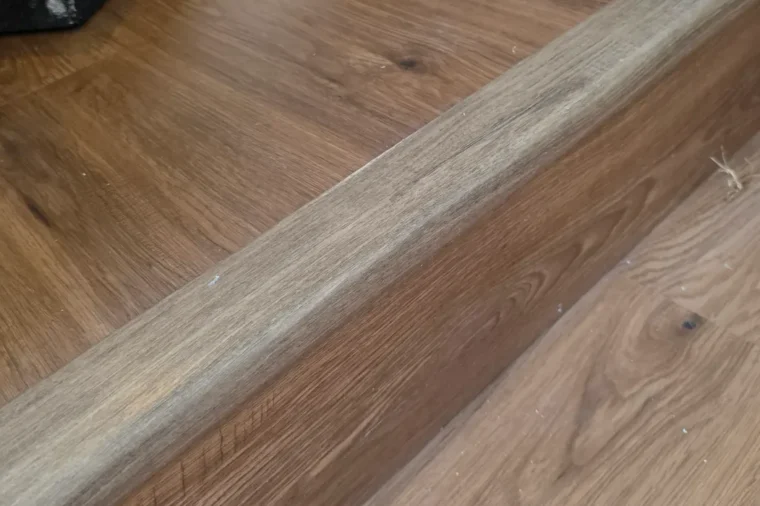
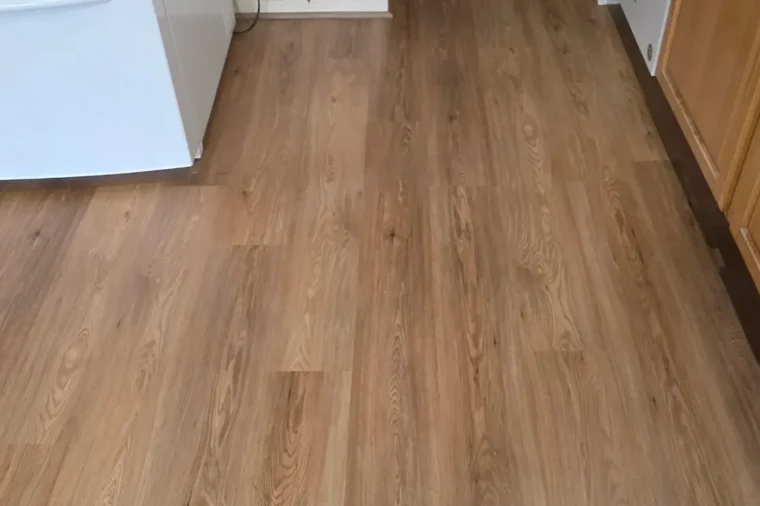
Vinyl composition tile and sheet vinyl are restored by stripping old finish, repairing seams and damaged sections, and applying new floor finish. Luxury vinyl tile and wood-look plank, sometimes called vinyl wood flooring, work differently. They have a factory wear layer that cannot be sanded or refinished, so damaged planks are replaced individually rather than restored.
Safety note for older buildings: Resilient floor tiles installed before the 1980s, especially 9-by-9-inch tiles, and the black adhesive beneath them may contain asbestos. Do not sand, grind, or aggressively strip these floors until a qualified inspector has tested them.
Restore or Replace? A Practical Decision Framework
Restoration Usually Makes Sense When:
- The flooring is still firmly bonded or fastened, and the substrate is stable
- Damage is on the surface (scratches, dull finish, stains, worn grout) or limited to isolated areas
- Hardwood still has enough wood above the tongue to sand safely
- The space will continue to be used in the same way
- You need results with minimal downtime
Replacement Usually Makes Sense When:
- The substrate or subfloor has failed, or there is ongoing moisture coming from below
- Cracked, loose, or hollow-sounding tiles are widespread
- Engineered wood veneer or vinyl wear layer is worn through
- Office or corridor carpet is matted, delaminating or permanently stained; carpet can be cleaned but not restored, so see our guide to commercial carpet installation
- The use of the space has changed, such as converting an office into a restaurant or clinic
- The current material cannot meet safety, sanitation, or slip-resistance needs for how the space is used today
Cost: More Than the Price per Square Foot
For hardwood, professional refinishing commonly runs about $3 to $8 per square foot, while full replacement often runs $8 to $15 or more once removal, new material, and installation are included. Tile, stone, terrazzo, and concrete restoration prices vary widely by condition, so an on-site assessment is the only reliable way to get an accurate number.
For a business, the invoice is only part of the cost. Consider the full picture:
| Cost Factor | Restoration | Replacement |
|---|---|---|
| Material | Mostly finishes, grout, and sealers | New flooring plus setting materials |
| Demolition and disposal | Minimal | Often significant |
| Downtime | Hours to a few days, often after hours | Days to weeks |
| Lost revenue risk | Low | Higher, especially for restaurants and retail |
| Tenant or customer disruption | Limited, can be phased | Larger, often requires closing areas |
A simple way to evaluate downtime: Multiply your average daily revenue (or daily cost of an unusable area) by the number of days each option keeps the space closed, then add that figure to each quote. For a busy restaurant or retail store, this lost-revenue cost can matter more than the price difference between the two bids.
When Restoration Isn’t Enough: Commercial Tile Installation
Sometimes the honest answer is to replace. When that happens, the new floor should be designed for how the space is really used, not just for how it looks on opening day.
Commercial Quarry Tile Installation for Restaurant Kitchens
Quarry tile is an unglazed, extruded, and kiln-fired tile made from clay and shale. Its dense body resists grease, hot water, and heavy loads, and abrasive versions add grit to the surface for better traction on wet or greasy floors. That is why it remains the go-to floor for commercial kitchens, dish rooms, and food processing areas.
A commercial quarry tile installation that lasts depends on getting the full system right, not just setting the tile:
- Substrate and slope: The slab must be sound and sloped correctly toward floor drains so water does not pond.
- Waterproof, crack-isolation membrane: This protects the slab and keeps normal slab movement from cracking tile and grout.
- Proper mortar: Quarry tile weighs more than typical ceramic tile, so it needs a setting mortar rated for large, heavy tile or an epoxy mortar in harsh chemical areas.
- Epoxy grout: Cement-based grout breaks down under degreasers, acids, and hot pressure washing. A 100%-solids industrial epoxy grout meeting ANSI A118.3 is the preferred choice for kitchen floors.
- Joint width: Quarry tile joints are wider than typical ceramic tile, commonly between 1/4 inch and 3/8 inch.
- Coved base: A curved tile base where the floor meets the wall eliminates the dirt-catching 90-degree corner. The FDA Food Code, adopted in some form by state and local health departments, calls for floor-and-wall junctures in food establishments to be coved and sealed.
Commercial Tile Installation for Offices, Retail, and Restrooms
Outside the kitchen, commercial tile installation usually means porcelain tile in lobbies, restrooms, corridors, and retail floors. Key specifications to discuss with your installer include:
- Slip resistance: For level interior floors expected to be walked on when wet, ANSI A137.1 calls for tile with a wet dynamic coefficient of friction (DCOF) of at least 0.42. Entrances, restrooms, and areas near beverage stations deserve extra attention.
- Movement joints: Large commercial floors need movement joints placed according to TCNA guidelines. Skipping them is a common cause of tenting and cracking tile.
- Flatness and lippage control: Large-format porcelain requires a flat substrate and careful setting to avoid uneven tile edges that can create trip hazards.
- Grout selection: High-performance or epoxy grout in restrooms and wet areas reduces staining and future restoration work.
Planning Restoration Around Your Business Operations
The best commercial flooring restoration plan is one your customers never notice. A professional contractor should plan the following with you before work begins:
- Scheduling: Night, weekend, or holiday work, with the building divided into phases so key areas stay open.
- Test area: A small test section on floors with unknown coating history shows whether buildup removes cleanly and whether new finishes will bond.
- Cure times: Know when each area can handle light foot traffic, full traffic, rolling carts, and furniture.
- Dust and odor control: Dust-containment sanding systems, ventilation, and low-VOC products help protect occupied spaces.
- Safety: Wet, stripped, or curing floors are slip hazards. Under OSHA’s walking-working surfaces standard, employers must keep floors clean and free of hazards such as spills, so barriers, signage, and clear walking paths are part of the plan.
- Paperwork: Most property managers require a certificate of insurance (COI) before contractors can work in the building.
Commercial Flooring Restoration in Northern Virginia, Maryland, and Washington, D.C.
Commercial floors in the DMV deal with a specific set of challenges. Winter ice-melt residue gets tracked across entries and lobbies, where it can etch stone, dull finishes, and break down grout. Humid summers affect wood floors and cure times. The region also has a wide range of building types, from historic buildings in Washington, D.C. with original hardwood and terrazzo, to office parks and retail centers in Northern Virginia, to restaurant corridors throughout Maryland, and each needs a different restoration plan.
FIXO DMV provides commercial flooring restoration, commercial tile installation, and commercial quarry tile installation for businesses across Northern Virginia, Maryland, and Washington, D.C., along with luxury vinyl plank installation, engineered hardwood installation, and floor removal, baseboards, and stair work. Property managers in Arlington, Bethesda, Washington, D.C., and communities across the DMV can start with an on-site assessment that identifies each floor type, its condition, and whether restoration or replacement makes the most sense.
How to Choose a Commercial Flooring Restoration Contractor
Before you sign, ask each contractor:
- Will you walk the site and identify every floor type before quoting?
- Do you perform test areas on floors with unknown coatings or finishes?
- Can you work nights, weekends, or in phases around our operating hours?
- What products and finish systems will you use, and what are the cure times?
- How will you control dust, odor, and slip hazards in occupied areas?
- Can you provide a certificate of insurance and proof of licensing for our jurisdiction?
- What maintenance plan do you recommend after the work is complete?
- Do you have photos or references from similar commercial projects?
A contractor who answers these questions clearly, and who will tell you when a floor is not worth restoring, is worth more than the lowest bid.
Protecting the Investment A Post-Restoration Maintenance Plan
Restoration resets the clock. A maintenance plan decides how long it stays reset.
| Frequency | Recommended Tasks |
|---|---|
| Daily | Dust mop or sweep, spot-clean spills, empty entry mats |
| Weekly | Auto-scrub or damp mop with a pH-neutral cleaner suited to the floor type |
| Monthly to quarterly | Inspect grout, sealers, and high-traffic lanes; burnish or buff finished floors if appropriate |
| Every 1 to 3 years | Recoat hardwood, reseal tile and stone, or refinish resilient floors based on traffic |
Two simple habits add years to almost any commercial floor. Use long, high-quality entrance matting to capture grit and ice melt before it spreads, and use cleaners approved for each specific floor type. Acidic or high-alkaline products can damage stone, grout, and finishes.
If restoration is not enough and the floor has to come out, here is how to choose commercial flooring contractors in Washington, DC.
Frequently Asked Questions
What is the difference between floor restoration and floor refinishing?
Refinishing is one type of restoration, most often used for hardwood, where the floor is sanded and new finish is applied. Commercial flooring restoration is a broader term that also includes regrouting tile, honing terrazzo, stripping and refinishing VCT, and polishing concrete.
Is it cheaper to restore or replace a commercial floor?
In most cases, restoration is significantly cheaper when the floor is structurally sound. For hardwood, refinishing often costs about $3 to $8 per square foot compared with $8 to $15 or more for replacement, and restoration usually involves much less downtime.
How long does commercial floor restoration take?
A hardwood screen-and-recoat can often be finished in a day. A full refinish, tile regrouting, or terrazzo restoration may take several days depending on the size of the space and cure times. Phasing the work and scheduling it after hours can keep most businesses open.
Can old quarry tile in a restaurant kitchen be restored?
Often, yes. If the tiles are still bonded, restoration can include deep cleaning, removing failed grout, regrouting with epoxy, and replacing cracked tiles. If many tiles sound hollow or the floor no longer drains properly, a new commercial quarry tile installation is usually the better long-term solution.
Why is epoxy grout recommended for commercial kitchens?
Cement-based grout is porous and breaks down when exposed to grease, acidic cleaners, and hot pressure washing. A 100%-solids epoxy grout is dense, chemical-resistant, and easier to keep sanitary.
Can a business stay open during floor restoration?
Usually, yes. Contractors can divide the work into phases, schedule nights or weekends, and use fast-curing, low-odor products so key areas stay open.
How often should commercial floors be restored?
It depends on the amount of traffic and the type of floor. Busy entrances, corridors, and restaurants may need periodic restoration every few years, while lightly used areas can go much longer with good daily maintenance.
The Bottom Line
Commercial flooring restoration is often the most cost-effective way to bring a worn floor back to life when the structure underneath is sound. It protects your investment, limits downtime, and preserves durable materials such as hardwood, terrazzo, and quarry tile. When the substrate has failed, moisture keeps returning, or the space needs a different kind of floor, replacement with a properly specified commercial tile installation is the better long-term choice. Start with a thorough on-site assessment, insist on test areas for uncertain floors, and choose a contractor who is willing to give you an honest answer, even when that answer is to restore instead of replace.
For more flooring guidance from our team, read this FIXO DMV post.
 4.9 on Google14 reviews
 Licensed & InsuredVirginia · Maryland · Washington, D.C.
 Workmanship GuaranteedInstallation backed in writing
 Locally OwnedServing NoVA, MD & D.C.