Gym floor installation in Washington DC usually means rubber: rolls for cardio and general areas, thicker tiles or mats where weights hit the floor, and an acoustic underlayment in condos and upper-floor gyms. Plan on about 8 mm for cardio, 9 to 12 mm for free weights and heavier mats for lifting platforms. Installed rubber flooring typically runs about $4 to $12 per square foot, and replacing a floor covering doesn’t normally need a DC building permit.
Washington has every kind of gym under one skyline: rowhouse basements with a squat rack, garage setups in Chevy Chase and Brookland, condo fitness rooms in Navy Yard and NoMa, and boutique studios on busy commercial corridors. They share one requirement, a floor that protects the slab, the equipment and the people downstairs, but they get there in different ways.
This guide covers gym floor installation in Washington DC by gym type, then walks through zoning, thickness, what goes under the rubber, DC permits and licensing, cost and installation. Alvin wrote it for FIXO, which installs flooring for homes, condos and businesses across DC, Northern Virginia and Maryland.
What this gym flooring guide covers
Key takeaways
- Rubber gym flooring handles most uses, from cardio to heavy lifting, as long as the thickness matches the activity.
- Zone the floor. Thick mats only belong where weights get dropped, which keeps cost and height down elsewhere.
- Upper-floor and condo gyms need an acoustic underlayment to cut impact noise to the units below.
- DC’s Department of Buildings puts floor coverings on its no-permit list, but interior alterations and new commercial layouts need permits.
- Home improvement contractors in DC must be licensed with DLCP, bonded and insured.
Gym Floor Installation in Washington DC by Gym Type
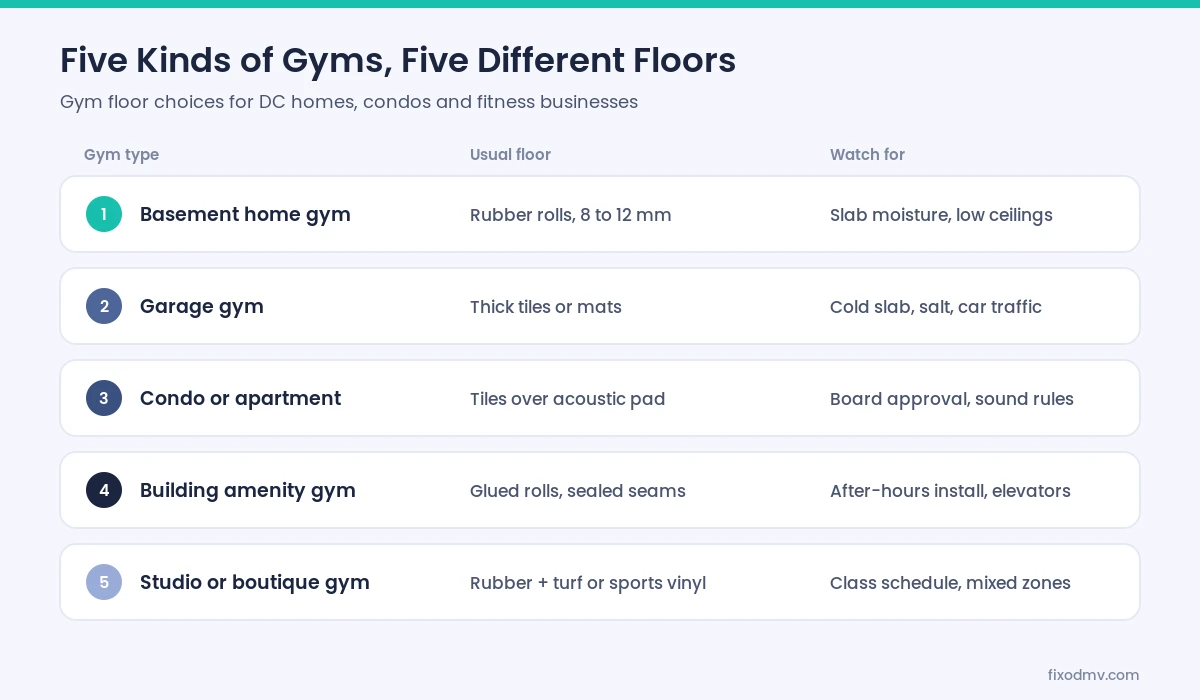
The right floor depends less on the brand of rubber and more on where the gym is and who’s under it. Five setups cover nearly every gym floor installation in Washington DC.
Rowhouse and Basement Home Gyms
Many DC home gyms live in a basement on a concrete slab, which is the easiest base for rubber. The catches are moisture and height. Older rowhouse basements can be damp, so the slab should be checked before rubber goes down, and ceilings are often low enough that every millimeter of flooring matters under an overhead press. For basement home gym flooring, rubber rolls of about 8 to 12 mm usually work well, with a platform where you deadlift.
Garage Gyms
Detached and attached garages in neighborhoods like Chevy Chase, Brookland and Takoma bring cold slabs, road salt and sometimes a car parked on the same floor. Thick interlocking tiles or mats are the best home gym flooring for garages because they can be lifted in sections. If a car parks on the floor in winter, ask about tiles rated for vehicle traffic.
Condo and Apartment Gyms
A gym inside a condo unit is mostly a noise problem. Dropped weights and treadmill footfall travel through concrete to the units below. Rubber tiles over an acoustic underlayment, with no dropping heavy weights, is the usual approach. Expect the association to ask for approval before the work starts.
Building Amenity Gyms
The fitness rooms in DC’s apartment and office buildings are often on upper floors or rooftops, above occupied spaces. They usually get glued rubber rolls with sealed seams, an acoustic layer and thicker drop zones by the racks. Installation is commonly scheduled after hours, with freight elevator bookings and protection for lobbies and corridors.
Studios and Boutique Gyms
Strength studios, CrossFit-style boxes and boutique fitness spaces often mix rubber, turf lanes for sled pushes, and sometimes sports vinyl or hardwood for classes. The layout follows the class plan, and installation has to work around the studio’s schedule so it can reopen quickly.
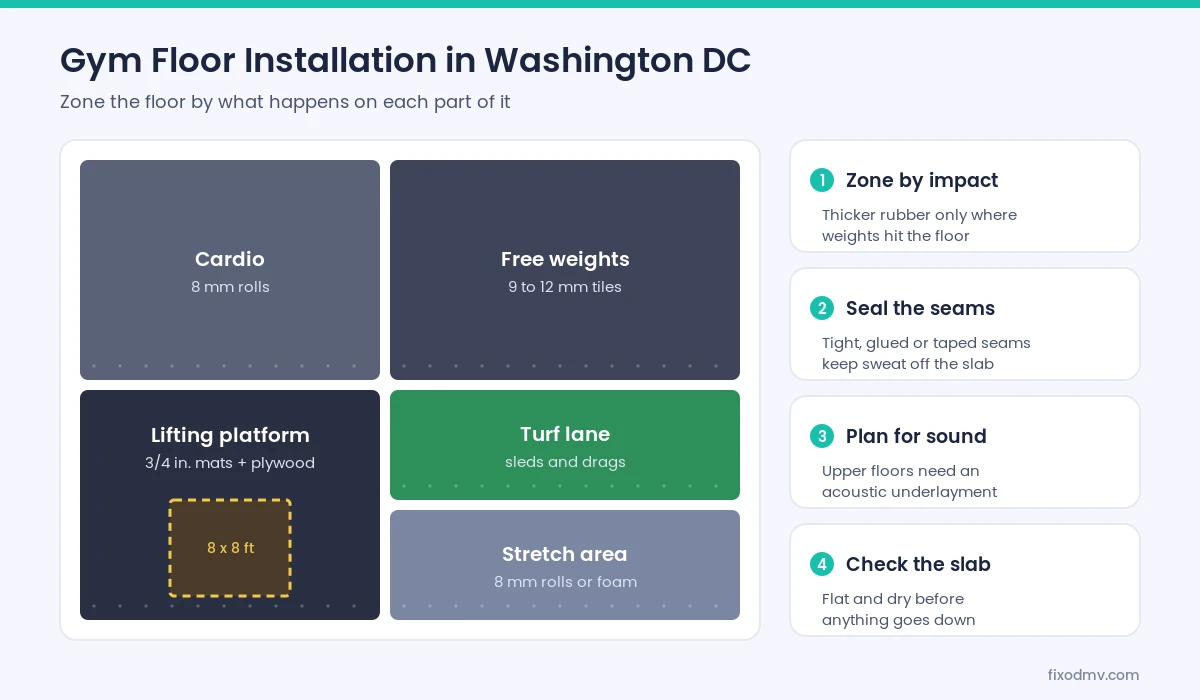
Zone the Floor by What Happens on It
The single best way to control the cost of gym floor installation in Washington DC is zoning. A gym floor doesn’t need the same thickness everywhere, so match each area to its use:
- Cardio: treadmills, bikes and rowers need cushioning and protection for the floor, not impact absorption. Thinner rolls work here.
- Free weights: dumbbells and kettlebells get set down hard, so this zone gets thicker rubber.
- Lifting platform: barbells and bumper plates need the thickest build-up, often mats over plywood in a dedicated platform area.
- Turf lane: sleds, drags and agility work run on artificial turf laid over a firm base.
- Stretching: softer rolls or foam for floor work and mobility.
Zoning also keeps heights sensible at doorways. A full 3/4-inch floor across a whole basement can create tripping edges and door clearance problems that a zoned layout avoids.
How Thick Should Rubber Gym Flooring Be?
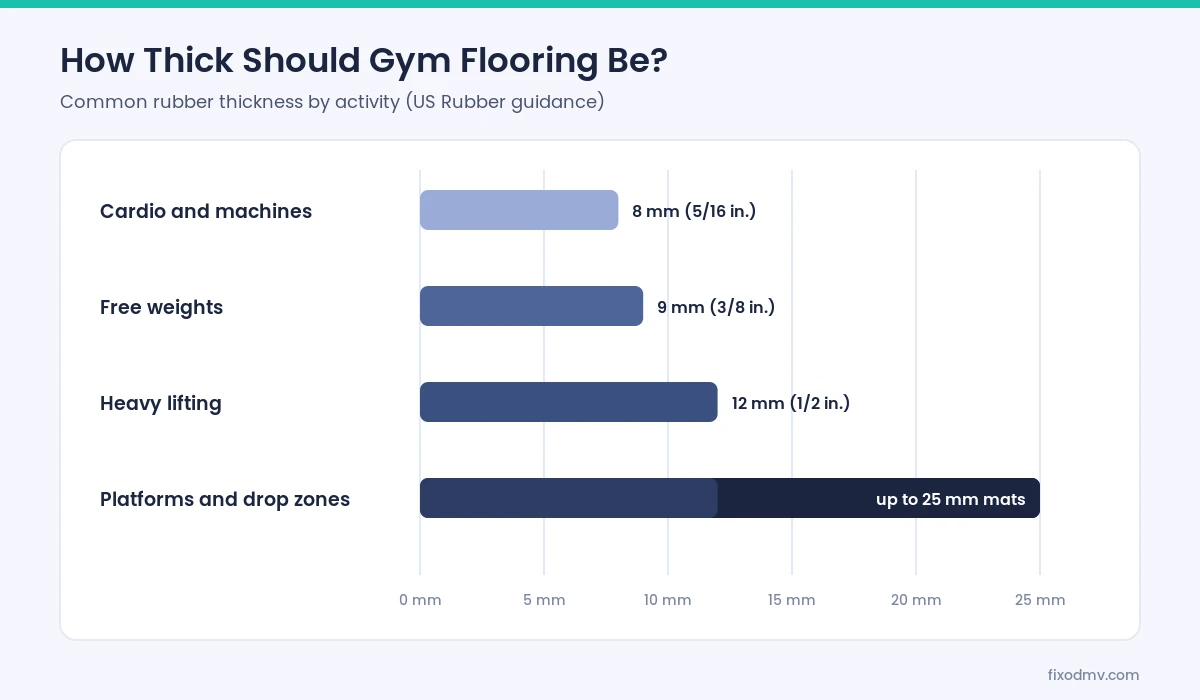
Thickness is the most important spec for rubber gym flooring. US Rubber’s thickness guide recommends these starting points:
| Area | Typical thickness | Why |
|---|---|---|
| Cardio and machines | 8 mm (5/16 in.) | Comfort underfoot, protects the floor under equipment |
| Free weights | 9 mm (3/8 in.) | More impact absorption for dumbbells and kettlebells |
| Heavy lifting | 12 mm (1/2 in.) | Slab protection and sound control for bumper plates |
| Platforms and drop zones | Interlocking mats of 12 to 25 mm | Localized heavy-duty protection where weights land |
Those are minimums for typical use, not limits. Gyms that drop heavy barbells from overhead, especially on upper floors, often build dedicated platforms with layers of plywood under thick rubber.
Rubber Rolls, Tiles, Mats and Other Home Gym Flooring
Rubber comes in three main formats, and many gyms use more than one. Other materials fill specific roles.
| Material | Best for | Trade-offs |
|---|---|---|
| Rubber rolls | Large areas, cardio, general floors | Heavy to handle; fewest seams |
| Rubber tiles | Home gyms, tight spaces, condos | More seams; easy to replace one tile |
| Interlocking mats | Drop zones and platforms | Thick and heavy; best used in zones |
| Artificial turf | Sled lanes and agility work | Needs a firm, flat base |
| Sports vinyl or hardwood | Group classes, dance, courts | Not for dropped weights |
| Foam tiles | Kids’ play and light stretching | Dents under equipment; not for weights |
For most home gym flooring, rubber tiles or rolls in the 8 to 12 mm range strike the best balance. Rolls give a cleaner look in larger rooms, while tiles are easier to carry down narrow rowhouse stairs and to swap out if one gets damaged.
What Goes Under a Gym Floor
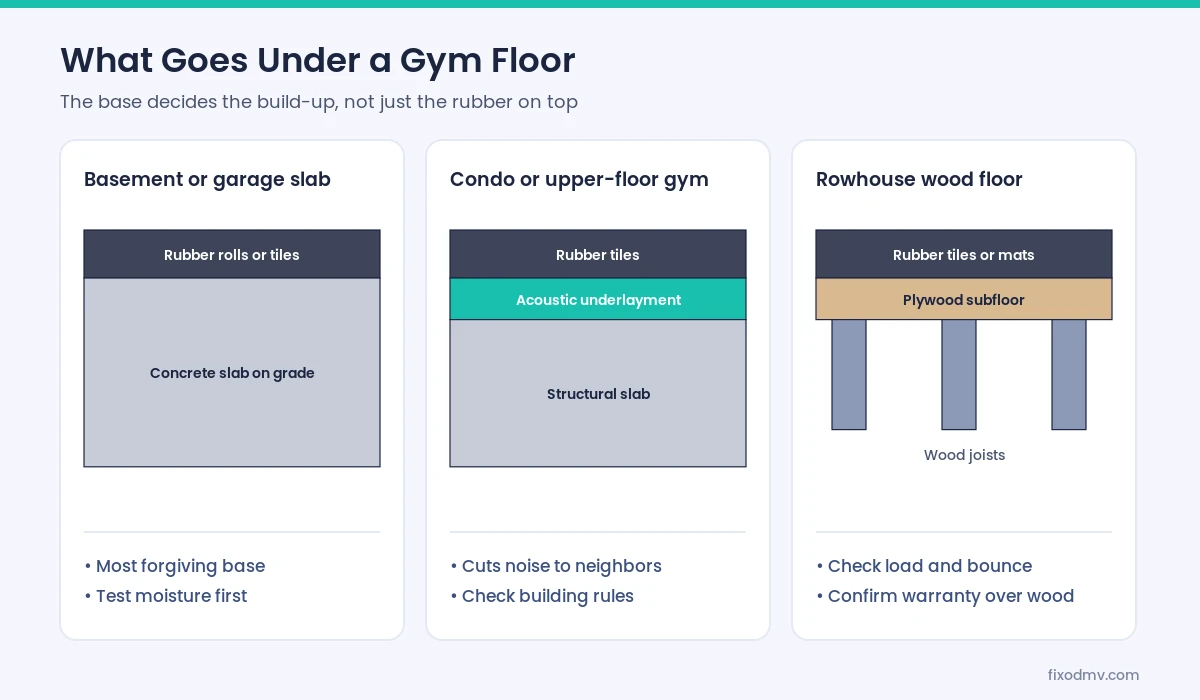
For any gym floor installation in Washington DC, the base under the rubber decides the build-up. A slab on grade, a condo slab and a wood floor framed on joists each need something different.
Concrete Slab on Grade
Basement and garage slabs are the most common and most forgiving base. US Rubber’s guidance calls for a slab that’s dry and flat, typically within 1/8 inch over 10 feet. A slab moisture check matters in older DC basements, where water can wick up through the concrete and get trapped under rubber.
Upper-Floor and Condo Slabs
Above occupied space, an acoustic underlayment goes between the slab and the rubber to cut impact noise traveling downward. Many buildings set a minimum sound rating for any new floor, so the underlayment choice often comes from the building’s rules rather than personal preference.
Wood Subfloors
Rowhouse upper floors and some additions are wood framed. Rubber can go over plywood, but the floor has to be stiff enough for the load, and some gym flooring makers don’t warranty their products over wood. For heavy racks and plates on an upper floor, a structural engineer’s opinion is worth getting before the gym goes in.
DC Permits, Licenses and Building Rules
Most gym floor installation in Washington DC is finish work, which keeps the paperwork light. The DC Department of Buildings’ list of work that doesn’t require a building permit includes tiling, carpeting, floor covering and similar finish work, and it notes that historic-district properties follow different rules. The same list shows that interior alterations, finished basements and new commercial layouts do need permits.
That means a rubber floor in an existing basement gym usually needs no permit, while finishing an unfinished basement to create the gym, or building out a new studio, usually does. Commercial owners should confirm with DOB before a build-out.
- Contractor license: DC’s Office of the Attorney General advises checking that a home improvement contractor is licensed with DLCP, and licensed contractors must be bonded and insured.
- Written contract: it should include the contractor’s DC license number, payment terms, start and completion dates and the materials.
- Condo approval: most associations want a written alteration request, proof of the installer’s insurance and reserved elevator time.
- Sound rules: buildings may set minimum impact-sound ratings for floors above other units.
You can verify a business license through DC’s Scout database or the DLCP website, as the Attorney General’s home improvement consumer alert explains.
What Gym Flooring Costs in Washington DC
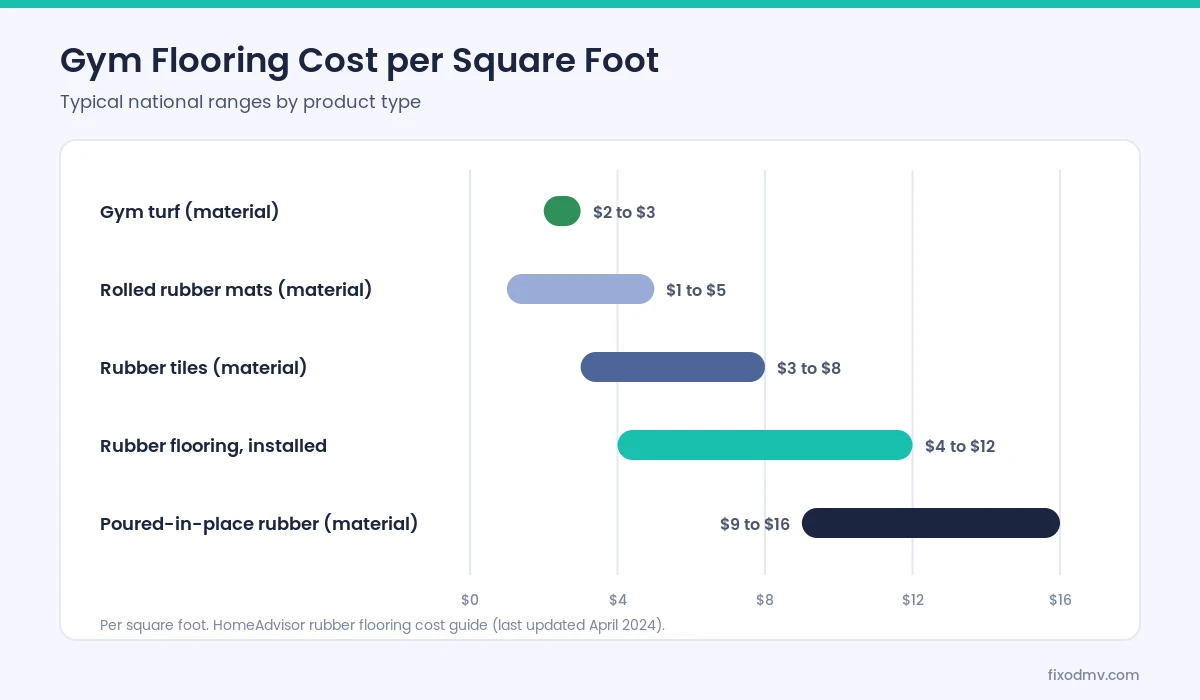
Rubber gym flooring is one of the more affordable commercial-grade floors. HomeAdvisor’s rubber flooring cost guide, last updated in April 2024, puts installed rubber flooring at about $4 to $12 per square foot.
| Product | Typical cost per sq ft |
|---|---|
| Rolled rubber mats (material) | $1 to $5 |
| Rubber tiles (material) | $3 to $8 |
| Poured-in-place rubber (material) | $9 to $16 |
| Gym turf (material) | About $2 to $3 |
| Rubber flooring, installed | About $4 to $12 |
Gym floor installation in Washington DC tends to land toward the upper part of national ranges because of access and scheduling. Narrow rowhouse stairs, condo elevator bookings, after-hours work in commercial buildings and parking all add time. Acoustic underlayment, lifting platforms and slab repair are separate line items worth asking about.
How Gym Floor Installation Works
A typical rubber gym flooring job goes in over one to three days, depending on size, zones and whether it’s glued down.
- Measure and plan zones. The installer maps cardio, weights, platforms and turf, and checks door heights.
- Check the base. Flatness and moisture are tested, and low spots or cracks are patched.
- Let the rubber relax. Rolls are unrolled in the room so they lie flat before cutting.
- Lay underlayment. Acoustic layers go down first on upper floors.
- Dry-lay and trim. Rolls or tiles are fitted and seams are cut tight, often by overlapping and cutting through both pieces.
- Adhere or tape. Commercial floors are usually glued with the maker’s adhesive. Home gyms are often loose-laid with taped seams.
- Finish edges. Ramps or reducers go at doorways so the thicker floor doesn’t create a trip edge.
Ask how long to wait before moving equipment back if the floor is glued. Adhesives need time to cure before heavy racks and machines roll across them.
Questions to Ask Before Gym Floor Installation in Washington DC
Use these questions when you compare quotes for gym floor installation in Washington DC. The answers show quickly whether an installer has thought about your building as well as the rubber.
- What thickness are you quoting for each zone? One thickness for the whole room usually means overspending on cardio areas or underprotecting the lifting area.
- Is the rubber glued, taped or loose-laid? Commercial floors are normally glued, while home gym flooring is often loose-laid, which makes it easier to change later.
- How will you check the slab? Ask for a moisture and flatness check, especially in older rowhouse basements.
- What underlayment are you using, and what sound rating does it reach? This matters most in condos and building gyms.
- Who handles building approvals and elevator bookings? In larger DC buildings, scheduling can take longer than the install itself.
- How will the floor meet doorways and other flooring? Thick rubber needs ramps or reducers at every edge people walk across.
- What’s your DLCP license number? It should also appear on the written contract.
A detailed quote that answers these points is easier to compare and less likely to change once work starts. It also makes gym floor installation in Washington DC go faster on the day, because the crew arrives knowing the zones, the build-up and the access plan.
Cleaning and Caring for Rubber Gym Flooring
Rubber floors are low-maintenance, but a few habits keep them looking good and smelling fresh:
- Sweep or vacuum often. Grit grinds into the surface under shoes and equipment.
- Use a pH-neutral cleaner. Harsh solvents and oil-based products can break down rubber.
- Air out new rubber. Recycled rubber can smell at first, so ventilation in the first weeks helps.
- Wipe sweat promptly. Sealed seams keep moisture off the slab, but standing sweat still dulls the surface.
- Rotate or replace damaged tiles. One worn tile in a drop zone can be swapped without redoing the floor.
Our guide to waterproof basement flooring helps if part of the basement will be used as living space alongside the gym.
Gym Flooring FAQs
What is the best flooring for a home gym in DC?
Rubber is the most common home gym flooring. Rolls or tiles of about 8 to 12 mm cover most home gyms, with thicker mats over plywood for a lifting platform. Condo gyms usually add an acoustic underlayment to cut noise to the units below.
Do I need a permit for gym floor installation in Washington DC?
Usually not for the floor covering itself. DC’s Department of Buildings puts floor coverings on its no-permit list, with different rules for historic-district properties. Finishing a basement, interior alterations and new commercial layouts do need permits.
How thick should rubber gym flooring be?
US Rubber recommends about 8 mm for cardio and machines, 9 mm for free weights and 12 mm for heavy lifting, with thicker interlocking mats of up to 25 mm for platforms and drop zones. Heavier lifting on upper floors often calls for a built-up platform.
How much does gym flooring cost per square foot?
HomeAdvisor’s guide, last updated in April 2024, puts installed rubber flooring at about $4 to $12 per square foot. Rolled mats run about $1 to $5 for material, tiles $3 to $8 and poured-in-place rubber $9 to $16.
Can rubber gym flooring go over carpet or wood?
Carpet should usually come out first, because it compresses and lets the rubber move. Rubber can go over a sound plywood subfloor, but some manufacturers don’t warranty their products over wood, and heavy equipment on an upper floor may need a structural check.
How do I reduce noise from a gym in a condo?
Use an acoustic underlayment under the rubber, choose thicker tiles in weight areas, add platforms for any lifting, and avoid dropping weights. Check the building’s flooring rules first, since many set a minimum sound rating for floors above other units.
Planning Your Gym Floor
A good gym floor installation in Washington DC starts with three questions: what’s under the floor, who’s below it and what happens on each part of it. Answer those, zone the room, and the rest comes down to choosing the right rubber thickness and an installer who knows DC buildings.
FIXO installs rubber gym flooring for homes, condos and commercial spaces across DC. See our flooring installation in Washington DC page, read about our commercial flooring work in DC, or send your room size through the instant quote form.
 4.9 on Google14 reviews
 Licensed & InsuredVirginia · Maryland · Washington, D.C.
 Workmanship GuaranteedInstallation backed in writing
 Locally OwnedServing NoVA, MD & D.C.