Wooden stair banister replacement in Virginia usually means swapping the handrail, balusters and sometimes the newel posts while keeping the stair itself. A new banister has to meet the state’s IRC-based residential code: a handrail 34 to 38 inches high, guards that stop a 4-inch sphere, and posts anchored solidly enough to stop the wobble that sends most homeowners looking. Bob Vila’s cost guide puts an average railing job at about $900 for 25 feet, with wood running roughly $10 to $40 per linear foot and wrought iron $50 to $120.
The banister is the first thing guests touch and the part of a staircase that ages worst. Spindles loosen, newel posts start to rock, and the honey oak or builder-white look of a 1990s colonial starts to feel dated long before the treads wear out. The good news is that most railings can be replaced without rebuilding the stair.
This guide walks through the parts of a banister, the signs it needs work, when repair is enough, the code rules a new one must meet, materials, cost, the replacement process and how to hire. Alvin put this together for FIXO, whose crews handle stairs and floors throughout the DMV.
What this banister guide covers
Key takeaways
- A wobbly banister is almost always a newel post problem. Anchoring the post properly matters more than the style you choose.
- Handrails must sit 34 to 38 inches above the stair nosings, and gaps between balusters must stop a 4-inch sphere.
- Swapping wood spindles for iron balusters is the most popular update, and it can often reuse the existing handrail.
- Any Virginia job of $1,000 or more must go to a contractor holding a DPOR license, and that covers most full railing replacements.
- Replacing treads and the banister together gives the best match and avoids damaging new work later.
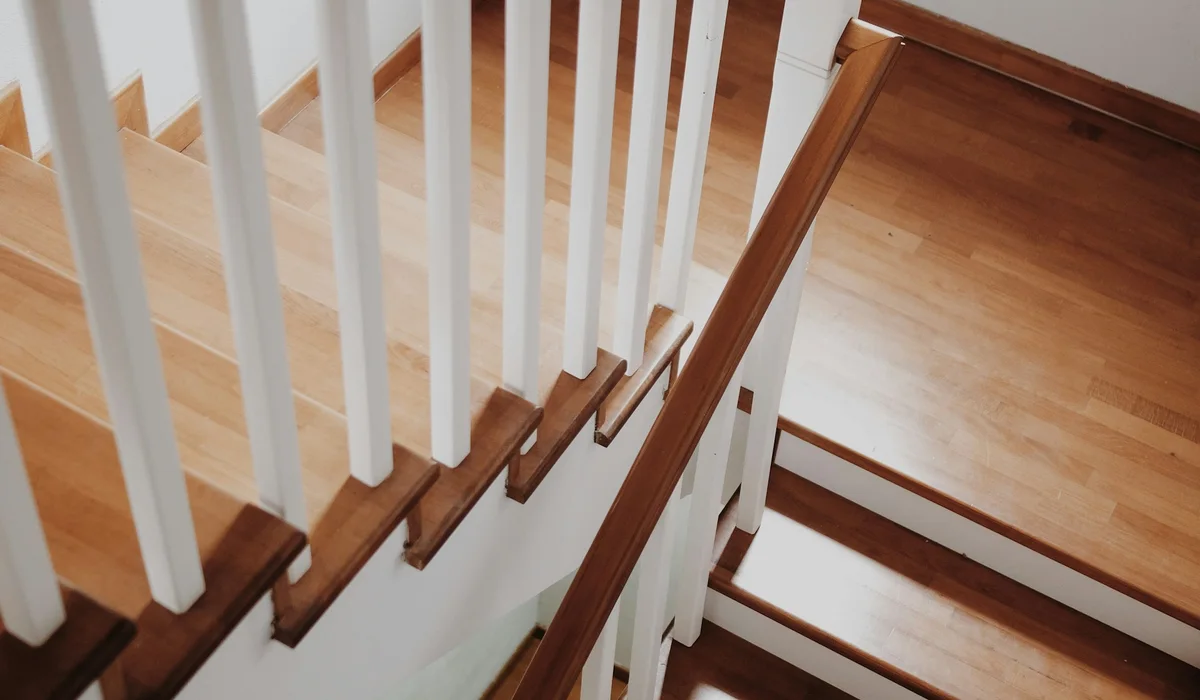
The Parts of a Banister
People use “banister” for the whole railing, but installers price it piece by piece. Knowing the names helps you read a quote for wooden stair banister replacement in Virginia and see what’s actually changing.
| Part | What it does | Common problems |
|---|---|---|
| Handrail | The rail you hold while climbing | Loose joints, worn finish, wrong height |
| Balusters (spindles) | Vertical pieces that fill the space under the rail | Loose or cracked spindles, gaps too wide |
| Newel posts | Heavy posts at the bottom, top and turns | Rocking or leaning from weak anchoring |
| Shoe rail or base rail | Holds the bottom of balusters on landings | Separation from the floor, cracks |
| Fittings | Volutes, goosenecks, caps and rosettes at turns and ends | Dated style, broken joints |
On open stairs, the balusters usually sit directly in the treads. On closed stairs with a knee wall, they sit in a shoe rail on top of the wall. That difference changes how much of the stair gets disturbed during stair railing replacement.
Signs It’s Time for Wooden Stair Banister Replacement in Virginia
Some banisters need a few screws and some glue. Others are past saving. These signs point toward replacement:
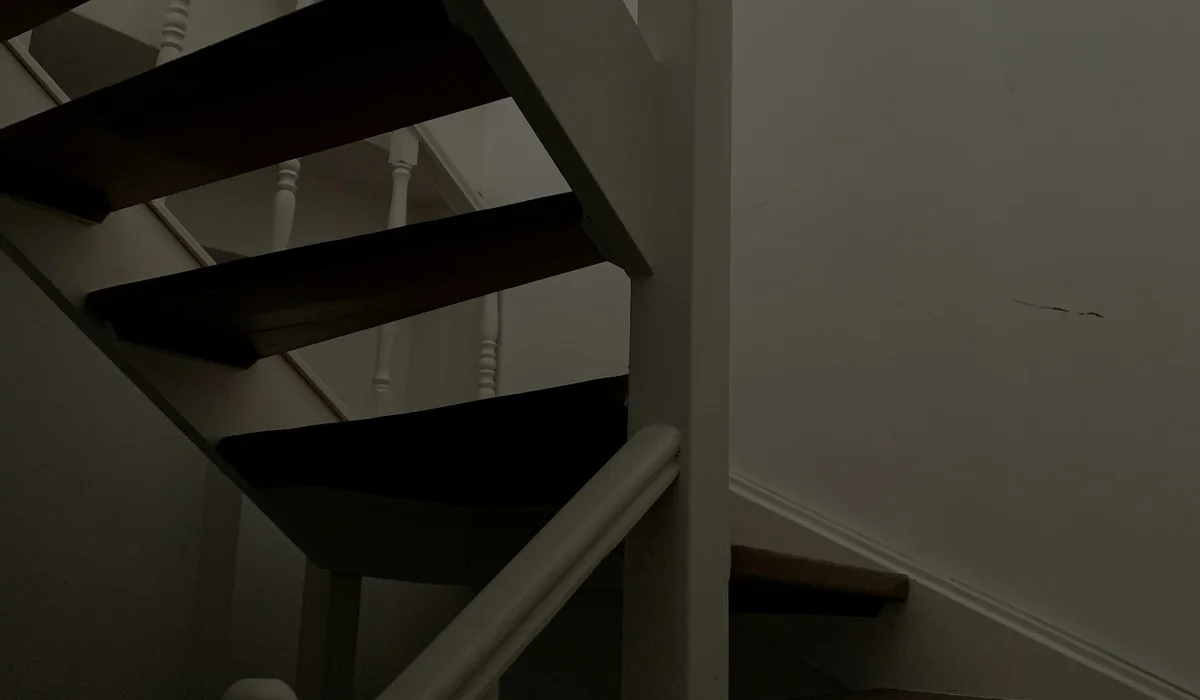
- The newel post rocks even after tightening, especially at the bottom of the stair.
- Several balusters are loose or cracked, or the rail moves when you push on it from the side.
- Gaps between balusters are wider than about 4 inches, which matters most if young children live in or visit the home.
- The handrail is too low or stops partway down the flight.
- The style no longer fits after new floors or treads went in.
- Damage from pets, moving furniture or water has split rails or posts.
Repair, Refresh or Replace?
Not every tired railing needs a full wooden stair banister replacement in Virginia. Match the problem to the smallest fix that solves it.
| Problem | Repair or refresh option | When to replace instead |
|---|---|---|
| Wobbly newel post | Re-anchor with a newel fastening kit or through-bolting into framing | Post is cracked or the base is rotted |
| A few loose balusters | Re-glue and pin, or replace individual spindles | Many are loose or the style is being changed |
| Worn finish | Sand and refinish, or paint the balusters and stain the rail | Wood is damaged or the profile is dated |
| Dated wood spindles | Swap to iron balusters and keep the rail | Rail or posts are also being changed |
| Rail too low or gaps too wide | Rarely fixable by repair | Usually the case |
The iron baluster swap deserves a special mention. Replacing wood spindles with metal ones while keeping a sound oak handrail is one of the most cost-effective updates in Northern Virginia homes, and it changes the whole look of an entry.
Virginia Code Checklist for a New Banister
Virginia’s Uniform Statewide Building Code, maintained by the Department of Housing and Community Development, uses a residential code based on the International Residential Code. These are the IRC stair and guard rules that wooden stair banister replacement in Virginia is normally built to. Your local building official has the final word, so confirm anything unusual.
| Rule | Typical requirement |
|---|---|
| Handrail height | 34 to 38 inches above the stair nosings |
| When a handrail is required | Flights with four or more risers |
| Handrail length | Continuous for the full flight, from above the top riser to above the lowest riser |
| Handrail ends | Returned to the wall or ended at a newel post or safety terminal |
| Round handrail size | 1-1/4 to 2 inches in diameter |
| Wall clearance | At least 1-1/2 inches between the rail and the wall |
| Guards required | Open sides more than 30 inches above the floor below |
| Guard height | 36 inches at landings and balconies; 34 inches on the open side of stairs |
| Baluster spacing | Must stop a 4-inch sphere; 4-3/8 inches on the sides of stair treads |
| Triangle under the rail | Opening formed by riser, tread and bottom rail must stop a 6-inch sphere |
Older Virginia homes often have railings that predate these numbers. Many building officials expect new railing work to meet current requirements even in an older house, so plan the new banister to the table above rather than copying the old layout.
Materials and Styles for Stair Railing Replacement
For wooden stair banister replacement in Virginia, most homes mix materials: a wood handrail and newels with either wood or iron balusters. Here’s how the common options compare.
| Material | Look | Notes |
|---|---|---|
| Red oak | Traditional, takes stain well | The standard for handrails and newels in many colonials |
| Poplar | Smooth, paint-grade | Common for painted balusters and posts |
| Maple or white oak | Lighter, modern | Matches newer light floors; higher cost |
| Iron balusters | Clean or decorative metal | Very popular update; slimmer than wood |
| Cable or glass | Contemporary, open | Higher cost; check code details with the installer |
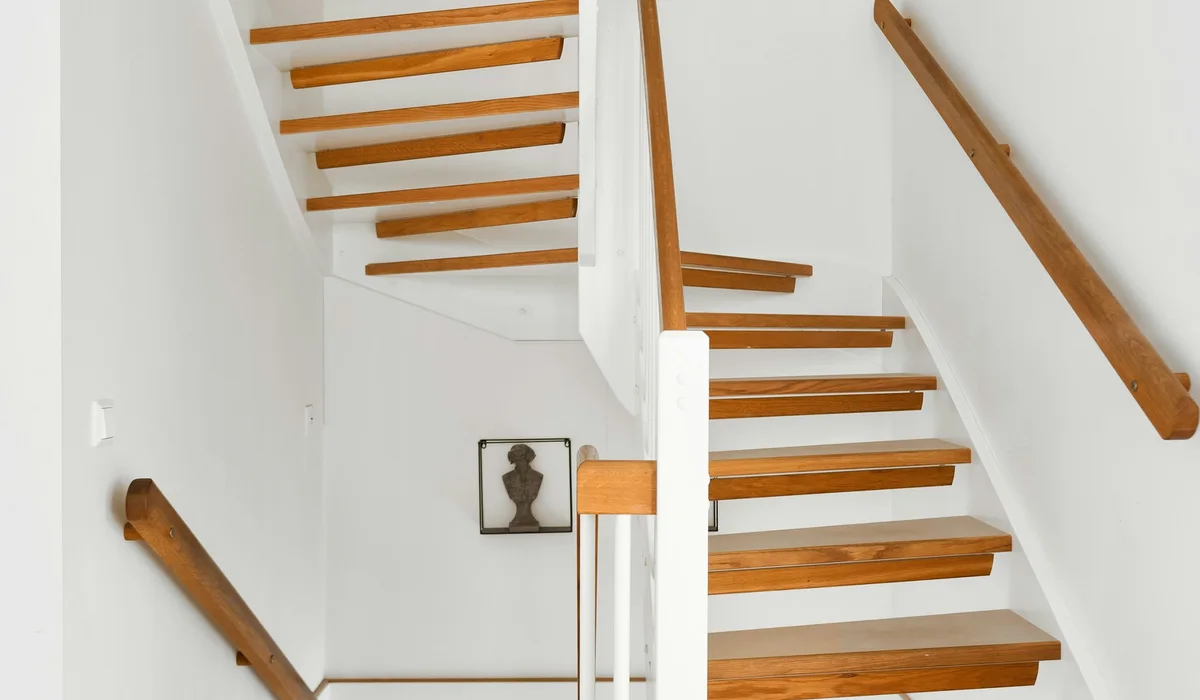
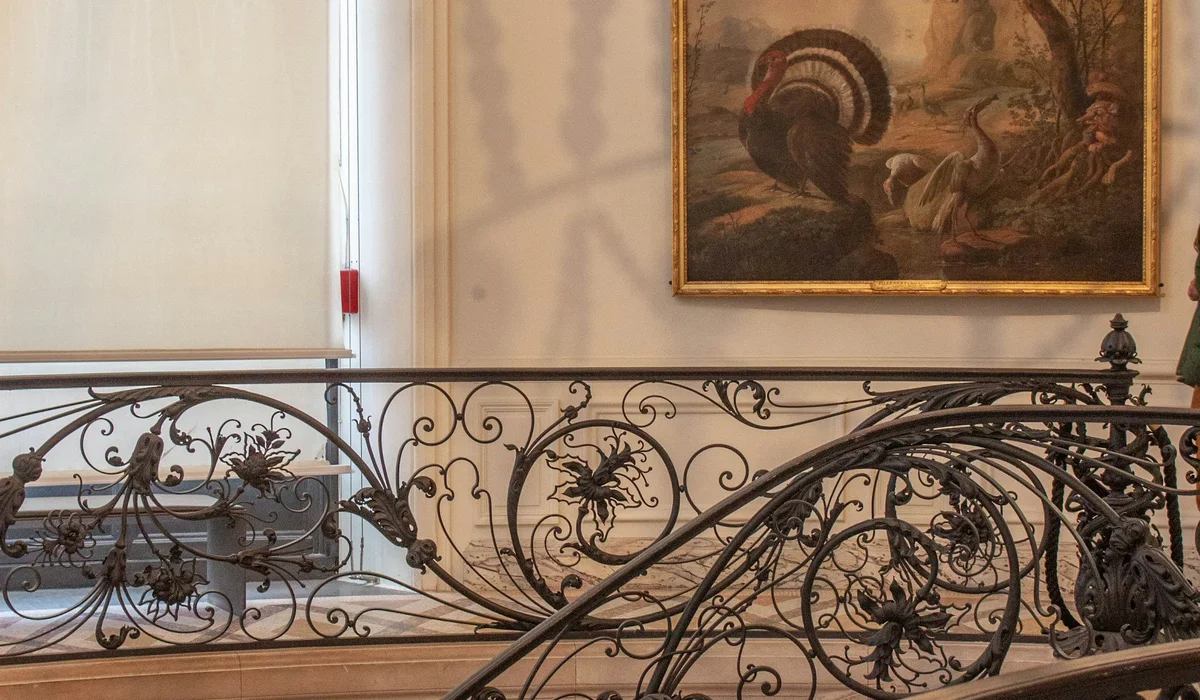
A stained handrail with painted white balusters and newels suits most colonials and townhouses. Black iron balusters under a dark-stained rail suit homes with newer wide-plank floors. Matching the handrail stain to new hardwood treads ties the stair to the rest of the floor.
Banister Replacement Cost in Virginia
Banister replacement cost depends on length, material and how many newel posts and fittings the stair needs. Bob Vila’s stair railing cost guide (updated December 2023) gives these national figures:
| Item | Typical national range |
|---|---|
| Overall railing replacement | $200 to $10,000; about $900 average for 25 feet |
| Wood railing | About $10 to $40 per linear foot |
| Wrought iron | About $50 to $120 per linear foot |
| Glass | About $100 to $500 per linear foot |
| Balusters (materials) | About $3 to $17 each, often 3 per foot |
| Labor | About $70 to $150 per hour, often 6 to 10 hours |
Those figures are a few years old, and Northern Virginia labor tends to sit toward the upper end. Treat them as a floor rather than a ceiling. Newel posts, turned fittings, staining and painting are often priced separately.
As an example, a straight 14-foot flight with a 10-foot landing guard has about 24 feet of railing. In wood, that’s roughly $240 to $960 in railing at Bob Vila’s per-foot rates, plus balusters, newels and six to ten hours of labor. Switching to iron balusters raises material cost but often reuses the existing rail.
How Wooden Stair Banister Replacement Works
A typical wooden stair banister replacement in Virginia takes one to three days, depending on whether the stair is open or closed and whether newels are replaced.
- Measure and plan. The installer checks rail heights, baluster layout, newel locations and the framing below.
- Remove the old railing. Balusters, rail and posts come out without damaging treads or the knee wall.
- Anchor the newel posts. Posts get bolted into the stair framing or floor structure, the step that decides whether the new banister will feel solid.
- Set the handrail. The rail is cut to the stair angle, joined at fittings and fixed to the posts at the right height.
- Install balusters. Spacing is laid out to stay under the 4-inch rule, and each baluster is fixed top and bottom.
- Finish. Wood is stained, painted or sealed, and the stair is cleaned up.
If the treads are being replaced too, the new treads usually go in first, with baluster holes drilled after.
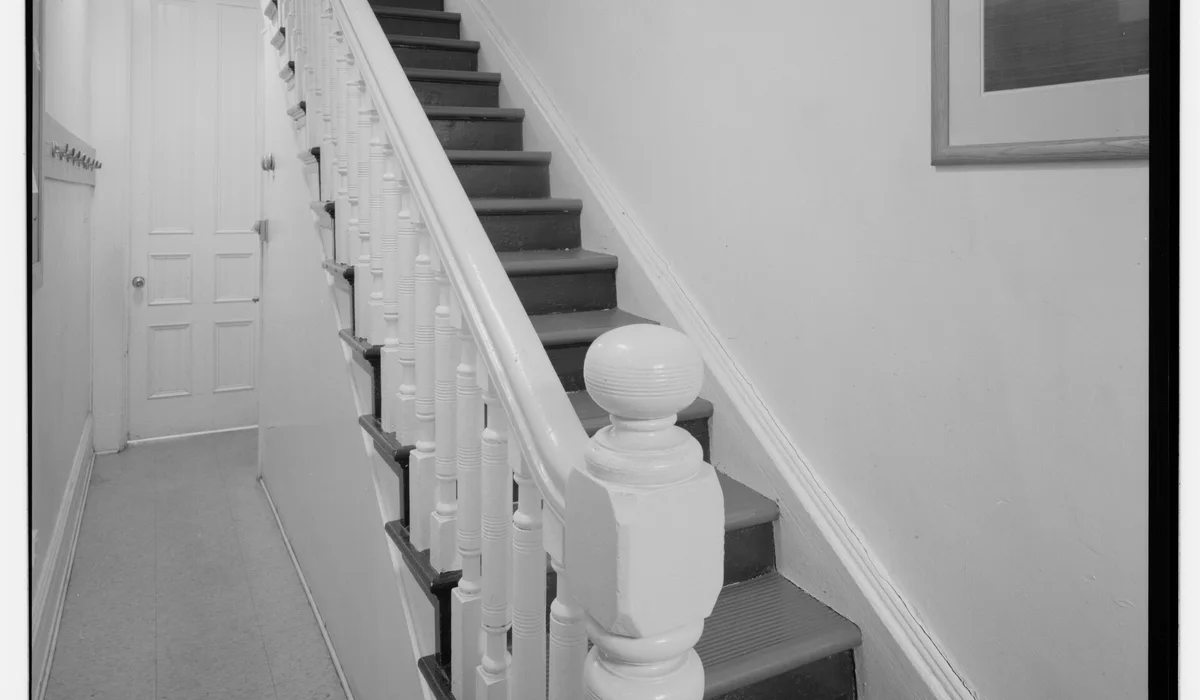
Older homes, like the historic rowhouse stair above, often have turned balusters and heavy newels worth restoring rather than replacing. A good installer will tell you when repair is the better choice.
Permits and Licenses for Banister Work in Virginia
The licensing rule is clear. Under Virginia law, a contractor needs a DPOR license once a job reaches $1,000, and most full stair railing replacement jobs pass that mark. You can check any license number with the DPOR license lookup.
Permits for wooden stair banister replacement in Virginia are less clear-cut. Fairfax County’s list of when a permit is required doesn’t name interior railings either way, so ask your county or city building office if the job changes the stair structure, moves a guard, or adds railing where there wasn’t one. Fairfax, Arlington, Loudoun, Prince William and the cities of Alexandria and Falls Church each run their own permit offices.
Condo and townhouse owners should also check association rules, especially if the work affects common stairs. Historic district review in places like Old Town Alexandria generally covers exteriors, not interior stairs.
Doing Treads and the Banister Together
Many stair railing replacement projects start because the stairs are going from carpet to wood. Doing both at once has real advantages:
- The handrail stain can match the new treads exactly.
- Baluster holes are drilled into new treads instead of patched in old ones.
- The newel posts can be re-anchored while the stair is open.
- One round of dust, noise and disruption instead of two.
Tread materials and the carpet-to-wood process are covered in our wood stair installers in Virginia guide, and our Fairfax hardwood guide shows how stairs fit into a main-level floor project.
Banister Styles by Virginia Home Era
Northern Virginia’s housing spans several building booms, and each left its own kind of railing. Knowing what you have helps plan a wooden stair banister replacement in Virginia that suits the house.
- 1950s to 1970s ramblers and split-levels: short flights between levels, often with thin wrought iron or simple wood rails. Even short flights need a handrail once they reach four risers.
- 1980s and 1990s colonials: oak handrails, turned white or oak spindles and a box or turned newel in a two-story foyer. These are the most common candidates for an iron baluster swap.
- 2000s and newer townhouses: square box newels, painted balusters and stained rails, often on three or four stacked flights.
- Older homes in Alexandria, Arlington and Falls Church: turned balusters and heavy newels that may be original and worth restoring.
In split-levels, the short flights make stair railing replacement quick per flight, but there are often three or four of them. In two-story foyers, the long open guard at the landing is usually the biggest share of banister replacement cost, because it combines rail, balusters and a tall newel.
Common Banister Replacement Mistakes
- Reusing a loose newel. A new rail on a rocking post will rock too.
- Copying old spacing. Older layouts often leave gaps wider than today’s 4-inch rule.
- Setting the rail too low to match the old one instead of the 34-to-38-inch range.
- Ignoring the landing guard. The open edge at the top of the stair needs a 36-inch guard, not just a handrail.
- Choosing finishes last. Deciding stain and paint colors after installation delays the job and can leave mismatched wood.
Each of these turns a wooden stair banister replacement in Virginia into a second project and adds to the banister replacement cost. Raise them with your installer before work starts, and get the agreed rail height and baluster spacing written into the quote.
Choosing a Contractor for Stair Railing Replacement
Wooden stair banister replacement in Virginia is finish carpentry with a safety job attached. Ask these questions before you hire:
- How will you anchor the newel posts? Look for an answer about bolting into framing, not just glue and screws.
- Will the new railing meet current code? The answer should mention rail height and the 4-inch rule.
- Is the quote itemized? Rail, balusters, newels, fittings, labor and finishing should be separate lines.
- Who does the staining and painting? Some installers leave finishing to a painter.
- What’s your DPOR license number? Check it before signing.
- Can I see stairs you’ve done? Photos of finished turns and landings show skill quickly.
A single-number quote makes it hard to compare banister replacement cost between bids, and it often leaves out newels or finishing.
Banister Replacement FAQs
How much does banister replacement cost?
Bob Vila’s guide puts the national average at about $900 for 25 feet of railing, with a range of $200 to $10,000. Wood runs about $10 to $40 per linear foot and wrought iron $50 to $120, plus labor at about $70 to $150 an hour. Northern Virginia jobs often land toward the higher end.
What is the code height for a stair handrail in Virginia?
Virginia’s residential code is based on the IRC, which sets handrail height at 34 to 38 inches measured from the stair nosings. Guards on the open side of a stair must be at least 34 inches, and guards at landings and balconies at least 36 inches. Confirm with your local building office.
Can I replace wood spindles with iron balusters?
Yes, and it’s one of the most popular banister updates. If the handrail and newels are sound, the installer removes the wood spindles, fits iron balusters top and bottom and fills the old holes. The spacing still has to stop a 4-inch sphere.
How do you fix a wobbly newel post?
Most wobbly newels are poorly anchored at the base. The fix is to bolt the post into the stair stringer, floor framing or blocking with a newel fastening kit or through-bolts. If the post itself is cracked or rotted, it should be replaced.
Do I need a permit to replace a banister in Virginia?
It depends on your locality and the scope. Like-for-like replacement often isn’t treated the same as changing the stair or adding new guards. Ask your county or city building office, and remember that a DPOR license is required once the job reaches $1,000.
How long does stair railing replacement take?
A straight stair with a short landing guard usually takes one to two days. Stairs with turns, several newels or custom fittings can take longer, and staining or painting adds drying time.
Planning Your Banister
A successful wooden stair banister replacement in Virginia starts with solid newel posts, a layout that meets the code table above, and a style that matches your floors. Decide if you are refreshing, swapping balusters or replacing everything, and get an itemized quote.
FIXO handles stair treads, risers and railing updates alongside floor installations across Northern Virginia. Read about our stair work, or send photos of your staircase through the instant quote form.