Berber carpet installation needs more care than standard cut-pile carpet, because the continuous loops show every crooked seam and can run if a cut edge isn’t sealed. The essentials are a thin, firm pad no thicker than 3/8 inch, seams cut along a row of loops and sealed, and a power stretcher rather than a knee kicker alone. Homewyse puts the national average for installed carpet at about $5.27 to $7.72 per square foot as of May 2026, with fiber and pad choice moving Berber prices up or down.
Berber is the flecked, nubby loop carpet found in basements, family rooms and offices across the DC area. It’s popular because it hides dirt, resists crushing and usually costs less than plush cut pile. It also has a reputation for visible seams and snags, and nearly all of that comes down to how it was installed.
This guide explains what Berber is, how the fibers compare, who it suits, nine installation tips that separate a good job from a bad one, cost, care and how to hire. Alvin wrote it for FIXO, whose crews install carpet and hard flooring in DMV homes and offices.
What this Berber guide covers
Key takeaways
- Berber is a loop pile carpet. Its loops make it durable and dirt-hiding but prone to runs if cut edges aren’t sealed.
- Use a thin, firm pad. Carpet makers warn against pads thicker than 3/8 inch under Berber and other thin loop carpets.
- Seams should be cut between rows of loops and sealed with a continuous bead of seam adhesive.
- Berber must be power-stretched. A knee kicker alone leaves ripples that show quickly in loop carpet.
- Homes with cats or dogs that dig should consider cut pile or hard flooring instead.
What Is Berber Carpet?
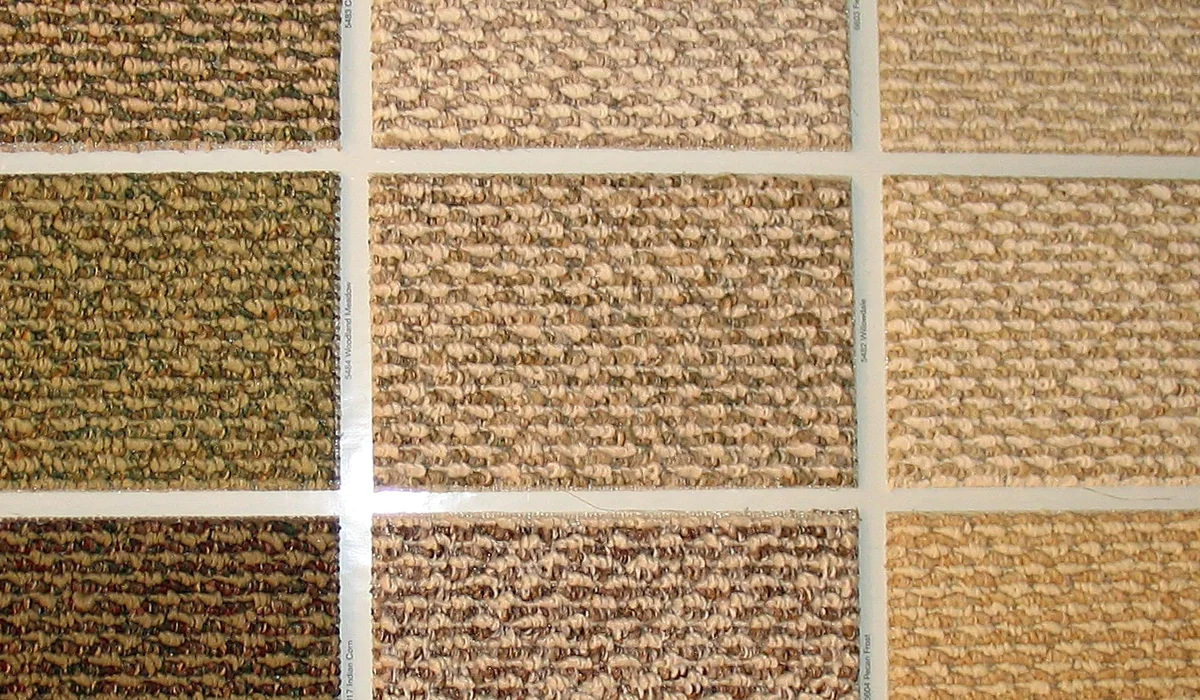
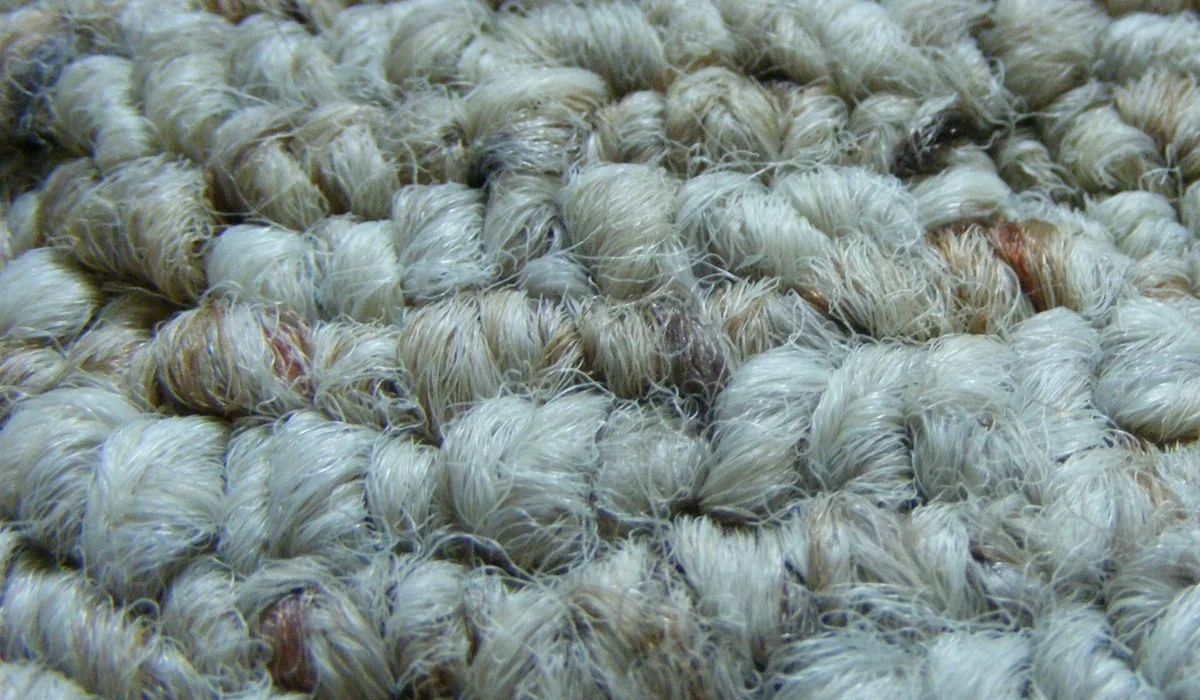
Berber carpet is a loop pile carpet: the yarn is tufted through the backing and left as uncut loops rather than sheared into tufts. The name originally referred to hand-woven rugs of North Africa’s Amazigh (Berber) people, and today it describes machine-made loop carpets, often with darker flecks on a light base.
- Level loop: every loop is the same height. It’s the most durable and common in offices and basements.
- Multi-level loop: loops of different heights create a pattern or texture.
- Cut and loop: a mix of cut and looped yarn for pattern, softer than all-loop styles.
Because the loops are continuous, the carpet behaves differently during berber carpet installation than cut pile. Seams have to follow the rows, and any cut edge can unravel if it isn’t secured.
Berber Fibers Compared
The fiber decides how a Berber looks after a few years more than the loop style does.
| Fiber | Strengths | Trade-offs |
|---|---|---|
| Olefin (polypropylene) | Low cost, stain and moisture resistant | Crushes and shows oily soil in busy areas |
| Nylon | Most resilient synthetic, holds up in traffic | Costs more than olefin |
| Polyester | Soft feel, good color | Less resilient in high-traffic loops |
| Wool | Natural, resilient, premium look | Highest cost; needs careful cleaning |
Olefin Berber is the budget choice for basements and rentals. Nylon is the safer pick for family rooms and stairs. Wool suits formal rooms where cost matters less than feel and appearance.
Is Loop Pile Carpet Right for You?
Loop pile carpet is a good fit in some homes and a poor one in others. Weigh these points before choosing it:
- Good for: basements, home offices, family rooms, rentals and busy households that want a carpet that hides dirt and resists crushing.
- Less good for: homes with cats that scratch or dogs that dig, because claws can catch a loop and pull it.
- Feel: Berber is firmer and flatter underfoot than plush cut pile.
- Cleaning: oily spills can be harder to remove from olefin loops.
If pets are the main concern, the best flooring for dogs and pets article weighs carpet against hard floors.
Berber vs Cut Pile vs Carpet Tile
Loop pile carpet isn’t the only option for busy rooms. Here’s how it compares with the two alternatives homeowners most often weigh.
| Berber (loop pile) | Cut pile | Carpet tile | |
|---|---|---|---|
| Feel | Firm, nubby | Soft, plush | Firm, thin |
| Hides dirt | Very well, especially flecked styles | Moderately | Well, in patterned styles |
| Pets that claw | Can snag and run | Better choice | Damaged tiles can be swapped |
| Seams | Need row-cutting and sealing | Easier to hide | No traditional seams |
| Best rooms | Basements, offices, family rooms | Bedrooms, living rooms | Basements, offices, play rooms |
For a basement used as a playroom or gym, carpet tile can make more sense than broadloom, because a stained or soaked tile can be lifted and replaced. For bedrooms, cut pile usually wins on comfort. Berber sits in the middle: tougher than plush, softer and warmer than tile.
Berber Carpet Cost by Room
These examples apply Homewyse’s national range of about $5.27 to $7.72 per square foot to typical room sizes. They assume a mid-range olefin carpet, so nylon or wool Berber will cost more.
| Room | Size | Estimated installed cost |
|---|---|---|
| Bedroom | 12 x 12 ft (144 sq ft) | About $760 to $1,110 |
| Family room | 16 x 20 ft (320 sq ft) | About $1,690 to $2,470 |
| Basement | 25 x 30 ft (750 sq ft) | About $3,950 to $5,790 |
Stairs, carpet removal and furniture moving are added on top. Larger rooms also need more seams, and every seam in loop pile carpet takes extra time to row-cut and seal, which nudges berber carpet cost up compared with cut pile of the same price per yard.
Basements deserve a note of their own. Berber over a concrete slab needs a moisture check first, and olefin fibers resist mildew better than wool. A berber carpet installation in a basement that has ever taken on water should use a moisture-resistant pad, or the room may be better suited to carpet tile or vinyl plank.
9 Berber Carpet Installation Tips
These nine points are where loop pile carpet installations go right or wrong. Use them to check an installer’s plan before work starts.
1. Acclimate the Carpet and the Room
Carpet and adhesives behave best in a controlled room. One carpet maker’s installation guide, from Peerless Contract, calls for air between 65 and 95 degrees, relative humidity between 10 and 65 percent and a subfloor no colder than 65 degrees, held for at least 48 hours before, during and after installation.
2. Use a Thin, Firm Pad
The pad is the most common mistake in berber carpet installation. Couristan’s cushion guidance says pad under Berber and other thin loop carpets should not exceed 3/8 inch, and that a thicker, softer pad is not acceptable. A soft pad lets the carpet flex, which opens seams and stresses the backing.
3. Plan Seams Before Cutting
Seams in loop pile carpet are more visible than in cut pile. A good seam plan runs seams in the same direction as the main light source, keeps them out of doorways and walking paths, and uses full-width pieces wherever possible.
4. Cut Seams Between Rows
Berber should be row-cut: the installer opens a row of loops with a row separator and cuts along it with a loop pile cutter. Cutting between the wrong rows, or across them, leaves fuzzy edges and color doubling at the seam.
5. Seal Every Cut Edge
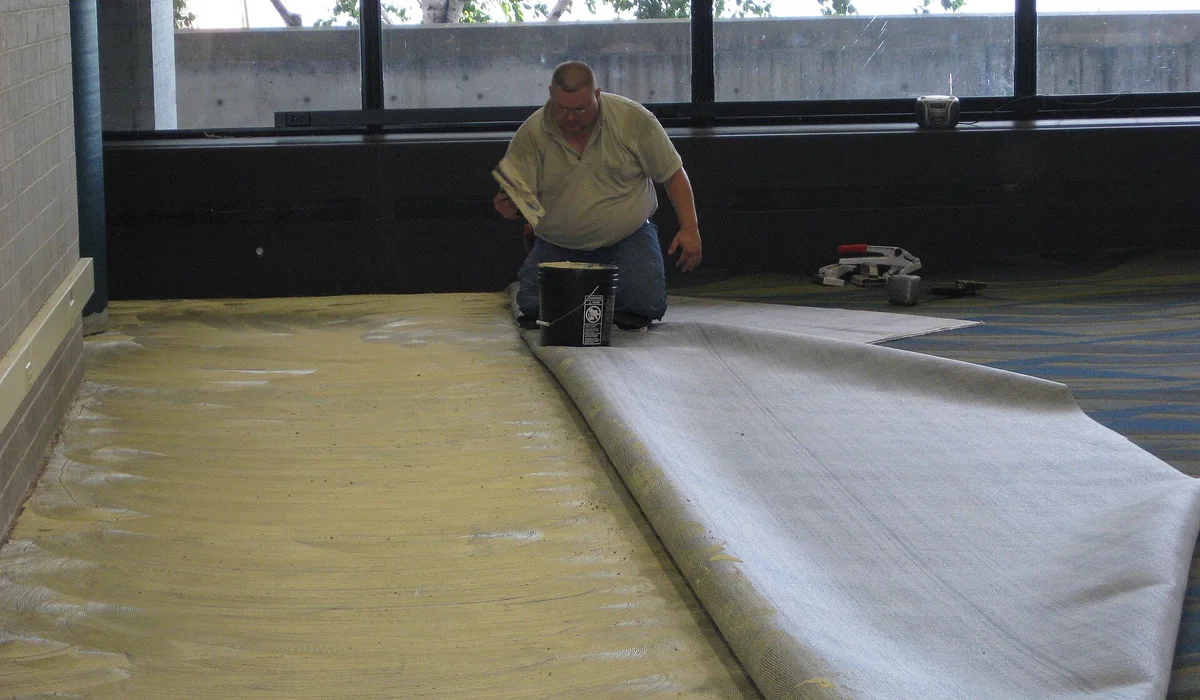
The Peerless guide calls for a continuous 1/8-inch bead of seam adhesive along the base of both cut edges. On loop carpet, that seal is what stops a snagged loop from pulling a whole row out, the problem known as zippering.
6. Power-Stretch the Carpet
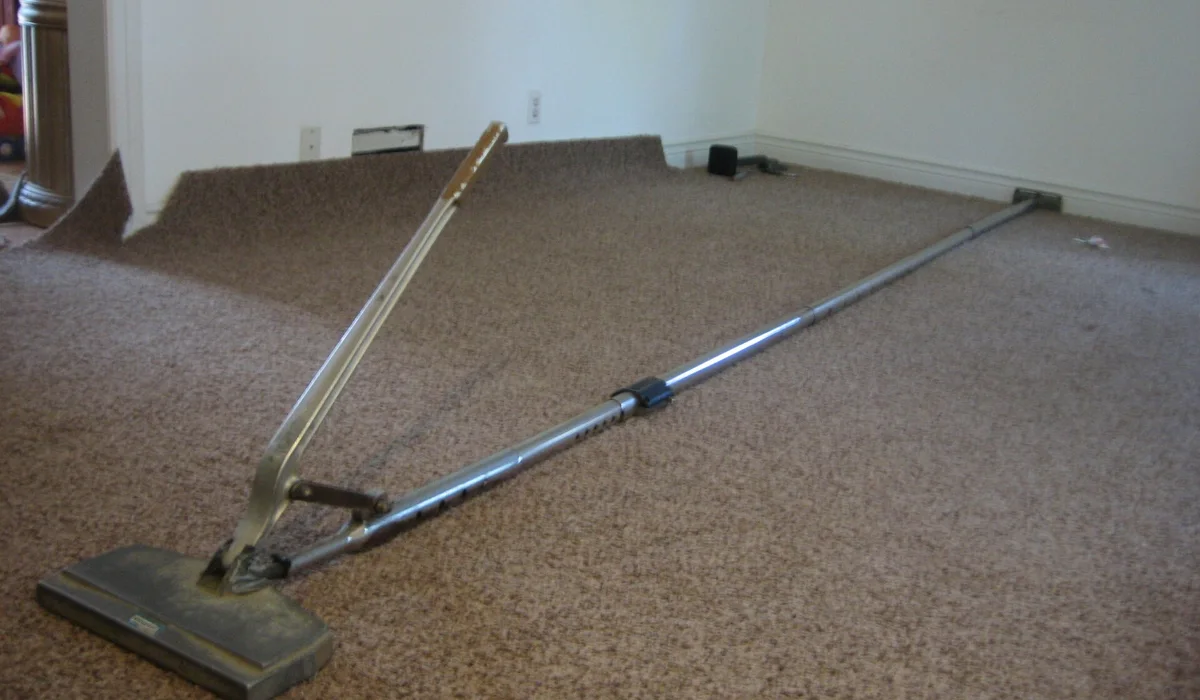
With a power stretcher, the installer tensions the carpet wall to wall in one pass. The Peerless guide requires one for stretch-in installations and limits knee kickers to positioning. Under-stretched Berber develops ripples within months, and loop carpet shows them clearly.
7. Finish Edges Carefully
At walls, the carpet is trimmed and tucked behind the tack strip. Rough trimming can leave loose loops that catch on vacuums. A good installer uses a wall trimmer and checks edges at doorways and around vents.
8. Handle Transitions Properly
Where Berber meets tile, wood or vinyl, the edge should be secured with a metal or wood transition strip. An exposed cut edge in a doorway is the most likely spot for a run to start.
9. Protect the New Carpet
Keep furniture off the carpet until the seams have set, use felt or wide glides under chair legs, and turn off or raise the vacuum’s beater bar if it catches loops.
Berber Carpet Installation Day, Step by Step
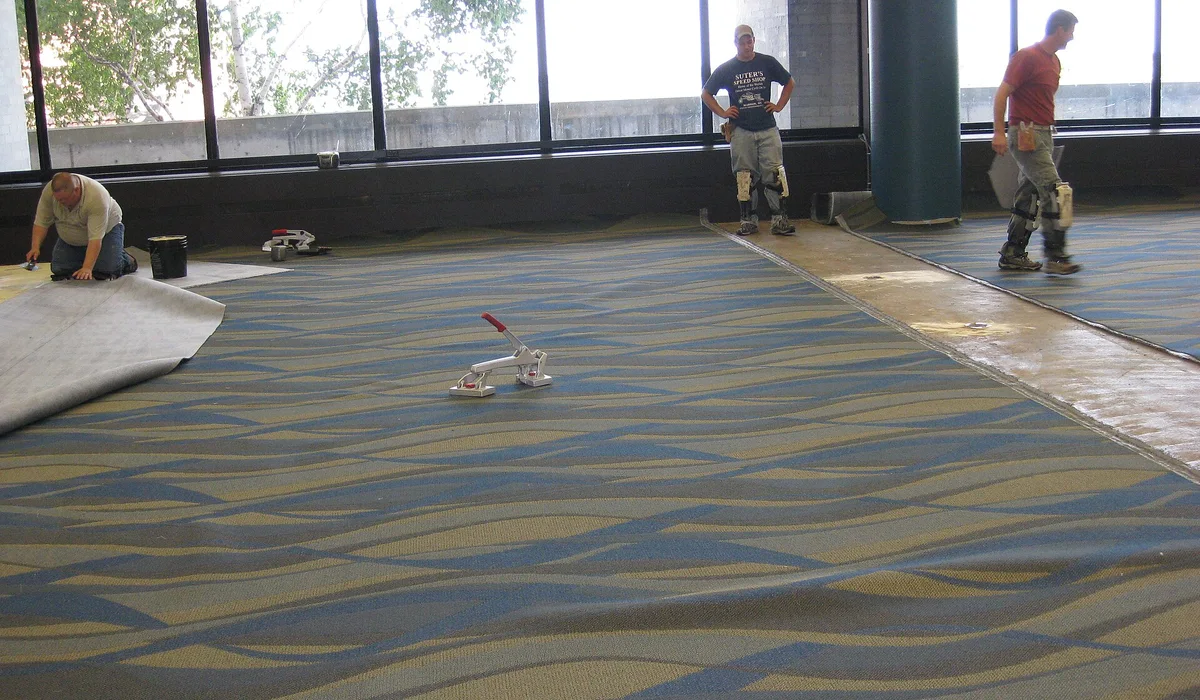
Knowing the order of work helps you prepare the house and spot shortcuts. A typical berber carpet installation in one or two rooms takes a day.
- Clear the rooms. Furniture, floor lamps and anything on the floor come out, unless moving is in your quote.
- Remove the old carpet and pad. Old tack strip is checked and replaced where it’s loose or damaged.
- Prepare the subfloor. Squeaks are screwed down, high spots sanded and the floor vacuumed.
- Lay the pad. Firm pad is stapled or glued down with its seams offset from the carpet seams.
- Cut and seam. Carpet is rough-cut, seams are row-cut, sealed and joined with hot-melt tape.
- Stretch and trim. A power stretcher sets the carpet on the tack strip, and edges are trimmed and tucked.
- Finish details. Transitions go on at doorways, vents are cut open and the room is vacuumed.
Plan for doors that may need trimming if the new carpet and pad are thicker than the old ones, and keep pets out of the rooms until the seams have cooled and set. If the crew skips the power stretcher or the seam sealer on loop pile carpet, ask why before they leave.
Berber on Stairs
Berber can go on stairs, but it takes skill. Loop carpet bent over a stair nosing can open up and show the backing, an effect installers call grinning. Two methods are common:
- Waterfall: the carpet flows over the nosing and drops straight to the next tread. It’s faster and cheaper but more prone to grinning.
- Cap and band (upholstered): the carpet wraps tightly around the nosing and is fastened under it. It looks tailored and reduces grinning but takes longer.
Dense, low-profile nylon Berber grins less than thick olefin styles. If you have stairs, ask to see a sample bent over a nosing before you buy.
Berber Carpet Cost
Homewyse’s carpet installation estimate puts the national average for installed carpet at about $5.27 to $7.72 per square foot as of May 2026, based on a mid-range olefin carpet with basic pad, seaming and stretching.
| Factor | Effect on Berber carpet cost |
|---|---|
| Fiber | Olefin is lowest, nylon mid-range, wool highest |
| Pad | Firm, dense pad costs more than soft foam but is required |
| Old floor removal | Carpet removal and disposal add to the total |
| Stairs | Priced per step; cap-and-band costs more than waterfall |
| Furniture | Moving furniture may be extra |
| Room shape | Odd shapes create more seams and more waste |
As an example, a 12 by 14 foot bedroom is 168 square feet. At Homewyse’s national range, that’s roughly $885 to $1,300 installed for a basic olefin carpet, before stairs or premium fiber. Nylon or wool Berber pushes that higher. Carpet is usually sold by the square yard, so expect quotes in either unit.
Care and Snag Repair
Berber lasts for years with a few habits:
- Clip snags, don’t pull them. Trim a pulled loop level with the pile using scissors. Pulling can run the whole row.
- Vacuum gently. Use suction only or a raised beater bar so the brush doesn’t fuzz or catch loops.
- Blot spills fast. Olefin resists water-based stains but holds oily soil, so treat spills quickly.
- Schedule deep cleaning. Hot water extraction by a professional every year or two keeps traffic lanes from dulling.
- Fix runs early. A carpet repair pro can re-tuft or patch a run before it spreads.
Choosing a Berber Carpet Installation Pro
The installer matters more with Berber than with almost any other carpet. Ask these questions before booking berber carpet installation:
- What pad do you recommend, and how thick and dense is it?
- Will you show me the seam plan before cutting?
- Do you row-cut and seal seams and cut edges on loop pile carpet?
- Do you use a power stretcher in every room?
- How do you handle stairs: waterfall or cap and band?
- Is removal, disposal and furniture moving included?
The answers tell you quickly whether an installer has real loop pile carpet experience. A low price paired with a soft pad and a knee kicker is the most common recipe for a Berber floor that ripples and runs.
Berber Carpet FAQs
What pad is best for Berber carpet?
A thin, firm, dense pad. Carpet makers such as Couristan advise that pad under Berber and other thin loop carpets should not exceed 3/8 inch, and that thick, soft pad is not acceptable. Soft pad lets the carpet flex, which opens seams and wears the backing.
How much does Berber carpet installation cost?
Homewyse puts the national average for installed carpet at about $5.27 to $7.72 per square foot as of May 2026, based on mid-range olefin. Nylon and wool Berber cost more, and removal, stairs and furniture moving are often extra.
Why do Berber seams show?
Usually because the seam wasn’t cut along a row of loops, the edges weren’t sealed, or the pad was too soft. A row-cut, sealed seam on firm pad is much less visible. Seams running across the main light source also show more.
Is Berber carpet good with pets?
It depends on the pet. Berber hides dirt and resists crushing, but cats that scratch and dogs that dig can catch a loop and pull it into a run. Cut pile carpet or hard flooring is often a better fit for those households.
Can Berber carpet be installed on stairs?
Yes, but it can grin, showing backing at the nosing when bent. Cap-and-band installation and dense, low-profile Berber reduce that effect. Ask to see a sample folded over a nosing before choosing.
How do I fix a run in Berber carpet?
Stop it from spreading by clipping the loose yarn level with the pile, not pulling it. A carpet repair professional can then re-tuft the row or splice in a piece taken from a closet. Sealed seams and edges make runs much less likely.
Planning Your Carpet
A good berber carpet installation comes down to the right fiber for the room, a thin, firm pad, row-cut and sealed seams, and a carpet that’s power-stretched tight. Get those right and Berber will hide dirt and hold its shape for years.
FIXO lays carpet, Berber and other loop pile styles included, plus hard floors such as LVP, laminate, engineered hardwood and tile, for clients throughout the DMV. See our commercial carpet installation guide, our Arlington carpet guide, or use the instant quote form with your room sizes.
 4.9 on Google14 reviews
 Licensed & InsuredVirginia · Maryland · Washington, D.C.
 Workmanship GuaranteedInstallation backed in writing
 Locally OwnedServing NoVA, MD & D.C.