Carpet installation in Arlington usually costs about $2 to $8 per square foot with pad and labor, and premium wool can run far higher. Arlington County doesn’t issue permits for new carpet, since the statewide building code treats floor finishes as exempt work. In condo buildings, plan for an approved product, the installer’s insurance certificate and a booked elevator before install day.
Arlington packs very different buildings into 26 square miles. A bedroom in a Cherrydale foursquare and a unit on the 14th floor of a Rosslyn tower both get carpet, but they ask very different things of the crew. In the house, the work starts with the subfloor under the old carpet. In the tower, it starts weeks earlier with the paperwork and an elevator booking.
This guide to carpet installation in Arlington covers costs for 2026, how to choose fiber and pad, what condo boards ask for, how a professional install should run and how to compare quotes. Alvin wrote it for FIXO, a DMV flooring company that works throughout Arlington County.
In this guide to carpet installation in Arlington
Key takeaways
- Most residential carpet installation in Arlington lands between $2 and $8 per square foot installed, before removal, stairs and furniture moving.
- Broadloom carpet comes off 12-foot rolls and is often priced by the square yard, so room shape affects how much you pay for.
- The Carpet and Rug Institute’s CRI 105 residential standard caps cushion thickness at 7/16 inch.
- Floor finishes are exempt from building permits in Arlington County, but condo associations set their own rules on products, hours and insurance.
- Ask every installer whether they power-stretch wall-to-wall carpet and where the seams will fall.
Carpet Installation in Arlington by Building Type
The building decides most of the job before you pick a color. Here is how carpet installation in Arlington changes across the county’s main types of housing and workspace.
| Building type | Typical areas | What sits under the carpet | What to plan for |
|---|---|---|---|
| Detached house, 1920s to 1950s | Lyon Park, Cherrydale, Westover, Bluemont | Plank or plywood over joists; slab in some lower levels | Squeaks fixed before pad goes down; stairs often included |
| Garden-style condo | Fairlington, Colonial Village | Concrete slab | Association approval, low-profile pad, careful door clearances |
| High-rise condo or apartment | Rosslyn, Courthouse, Clarendon, Ballston, Pentagon City | Concrete on every level | Elevator booking, insurance certificate, set work hours |
| Finished basement | Across the county | Concrete below grade | Moisture check first; a waterproof floor may fit better |
| Office suite | Rosslyn, Ballston, Crystal City, Pentagon City | Concrete with floor boxes and cabling | Carpet tile, after-hours work, building contractor rules |
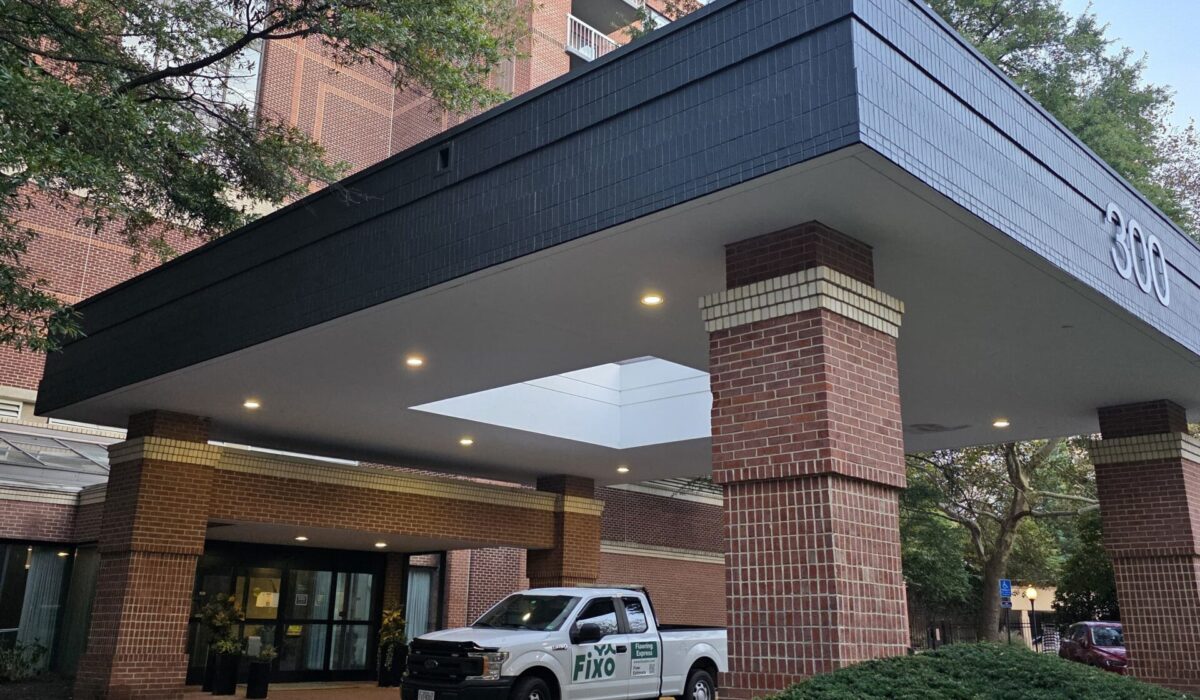
For carpet installation in Arlington, older detached houses hide the biggest unknown: the floor under the old carpet. Pulling up a 30-year-old carpet often reveals oak strip flooring worth refinishing, pet stains that have soaked into the subfloor, or loose plywood that squeaks. A careful installer screws down loose spots and seals odor-stained wood with a stain-blocking primer before new pad goes down.
Carpet Installation Cost in Arlington
For most homes, carpet installation in Arlington costs about $2 to $8 per square foot with carpet, pad and labor included. Basic polyester in a spare bedroom sits at the low end, while wool or patterned carpet on a staircase sits at the top.
| Item | Typical national range |
|---|---|
| Carpet with pad and installation | About $2 to $8 per sq ft |
| Premium wool, installed | Can reach $21 per sq ft |
| Removing old wall-to-wall carpet | About $0.70 to $1.60 per sq ft |
| Removing glued-down carpet | About $0.75 to $1.80 per sq ft |
| Stairs | About $12 to $45 per step |
| Moving furniture | About $25 to $75 per room |
| Subfloor repair, when needed | About $250 to $750 per room |
These ranges come from national cost guides published by HomeServe, HomeGuide and Fixr. Labor across the DC metro tends to sit at or above the national middle, and high-rise jobs can add time for elevator trips and building rules. A quote that lists each line separately is easier to compare than one total.
A Worked Example
Take a two-bedroom condo where both bedrooms and the hallway get new carpet, about 330 square feet in total. At $5 per square foot installed, that’s $1,650. Removing the old carpet at $1 per square foot adds $330, and moving furniture in two rooms adds about $100. The job lands near $2,080 before any stairs or subfloor repair.
How Carpet Is Measured and Sold
Broadloom carpet comes off rolls that are usually 12 feet wide, and many stores price it by the square yard. One square yard equals 9 square feet, so a carpet priced at $36 per square yard costs $4 per square foot before installation.
Roll width explains why the carpet order on a quote for carpet installation in Arlington is usually larger than the room. A room 14 feet wide can’t be covered by one 12-foot piece, so the installer adds a 2-foot strip with a seam, and the leftover from that strip is often waste. Hallways, closets and L-shaped rooms add more offcuts. Patterned carpet needs extra length so the pattern lines up across seams.
- Ask for a seam diagram showing where each seam falls and which way the pile runs.
- Seams should run away from doorways and main walking paths where possible, and along the light from windows rather than across it.
- All pieces in a room should run with the pile in the same direction, or the color will look different from piece to piece.
Fiber, Pile and Pad: Choosing Carpet That Lasts
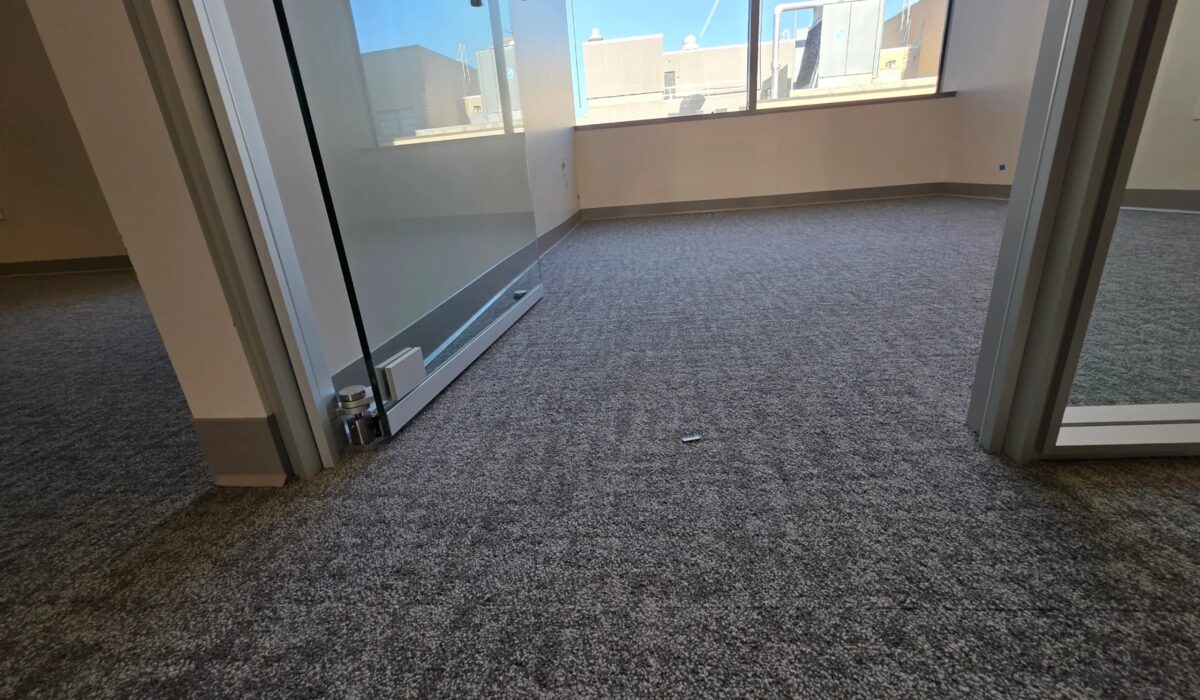
Fiber and pad decide how long carpet lasts, while pile mostly decides how it looks and feels. In rooms with the most foot traffic, spend on fiber and pad first.
Fiber
Most carpet installation in Arlington homes uses nylon or polyester, with wool reserved for living rooms and stair runners.
- Nylon: the most resilient common fiber. It springs back under furniture and foot traffic, which suits stairs, halls and family rooms.
- Polyester (PET): soft, colorful and often cheaper. It resists stains well but crushes faster in heavy traffic, so it suits bedrooms.
- Triexta: a newer fiber with strong stain resistance and good softness, often sold under brand names.
- Wool: natural, long-lasting and the most expensive. It hides soil well but needs care with some cleaners.
- Olefin (polypropylene): common in Berber loops and basements. It resists moisture but can mat in busy areas.
Pile
Cut pile carpets, such as plush, saxony and frieze, feel softest underfoot and show footprints more. Loop pile, including Berber, is firm and hard-wearing but can snag on pet claws. Cut-and-loop styles mix the two and hide wear and stains well. Denser carpet with tightly twisted yarn generally lasts longer than a deep, loose pile at the same price.
Pad
The pad, also called cushion, protects the carpet backing and makes the floor feel softer. For residential installs, the CRI 105 standard from the Carpet and Rug Institute says cushion thickness shouldn’t exceed 7/16 inch, because thicker pad lets the carpet flex too much and wears out the backing. Many carpet warranties also name a minimum pad density, so check the warranty before buying a cheaper pad. Over concrete, a pad with a moisture barrier helps keep spills from reaching the slab.
Condo Rules and Permits for Carpet Installation in Arlington
Arlington County doesn’t require a building permit for new carpet. Arlington enforces the Virginia Uniform Statewide Building Code, whose list of permit exemptions in section 108.2 includes new or replacement floor finishes in every type of building.
Condo associations are another matter. Before carpet installation in Arlington high-rises and garden condos, expect the management office to ask for most of the following:
- An alteration or work request form, sometimes with the product spec sheet
- A certificate of insurance listing the association as additional insured
- A reserved service elevator with protective pads and a set time window
- Work limited to weekday daytime hours, with quiet hours enforced
- A plan for removing old carpet and pad, since most buildings ban it from trash chutes
Some buildings require carpet or a sound-rated floor on upper levels to protect the neighbors below. If you’re thinking of switching between carpet and hard flooring, ask for the building’s flooring rules in writing first.
How a Professional Carpet Installation Works
A good carpet installation in Arlington follows the same order whether it’s one bedroom or a whole house. Most homes with a few rooms are finished in a day.
- Measure and plan seams. The installer measures each room, draws the seam layout and works out how many linear feet of roll are needed.
- Remove the old floor. Old carpet, pad and damaged tack strip come out, and staples are pulled from wood subfloors.
- Prepare the subfloor. Squeaks are screwed down, stains and odors are sealed, and high spots on concrete are ground flat.
- Install tack strip and pad. CRI 105 calls for tack strip at least 1 inch wide and 1/4 inch thick. Pad seams are taped so they don’t shift or show through.
- Seam the carpet. Pieces are joined with hot-melt seaming tape and the edges are sealed to stop fraying.
- Power-stretch and trim. A power stretcher pulls the carpet tight across the room. A knee kicker alone can’t stretch a large room enough, which is why loose carpet ripples within a year or two.
- Finish the edges. Transitions go in at tile and hardwood, doors are trimmed if the new carpet is thicker, and the room is vacuumed.
Open windows or run fans for a day or two after install. New carpet carries a light odor that fades quickly, and products certified under CRI’s Green Label Plus program are tested for low chemical emissions.
Caring for New Carpet in the First Year
The first year shapes how carpet installation in Arlington homes holds up over the next ten. Vacuum high-traffic areas at least weekly with a vacuum suited to the pile, since a stiff beater bar can fuzz loop carpet. Blot spills instead of rubbing them, and put walk-off mats at every exterior door to catch grit before it reaches the fibers. Many carpet warranties require professional hot-water extraction at set intervals, often every 12 to 24 months, so keep the receipts. Felt cups under heavy furniture stop permanent dents.
Carpet Tile for Arlington Offices
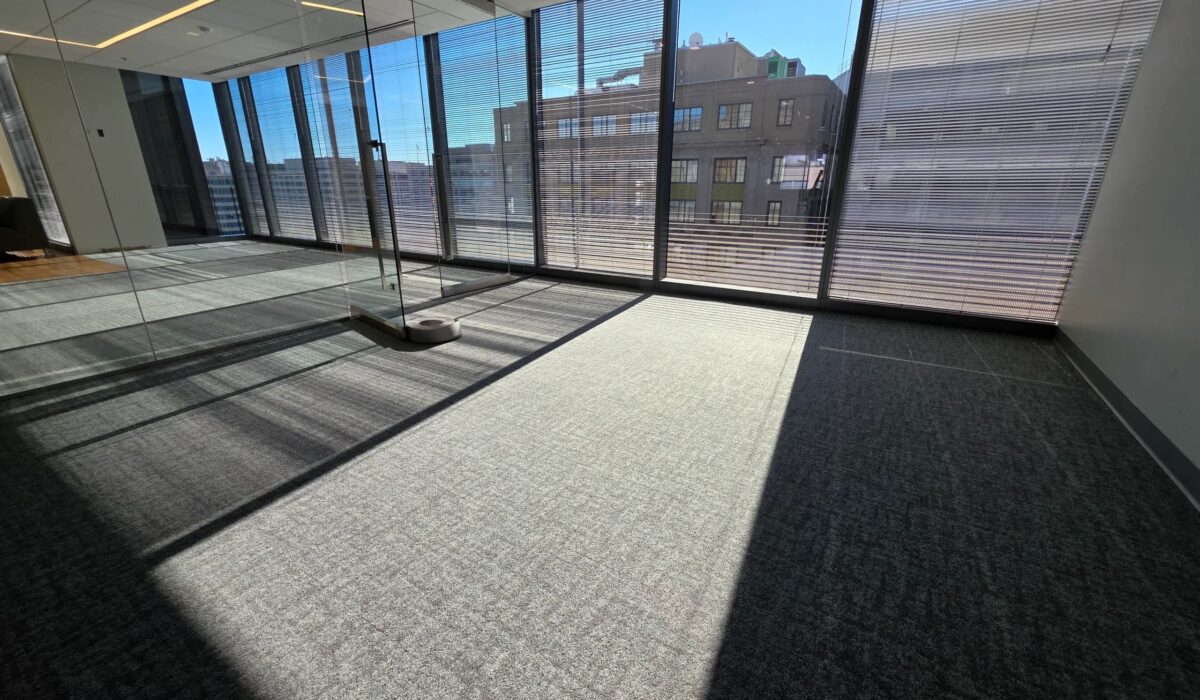
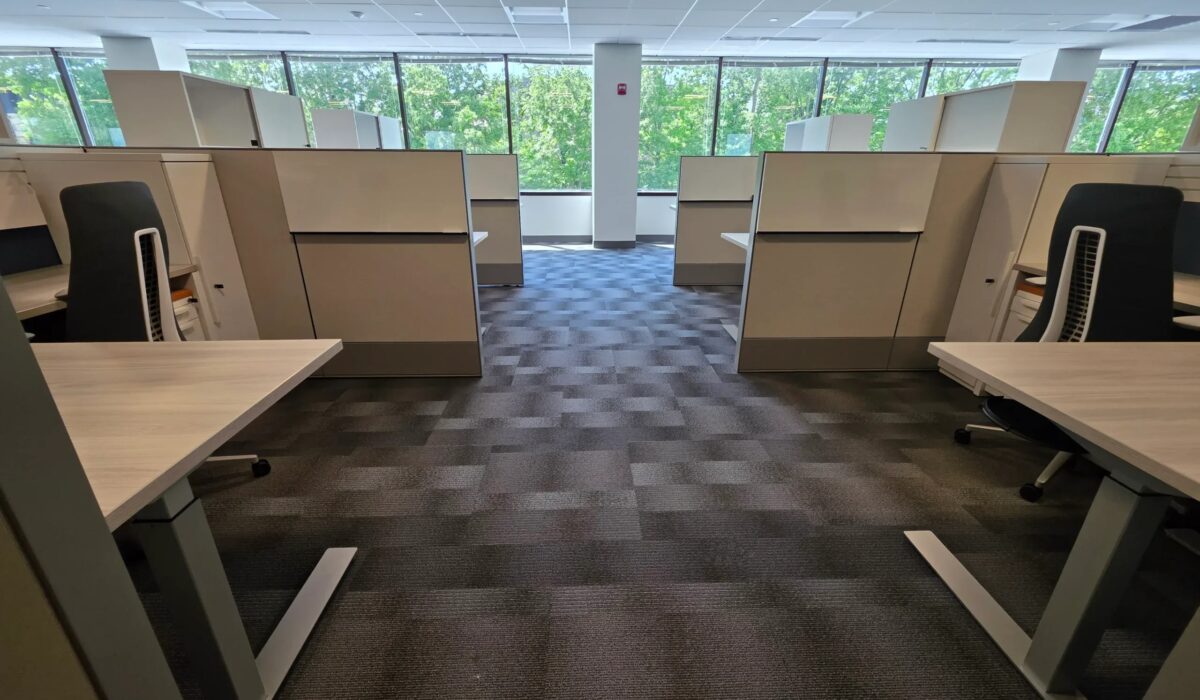
For offices in Rosslyn, Ballston and National Landing, carpet tile is usually the better choice than broadloom. A damaged square lifts out and swaps without a patch. Crews can also phase the work zone by zone, so the office stays open.
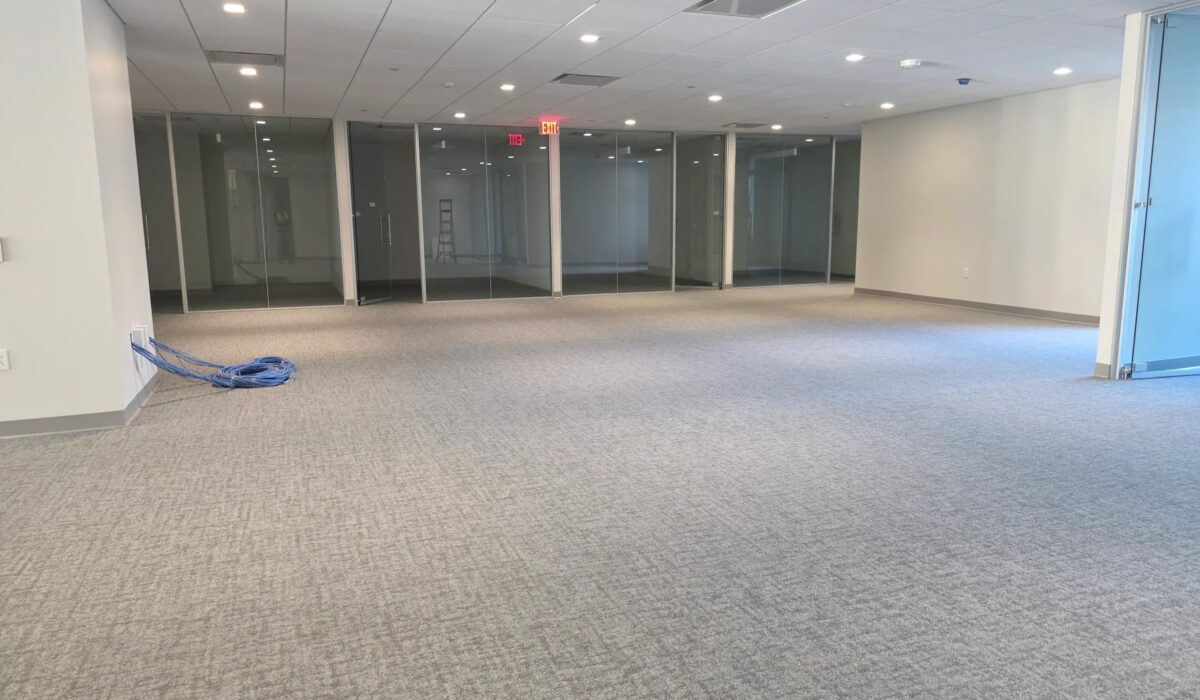
Commercial jobs follow the CRI 104 standard rather than CRI 105, and the concrete under them needs a moisture test before glue goes down. Building managers usually want the work done at night or on weekends. Our guide to commercial carpet installation covers costs, codes and phasing for offices in more detail.
Carpet or Hard Flooring for Your Arlington Home
Carpet earns its place in bedrooms, playrooms and upper floors of condos where sound matters. It’s warm underfoot, quiet and usually the cheapest floor to install. It’s the wrong choice for kitchens, bathrooms, entryways and basements that take on water.
In a damp lower level or a home with pets that have accidents, a waterproof floor lasts longer. Luxury vinyl plank flooring installation handles water and claws, and laminate flooring installation gives a harder wood-look surface for dry rooms upstairs. Many Arlington homes mix both: carpet in the bedrooms and a hard floor on the main level.
How to Choose Carpet Installers in Arlington
The best carpet installers in Arlington give you a seam diagram, a written pad spec and a clear removal plan before they take a deposit. Use these checks when you compare quotes for carpet installation in Arlington:
- License. In Virginia, any job worth $1,000 or more must be done by a DPOR-licensed contractor. Search the license number on DPOR’s lookup page.
- Insurance. Most condo managers won’t release the elevator until they have the installer’s insurance certificate on file.
- Stretching method. Ask whether they power-stretch every wall-to-wall room.
- Pad. The quote should name the pad’s thickness and density, not just say “premium pad.”
- What’s included. Removal, disposal, furniture moving, stairs and transitions should each be listed.
- Warranty. Ask how long the installer stands behind seams and stretching, and get it in writing.
Be wary of “free installation” offers. The labor cost usually moves into the carpet or pad price, and the extras, such as removal, stairs and moving furniture, often aren’t free.
Carpet Installation FAQs
Is a permit required for carpet installation in Arlington?
No. Arlington County enforces the Virginia Uniform Statewide Building Code, and section 108.2 lists floor finishes among the work that needs no permit. If you live in a condo, your association may still require a work request, the installer’s insurance certificate and a reserved elevator. Get the building’s rules in writing before you schedule the job.
How much does carpet installation cost in Arlington?
Most homes pay about $2 to $8 per square foot with carpet, pad and labor included. Removing old carpet adds about $0.70 to $1.60 per square foot, and stairs typically run $12 to $45 per step. Wool and patterned carpet cost more. A 330-square-foot bedroom and hallway job often lands near $2,000.
How long does carpet installation take?
Two or three bedrooms are usually carpeted in a single day, including removal of the old carpet and pad. A whole house with stairs may take two days. High-rise condos can take longer because of elevator windows and building work hours. You can usually walk on new carpet as soon as the installer finishes.
What carpet pad should I use?
For most homes, choose a firm pad no thicker than 7/16 inch, which is the CRI 105 limit for residential carpet. Thicker, softer pad lets the carpet flex and wear out early. Check your carpet’s warranty, since many makers name a minimum density. Over concrete, a pad with a built-in moisture barrier is a good idea.
Can carpet go in a basement?
Yes, if the basement is dry. Have the concrete checked for moisture first and use a pad with a moisture barrier or a synthetic carpet such as olefin. For a basement with any history of flooding or damp walls, luxury vinyl plank or another waterproof floor will outlast carpet.
How much carpet do I need for a 12 by 14 room?
A 12 by 14 room is 168 square feet, or about 18.7 square yards. Because carpet comes on 12-foot rolls, that room can be covered with one piece 12 feet wide and 14 feet long, with no seam. A room 14 by 14 needs a seam and extra carpet, so your order will be larger than the floor area.
Do Arlington condos require carpet?
Some do. Certain buildings require carpet or a sound-rated hard floor on upper levels to limit noise for the unit below, and the rules differ from one building to the next. Get a written copy of the building’s flooring policy from management before you buy anything, especially if you plan to replace carpet with a hard floor.
Planning Your Carpet Installation in Arlington
A lasting carpet installation in Arlington comes down to the right pad, a careful seam plan and a crew that power-stretches every room. Get the building’s rules in writing if you live in a condo, and compare quotes line by line rather than on the total.
FIXO installs carpet tile and broadloom for Arlington offices and buildings, and LVP, laminate, engineered hardwood and tile in homes, all at fixed prices. See the areas we cover on our flooring installation in Arlington page.
 4.9 on Google14 reviews
 Licensed & InsuredVirginia · Maryland · Washington, D.C.
 Workmanship GuaranteedInstallation backed in writing
 Locally OwnedServing NoVA, MD & D.C.